How to Store No Bake Cookies
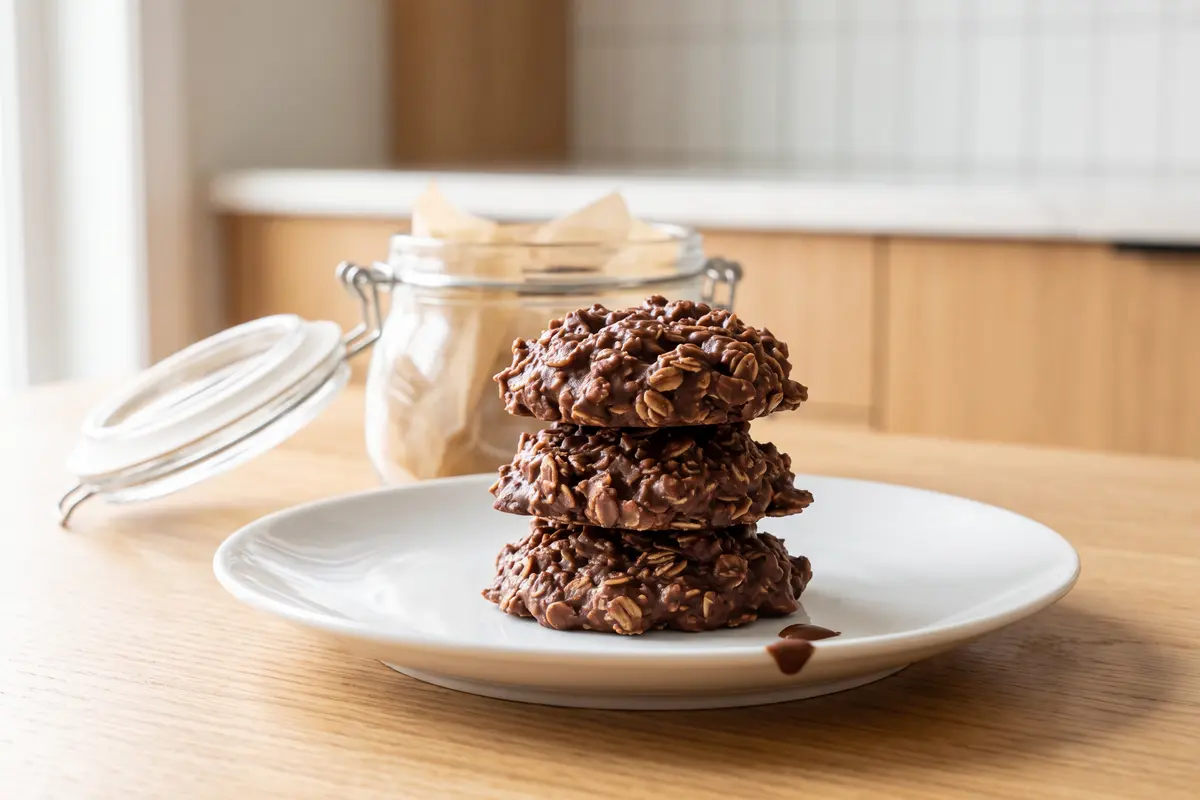
How to store no bake cookies properly to keep them soft, fudgy, and fresh for days. Learn the best ways to store them at room temperature, in the refrigerator, or freezer, plus simple tips to prevent dry, crumbly cookies.
I couldn’t figure out what I’d done wrong in the recipe—turns out, I hadn’t done anything wrong while cooking them. I just didn’t know how to store them.
The truth is, no bake cookies are more fragile than baked cookies. They don’t have that dry, crisp structure from oven heat. They’re held together by sugar and fat that can shift, separate, or dry out if you don’t protect them. Once I started using an airtight container and paying attention to temperature, my cookies stayed chewy and rich for days. No more sad, crumbly disappointments.
The biggest mistake most people make? Assuming room temperature is always fine, or that the fridge is always better. Neither is true in every situation, and the difference comes down to your kitchen’s humidity and how long you plan to keep them. Let me walk you through exactly what works.
- Store no bake cookies in an airtight container at room temperature for up to 5 days, or refrigerate for up to 2 weeks.
- Layer parchment paper between stacks to prevent sticking and moisture loss.
- Never leave cookies uncovered—exposure to air dries them out within hours.
- Refrigeration firms them up but can make them slightly less chewy; bring to room temp 10 minutes before serving.
- Freezing works for up to 3 months; thaw in the container to retain moisture.
Table of Contents
How Should You Store No Bake Cookies?
Store no bake cookies in an airtight container at room temperature for up to 5 days, or in the refrigerator for up to 2 weeks. Layer parchment or wax paper between stacks to prevent sticking. Never leave them uncovered—exposure to air dries them out quickly, turning the edges crumbly and the texture grainy within hours.
The key is moisture control. No bake cookies are made with butter, sugar, and oats, bound together by a cooked sugar syrup. That syrup stays soft and fudgy as long as it holds onto its moisture. When air hits the surface, the moisture evaporates, and the sugar starts to crystallize. You end up with cookies that feel dry and taste chalky instead of rich and chewy.
Room temperature works beautifully if your kitchen isn’t too warm or humid and you’ll eat the cookies within a few days. The fridge is your friend if you live somewhere hot or sticky, or if you want to keep them longer. Both methods work—you just need to match the storage to your situation.
Room Temperature vs. Refrigerator: Which Is Better?
| Storage Method | Best For | Texture | Shelf Life |
|---|---|---|---|
| Room Temperature (airtight) | Cool, dry kitchens; eating within 5 days | Soft, chewy, fudgy | Up to 5 days |
| Refrigerator (airtight) | Warm or humid climates; longer storage | Firmer, slightly less chewy (softens at room temp) | Up to 2 weeks |
| Freezer (airtight) | Long-term storage | Same as fresh after thawing | Up to 3 months |
Use this table to decide where to stash your batch. If your kitchen stays below 70°F and feels dry, room temp is perfect. If it’s summer, you’re near the stove a lot, or the air feels sticky, the fridge is safer.
Why Room Temperature Storage Works (And When It Doesn’t)
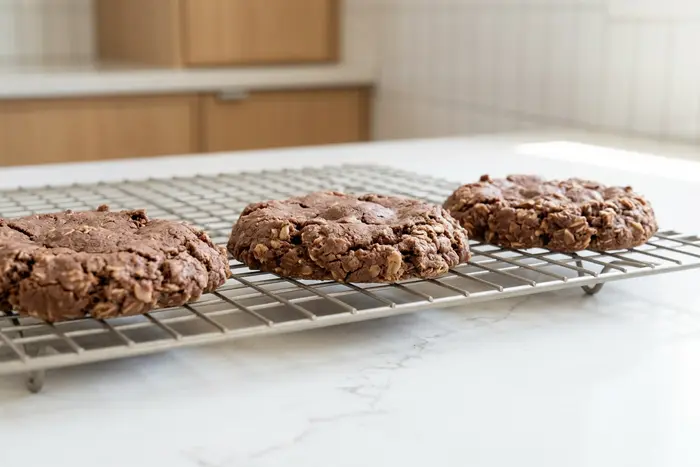
Room temperature keeps no bake cookies at their best texture: soft, fudgy, and easy to bite into. The butter stays pliable, the oats stay tender, and the chocolate-peanut butter mixture feels creamy on your tongue. As long as your kitchen is cool and dry—around 65 to 70°F—and you seal the container tightly, the cookies will hold their moisture and stay delicious for up to 5 days.
The problem is heat and humidity. If your kitchen gets warm, the butter can start to soften too much, making the cookies greasy or causing them to lose their shape. If the air is humid, moisture can settle on the surface, making them sticky or encouraging the sugar to weep. And if you leave them uncovered or in a container that doesn’t seal well, they’ll dry out fast—sometimes within a day.
I store mine on the counter in a plastic container with a snap-on lid, and I tuck a sheet of parchment between each layer. They stay perfect for the 3 or 4 days it takes my family to finish them. But in July, when my kitchen feels like a sauna, I skip the counter and go straight to the fridge.
Why Refrigeration Firms Them Up (And How to Fix It)
Refrigerating no bake cookies makes them firmer because the cold temperature solidifies the butter and tightens the sugar matrix. They won’t be as soft and fudgy straight out of the fridge—they’ll feel more like a dense truffle.
But this isn’t a bad thing if you like a firmer bite, and it’s the safest option if your kitchen is warm, if you live somewhere humid, or if you want to keep the cookies longer than 5 days.
The fridge also slows down any separation or weeping that can happen when butter and sugar sit at room temp too long. If your cookies were a little soft or greasy to begin with, chilling them can actually improve the texture.
If you want that soft, chewy texture back, just take the cookies out of the fridge 10 to 15 minutes before you plan to eat them. They’ll come back to room temperature and soften up beautifully. I do this every time—I pull out a few cookies in the morning, and by the time I’m ready for a snack, they’re perfect.
How to Store No Bake Cookies in the Fridge
Use an airtight container—plastic or glass with a tight-sealing lid. Layer parchment or wax paper between stacks so the cookies don’t stick together or pull apart when you grab one. Don’t stack them too high or they can squish. Keep them toward the back of the fridge where the temperature is most stable, not in the door where it fluctuates.
The Container Matters More Than You Think
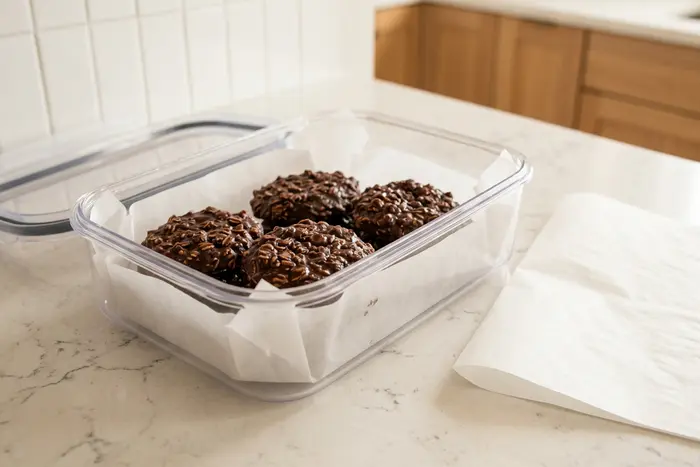
An airtight container is non-negotiable. I’ve tried leaving cookies in a bowl covered with plastic wrap, in a loosely lidded tin, and on a plate under a kitchen towel. Every single time, they dried out or got sticky. The seal has to be tight enough that no air gets in and no moisture escapes.
Plastic containers with snap-on lids work great. So do glass containers with rubber-sealed lids. Even a large zip-top bag works if you press out all the air before sealing. What doesn’t work: foil, loose plastic wrap, open plates, or containers with lids that don’t fit snugly.
And always layer parchment or wax paper between the cookies if you’re stacking them. Without it, they’ll stick together, and when you try to pull them apart, you’ll tear off chunks of chocolate or oats. It’s a small step that makes a huge difference.
How Long Do No Bake Cookies Last?
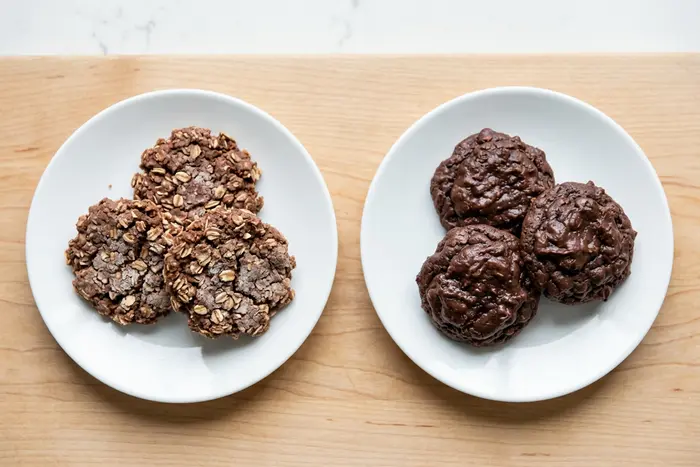
No bake cookies last up to 5 days at room temperature in an airtight container, up to 2 weeks in the refrigerator, and up to 3 months in the freezer. The timeline depends on how well you seal them and the temperature where you store them. If they’re left uncovered or stored in a warm, humid kitchen, they’ll start to dry out or get sticky within a day or two.
I’ve kept refrigerated cookies for a full 2 weeks and they tasted just as good as day one—maybe even a little better, because the flavors had time to meld. Frozen cookies are a lifesaver when I make a double batch. I pull out a few at a time, let them thaw in the container for 20 minutes, and they’re as soft and chewy as fresh.
You’ll know they’ve gone bad if they smell off, taste stale, or develop an odd texture—dry and crumbly, or wet and sticky in a way that feels wrong. But if you store them properly, that almost never happens.
Can You Freeze No Bake Cookies?
Yes, no bake cookies freeze beautifully for up to 3 months. Freezing locks in their texture and flavor, and they thaw back to their original softness without any loss of quality. It’s the best option if you want to make a big batch ahead or save extras for later.
To freeze them, arrange the cookies in a single layer on a parchment-lined baking sheet and freeze until solid—about 1 hour. Then transfer them to an airtight container or a heavy-duty freezer bag, layering parchment between stacks. This keeps them from sticking together and makes it easy to grab just a few at a time.
When you’re ready to eat them, take out as many as you want and let them thaw in the sealed container at room temperature for 15 to 20 minutes. Don’t thaw them uncovered or they’ll sweat and lose moisture. I’ve done this dozens of times and the cookies always come out perfect—soft, fudgy, and just as good as the day I made them.
How to Prevent No Bake Cookies from Drying Out Next Time
Prevent drying by storing cookies in an airtight container as soon as they’ve set—within 30 minutes to an hour of scooping them onto parchment. Never leave them out on the counter uncovered, even overnight. Layer parchment between stacks, and choose room temp or fridge storage based on your kitchen’s temperature and how long you plan to keep them.
- Let cookies set completely before stacking, but don’t wait hours to cover them—seal them up as soon as they’re firm to the touch.
- Use a container that seals tightly. Test it by turning it upside down; if the lid pops off, it’s not airtight enough.
- Store in a cool, dry spot away from the stove, dishwasher, or any heat source.
- If your kitchen is warm or humid, default to the fridge. It’s better to let them soften for 10 minutes before eating than to risk them drying out or getting greasy.
- For freezing, wrap the container in a layer of plastic wrap or foil for extra protection against freezer burn.
Once you’ve nailed storage, you’ll have chewy, fudgy cookies whenever you want them—no more crumbly disappointments. And if you’re troubleshooting other no bake cookie problems, like cookies that won’t set or taste grainy, the tips in my no bake cookie tips & troubleshooting guide cover all the common fixes.
Ending
Now you know exactly how to keep your no bake cookies soft, chewy, and delicious for days—or even months. It all comes down to sealing them up tight and picking the right spot in your kitchen. Once you’ve got that down, you’ll never waste another batch.
What’s your go-to storage method? Do you keep yours on the counter, or are you team fridge? Drop a comment and let me know—I’d love to hear what works in your kitchen. And if this guide helped, save it to Pinterest so you’ve got it handy next time you make a batch!
Frequently Asked Questions
Should no bake cookies be refrigerated or left out?
No bake cookies can be left out at room temperature in an airtight container for up to 5 days if your kitchen is cool and dry. Refrigerate them for up to 2 weeks if your kitchen is warm or humid, or if you want them to last longer. Both methods work—choose based on your climate and how soon you’ll eat them.
How do you keep no bake cookies from getting hard?
Keep no bake cookies soft by storing them in an airtight container as soon as they set. Never leave them uncovered—exposure to air dries them out within hours. Layer parchment between stacks and store in a cool, dry spot. If refrigerating, let them sit at room temp for 10 minutes before eating to soften.
Can you store no bake cookies in a Ziploc bag?
Yes, a heavy-duty zip-top bag works well for storing no bake cookies as long as you press out all the air before sealing. Layer parchment or wax paper between cookies to prevent sticking. A rigid airtight container is slightly better because it protects the cookies from getting squished, but a bag is fine if sealed tightly.
Why are my no bake cookies dry and crumbly after storing?
No bake cookies turn dry and crumbly when they’re left uncovered or stored in a container that isn’t airtight. Exposure to air pulls moisture out of the sugar and butter mixture, causing the texture to turn grainy and chalky. Always seal them tightly as soon as they’ve set to lock in moisture.
Can you freeze no bake cookies to keep them fresh longer?
Yes, no bake cookies freeze beautifully for up to 3 months. Freeze them in a single layer on parchment until solid, then transfer to an airtight container or freezer bag with parchment between layers. Thaw in the sealed container at room temp for 15 to 20 minutes before eating.
I also make sure my cookies set properly in the first place. If they’re undercooked or too soft, they won’t hold their shape in storage and they’re more likely to dry out or weep. A full rolling boil for 60 seconds is the magic number—check out my classic no bake cookies recipe for the full technique.