No Bake Cookie Tips
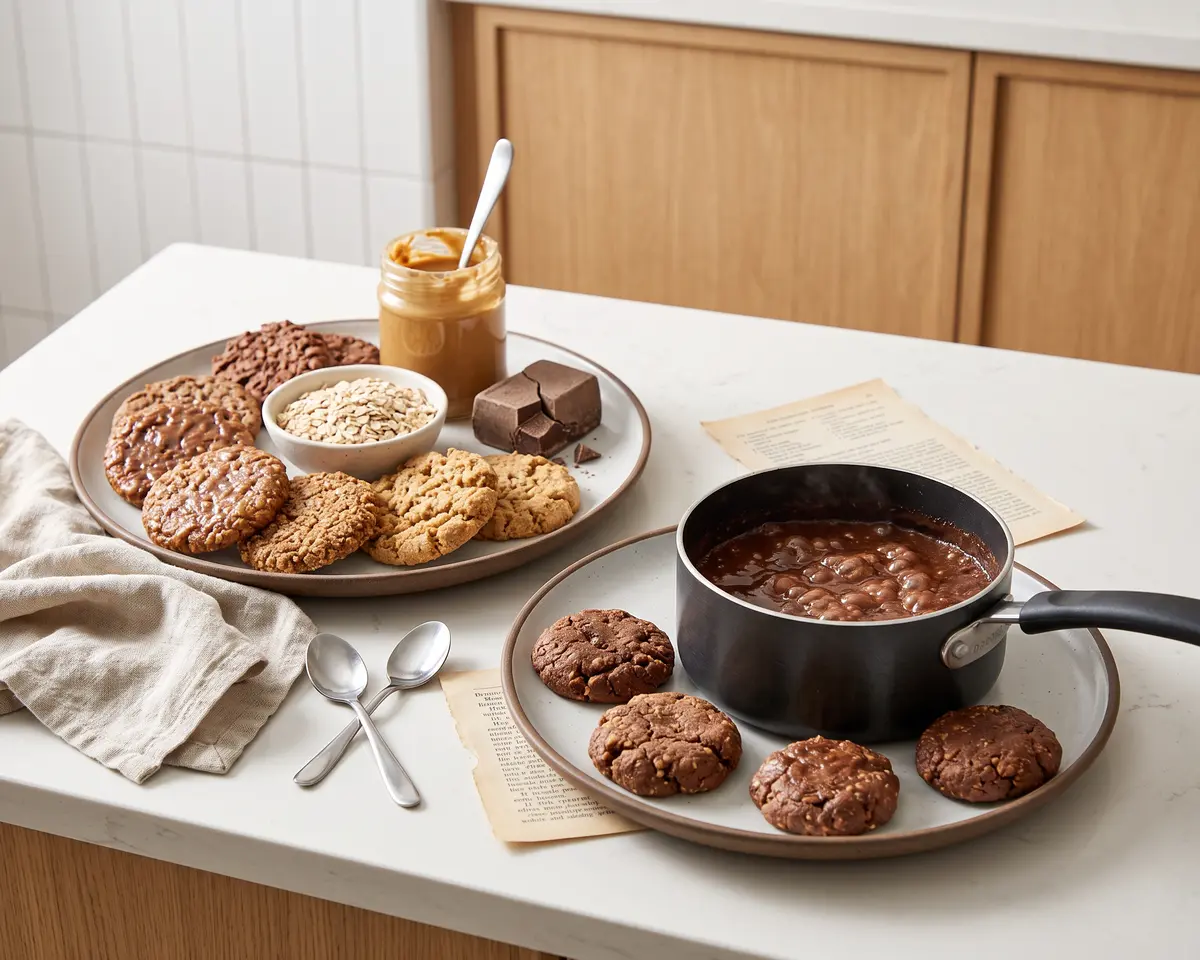
No bake cookie tips that fix every problem: cookies that won’t set, turn dry, get oily or grainy. 12 tested solutions for perfect no bake cookies every
No bake cookie tips saved my batch last Tuesday when my cookies spread into a sticky puddle on the counter. I’d made these a hundred times, but that day something went wrong—the mixture never firmed up, and I stood there wondering if I’d just wasted a pot of perfectly good chocolate and peanut butter.
No bake cookies are one of those recipes that seem foolproof until they’re not. The margin between chewy perfection and a gooey mess is narrow, and when things go sideways—cookies that won’t set, turn crumbly, separate into an oily slick, or harden into grainy pucks—it’s frustrating.
This guide walks you through twelve of the most common no bake cookie problems and exactly how to solve them. Whether you’re troubleshooting a batch that’s already on the counter or planning ahead to get it right the first time, you’ll find the answer here.
And if you’re starting from scratch, check out The Best No Bake Cookies Recipe (Easy, Classic and Foolproof) for the master formula that these tips build on.
Table of Contents
Key Takeaways
- Covers 12 common no bake cookie problems: won’t set, too dry, oily, grainy, and more
- Each fix includes the cause, the solution, and how to prevent it next time
- Comparison guide for oat types, peanut butter brands, and cocoa substitutions
- Storage and freezing tips to keep cookies fresh without drying out
- Humidity and altitude adjustments for tricky conditions
What Makes These 12 Variations Unique & Core Principles
The classic no bake cookie is a three-ingredient miracle: butter, sugar, and milk boiled together, then stirred with cocoa, peanut butter, oats, and vanilla. It sets on the counter in about thirty minutes, no oven required. But that simplicity is also what makes it finicky.
Because there’s no flour to bind things and no baking to firm them up, the texture depends entirely on timing, temperature, and ratios. Boil the mixture for fifty seconds instead of sixty, and the cookies stay soft. Boil it for ninety seconds, and they turn dry. Use natural peanut butter without adjusting the liquid, and the batch separates.
Stir in the oats while the pot’s still too hot, and the cookies harden before you can scoop them.
These twelve tips tackle every variable that can throw off that balance. Some are step-by-step guides for beginners. Others are troubleshooting fixes for specific problems: cookies that won’t set, turn crumbly, get oily, or develop a grainy texture.
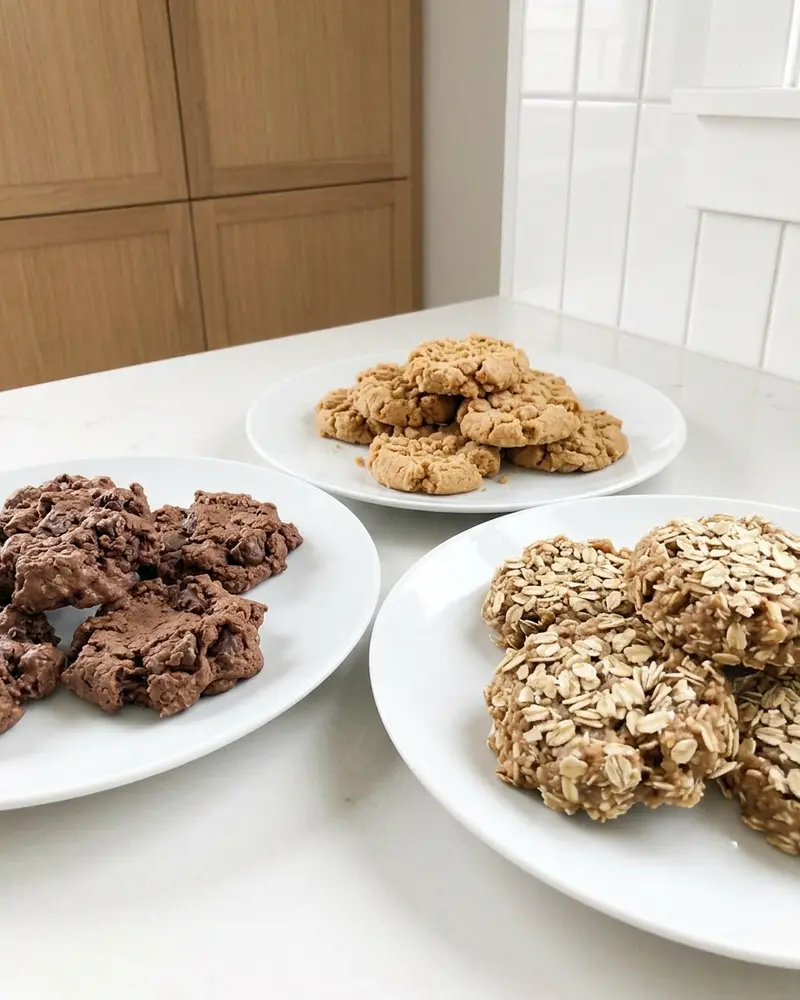
A few compare ingredient swaps—quick oats versus old-fashioned, natural peanut butter versus the shelf-stable kind, cocoa powder versus chocolate chips—so you know what works and what doesn’t.
The core principle across all of them is this: no bake cookies are about precision in a few key moments. Get the boil right, measure the oats accurately, and let the mixture cool just enough before you add the peanut butter. Do that, and the rest is easy.
Complete Recipe Collection (All 12 Recipes)
1. Easy No Bake Cookies for Beginners (Step by Step With Photos)
If you’ve never made no bake cookies before, this walkthrough shows you exactly what each step looks like: what a rolling boil looks like, when to pull the pot off the heat, and how thick the mixture should be when you drop it onto wax paper. It’s the best place to start if you want to see the process before you try it, with photos of every stage and notes on the tools that make it easier.
2. Why Won’t My No Bake Cookies Set? (And How to Fix Them)
This is the most common problem, and it almost always comes down to the boil. If your cookies are still soft and sticky after an hour on the counter, the sugar mixture didn’t reach the right temperature. This guide explains how to tell if that’s what happened, how to rescue a runny batch by reheating it, and what to watch for next time so the cookies firm up on schedule.
3. How to Fix Dry, Crumbly No Bake Cookies
Dry, crumbly cookies happen when the mixture boils too long or you add too many oats. The fix is to add a tablespoon of milk or a little extra peanut butter to the next batch, but this guide also shows you how to soften cookies that are already too dry by storing them with a piece of bread overnight. It’s a simple trick that works surprisingly well.
4. How Long to Boil No Bake Cookies (The 60 Second Rule)
Sixty seconds of a full rolling boil is the magic number for most no bake cookies, but that timing shifts if you’re at high altitude or if your stove runs hot. This comparison walks through what a rolling boil looks like, how to time it accurately, and when to add ten or fifteen seconds if you’re in a humid climate or above five thousand feet.
5. Why Are My No Bake Cookies Oily? (Causes and Fixes)
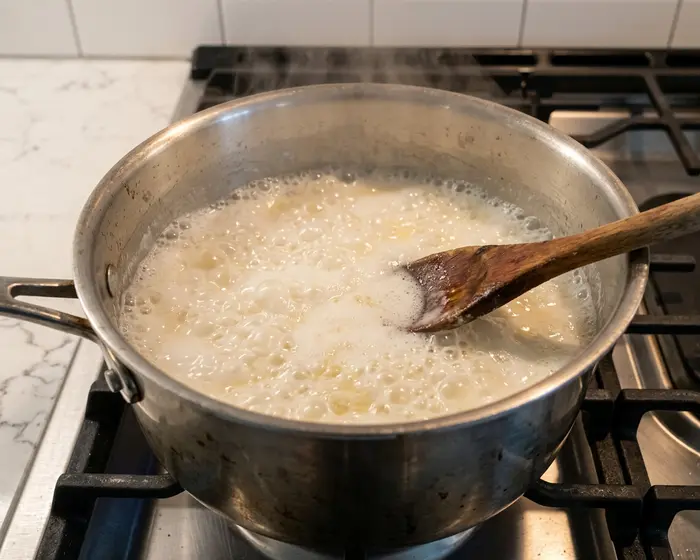
Oily cookies usually mean the fat separated out, either because you used natural peanut butter without stirring it first or because the mixture didn’t boil long enough to emulsify everything. This guide breaks down both causes and shows you how to fix an oily batch by stirring in a little more cocoa powder or oats to absorb the extra fat.
6. Why Are My No Bake Cookies Grainy? (Sugar Crystals Explained)
Grainy texture comes from sugar that didn’t dissolve completely or that recrystallized as the cookies cooled. It’s less common than the other problems, but when it happens, it’s obvious—the cookies feel sandy instead of smooth. This guide explains how to prevent it by stirring the sugar mixture constantly while it boils and not scraping the sides of the pot when you pour.
7. Quick Oats vs Old Fashioned Oats for No Bake Cookies
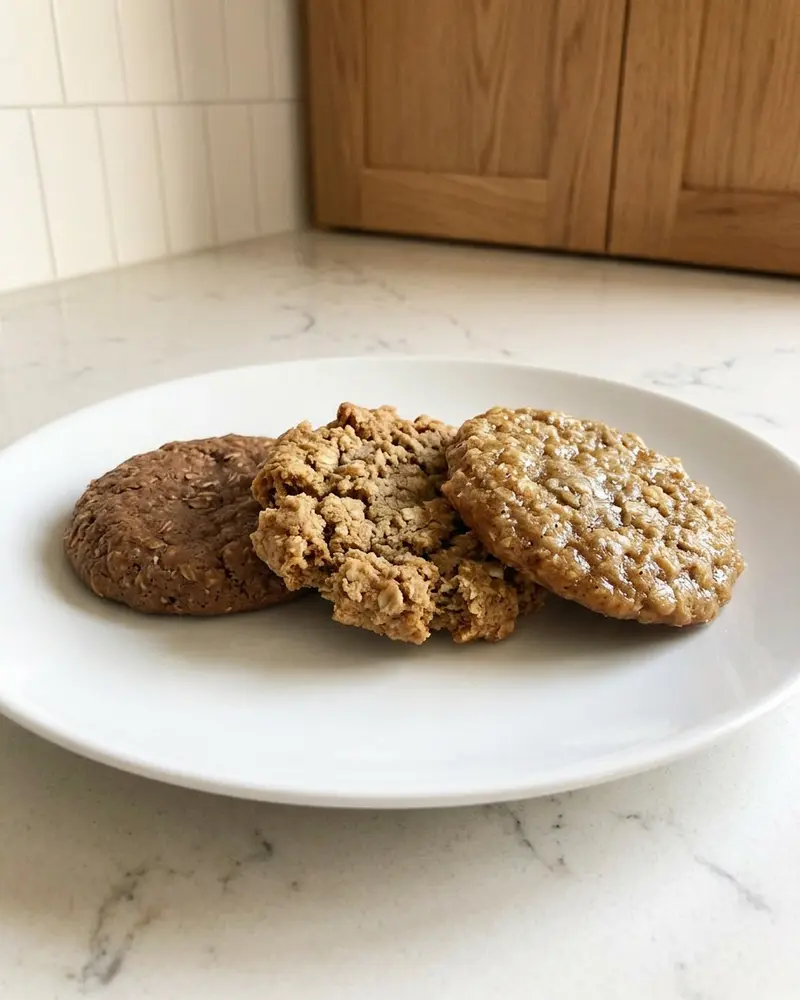
Quick oats are the standard choice because they absorb liquid fast and give the cookies a tender chew. Old-fashioned oats work too, but they stay chewier and take a little longer to set. This side-by-side comparison shows you the texture difference, when to use each type, and how to adjust the recipe if you only have rolled oats on hand.
8. How to Store No Bake Cookies So They Don’t Dry Out
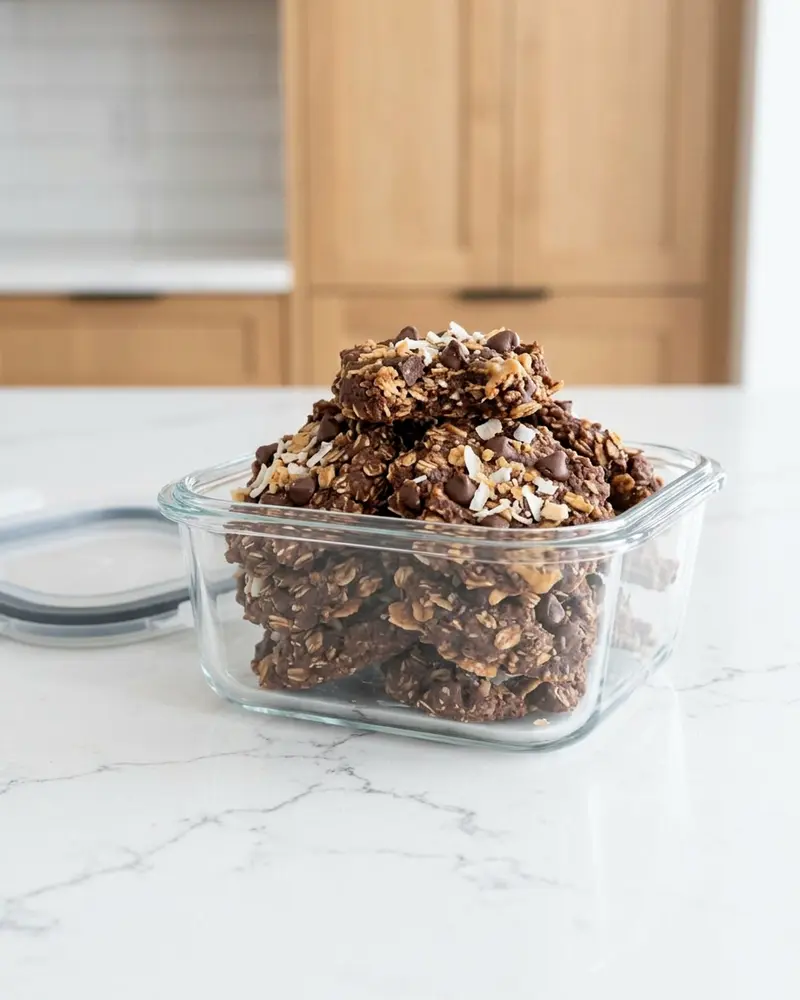
No bake cookies dry out fast if you leave them uncovered, but they also get sticky if you seal them up while they’re still warm. This guide walks through the best containers to use, whether to store them at room temperature or in the fridge, and how to keep them soft for up to a week without losing that chewy texture.
9. How to Freeze No Bake Cookies (and Thaw Them Right)
Freezing no bake cookies is one of the easiest ways to make them ahead, and they thaw in about fifteen minutes on the counter. This guide covers how to layer them in a freezer-safe container so they don’t stick together, how long they keep, and the best way to thaw them so they taste just as good as the day you made them.
10. How to Make No Bake Cookies in Humid Weather
Humidity is the enemy of no bake cookies because it keeps them from setting properly. If you’re making these on a rainy day or in a steamy kitchen, you’ll need to boil the mixture a little longer and let the cookies set in the fridge instead of on the counter. This guide gives you the exact adjustments to make so the cookies firm up even when the air is damp.
11. Natural Peanut Butter in No Bake Cookies: Does It Work?
Natural peanut butter—the kind with just peanuts and salt—works in no bake cookies, but it behaves differently than the shelf-stable kind because it has more oil and no added sugar or stabilizers. This comparison explains how to adjust the recipe when you use it, when it’s worth the swap, and which brands give the best results without making the cookies oily.
12. No Bake Cookies With Chocolate Chips Instead of Cocoa
If you’re out of cocoa powder, you can swap in chocolate chips, but you’ll need to melt them into the butter-sugar mixture and adjust the timing so the cookies still set. This guide walks through the substitution, how much to use, and what the texture difference is compared to the classic cocoa version.
Quick Recipe Comparison & Decision Guide
| Recipe Name | Prep Time | Key Focus | Best For |
|---|---|---|---|
| Easy No Bake Cookies for Beginners | 10 minutes | Step-by-step photo guide | First-time bakers |
| Why Won’t My No Bake Cookies Set? | 5 minutes | Troubleshooting runny cookies | Rescuing a failed batch |
| How to Fix Dry, Crumbly Cookies | 5 minutes | Fixing over-boiled or dry texture | Softening hard cookies |
| How Long to Boil No Bake Cookies | 10 minutes | Timing the boil precisely | Getting the texture right |
| Why Are My Cookies Oily? | 5 minutes | Fixing separated fat | Natural peanut butter users |
| Why Are My Cookies Grainy? | 5 minutes | Preventing sugar crystals | Smooth texture every time |
| Quick Oats vs Old Fashioned Oats | 10 minutes | Oat type comparison | Choosing the right oats |
| How to Store No Bake Cookies | 2 minutes | Keeping cookies soft | Week-long freshness |
| How to Freeze No Bake Cookies | 5 minutes | Make-ahead freezing | Batch prep and gifting |
| Humid Weather Adjustments | 10 minutes | Setting in damp conditions | Rainy-day baking |
| Natural Peanut Butter Guide | 10 minutes | Using natural PB successfully | Healthier ingredient swap |
| Chocolate Chips Instead of Cocoa | 10 minutes | Cocoa powder substitute | Pantry-friendly swap |
If I had to pick one place to start, it’s the beginner’s guide. It gives you the visual confidence to know what you’re looking for at every step. From there, the troubleshooting guides are your safety net—most batches run into one of these problems at some point, and knowing how to fix them means you’re never stuck with a ruined pot of chocolate.
Tips for Perfect No Bake Cookies Every Time
Use a Timer for the Boil
The sixty-second boil is non-negotiable, and it’s easy to lose track when you’re stirring and watching the pot. Set a timer the moment the mixture hits a full rolling boil—the kind where the bubbles don’t stop when you stir—and don’t pull it off early. Those last ten seconds matter more than you’d think.
Measure the Oats by Weight if You Can
Oats are light and fluffy, so a cup measured by scooping can be way off. If you have a kitchen scale, weigh them instead. You want around ninety grams per cup. Too many oats and the cookies turn dry. Too few and they stay soft.
Let the Mixture Cool for Thirty Seconds Before Adding Peanut Butter
If you dump the peanut butter into a pot that’s still at a full boil, it can seize up or separate. Pull the pot off the heat, count to thirty, then stir in the peanut butter and vanilla. The mixture should still be hot enough to melt everything together, but not so hot that it breaks.
Drop the Cookies Fast
Once you’ve stirred in the oats, the mixture starts to set. Work quickly to scoop and drop the cookies onto wax paper, and don’t go back to reshape them—they’ll firm up as they are. If the mixture gets too stiff to scoop, you can reheat it gently over low heat for a few seconds, but it’s better to just move fast the first time.
Don’t Refrigerate Unless You Have To
No bake cookies set best at room temperature. The fridge firms them up faster, but it can also make them a little harder and less chewy. Save the fridge for humid days or if you’re in a rush, but otherwise, just let them sit on the counter for thirty minutes.
Make-Ahead & Reheating Tips
No bake cookies are one of the best make-ahead desserts because they hold up well for days and freeze like a dream. You can scoop and set a batch in the morning, store them in an airtight container by afternoon, and they’ll stay soft and chewy for up to a week at room temperature.
If you’re making them more than a few days ahead, freeze them. Layer the cookies between sheets of parchment or wax paper in a freezer-safe container, seal it tight, and freeze for up to three months. They thaw in about fifteen minutes on the counter, and the texture stays just as good as fresh.
For gifting or parties, you can make the cookies a day or two ahead and store them in a single layer in a covered container. Don’t stack them until they’re fully set, or they’ll stick together.
What to Serve With No Bake Cookies
No bake cookies are rich and sweet, so they pair best with something simple that won’t compete. A glass of cold milk is the classic choice, and it cuts through the chocolate and peanut butter in a way that makes you want another cookie.
If you’re serving them as part of a dessert spread, keep the other options light: fresh fruit, a bowl of vanilla ice cream, or a plate of Soft Batch Chocolate Chip Cookies for variety. They also work well alongside coffee or hot chocolate, especially in the winter when you want something cozy and not too fussy.
For a party or potluck, arrange them on a platter with a few other no-bake treats—peanut butter balls, Rice Krispies treats, or fudge—so guests can try a little of everything without feeling too full.
Comparison Table: Ingredient Swaps and Their Effects
| Ingredient | Standard Choice | Swap Option | Effect on Texture | Best For |
|---|---|---|---|---|
| Oats | Quick oats | Old-fashioned oats | Chewier, takes longer to set | Heartier texture |
| Peanut Butter | Creamy, shelf-stable | Natural peanut butter | Can separate if not adjusted | Cleaner ingredient list |
| Cocoa Powder | Unsweetened cocoa | Chocolate chips | Softer set, sweeter flavor | When out of cocoa |
| Milk | Whole milk | Almond or oat milk | Slightly less rich, same set | Dairy-free option |
| Butter | Salted butter | Coconut oil | Firmer set, slight coconut flavor | Vegan version |
I stick with quick oats and creamy peanut butter for the most reliable results, but the swaps work as long as you know what to expect. Natural peanut butter needs a little extra attention to avoid separation, and old-fashioned oats give you a chewier bite that some people prefer. The rest are mostly about preference and what you have in the pantry.
For more detailed guidance on ingredient science and technique, Serious Eats offers excellent resources on how sugar, fat, and heat interact in candy-style recipes like these.
No Bake Cookie Tips FAQs
Can I make these recipes ahead of time?
Yes, no bake cookies store well for up to a week at room temperature in an airtight container and freeze beautifully for up to three months. Make them a day or two ahead for parties, or freeze a batch for longer storage. They thaw in about fifteen minutes on the counter and taste just as good as fresh. For best texture, store them in a single layer until fully set, then stack with parchment between layers to prevent sticking.
What is the most common reason these cookies fail to set?
The mixture didn’t boil long enough. No bake cookies need a full sixty seconds of rolling boil to reach the right temperature for the sugar to set properly. If you pull the pot off even ten or fifteen seconds early, the cookies stay soft and sticky. Use a timer, watch for a boil that doesn’t stop when you stir, and don’t rush it. Humidity and altitude can also affect setting time, so in damp weather or at high elevation, add an extra ten seconds to the boil.
Can I freeze these cookies for later?
Absolutely. Layer the cookies between sheets of parchment or wax paper in a freezer-safe container, seal it tight, and freeze for up to three months. They thaw quickly at room temperature—about fifteen minutes—and the texture stays soft and chewy. Freezing is one of the best ways to make these ahead for gifting or to keep a stash on hand for last-minute dessert emergencies.
Which oats work best across these recipes?
Quick oats are the best choice for classic no bake cookies because they absorb liquid fast and give a tender, chewy texture. Old-fashioned rolled oats work too, but they stay chewier and take a little longer to set, so the cookies end up with a heartier bite. If you only have rolled oats, pulse them a few times in a food processor to break them down slightly, or just expect a slightly different texture.
What are the best dairy-free and nut-free alternatives?
For dairy-free, swap the butter for coconut oil and use almond milk or oat milk instead of regular milk. The cookies will set a little firmer and may have a faint coconut flavor if you use unrefined coconut oil. For nut-free, replace the peanut butter with sunflower seed butter or tahini. Sunflower seed butter works almost exactly like peanut butter, though it can sometimes turn the cookies slightly green due to a harmless reaction with baking soda—it doesn’t affect the taste.