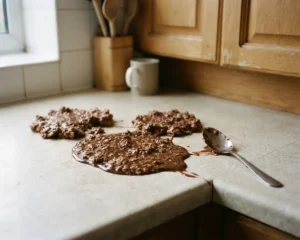
Why Are My No Bake Cookies Grainy?
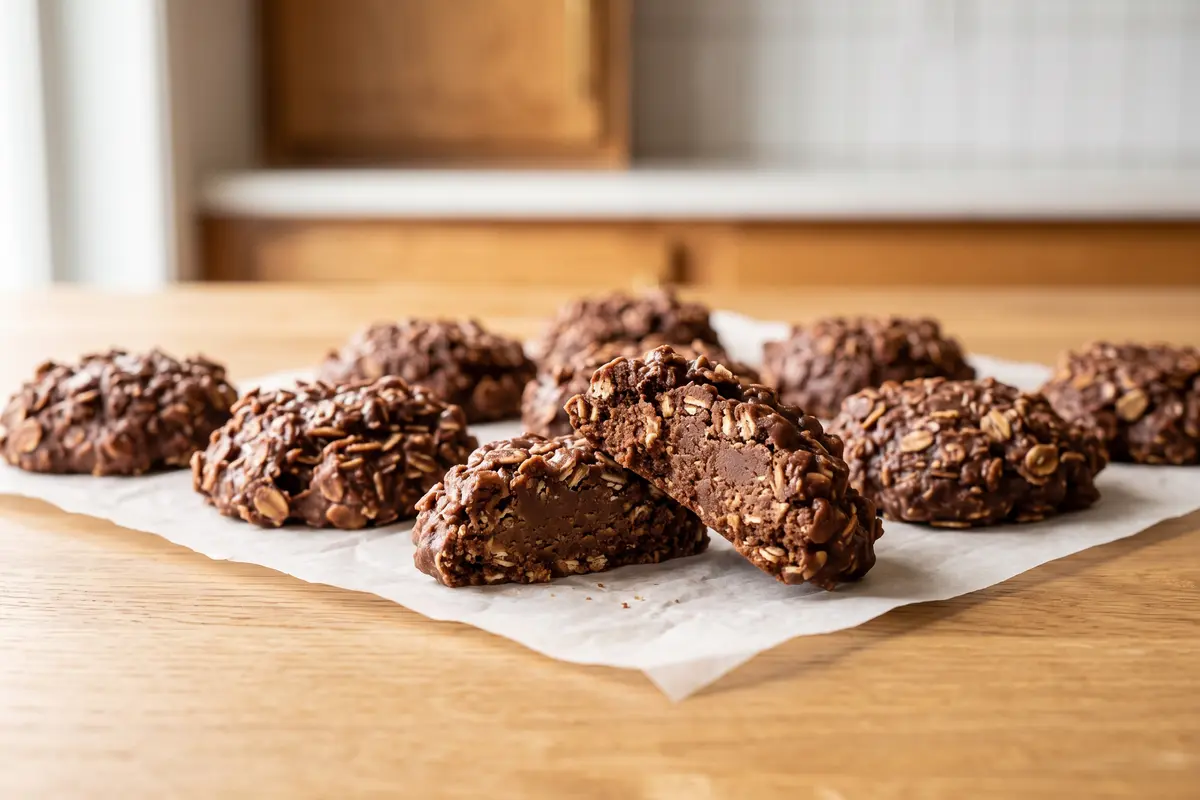
Why are my no bake cookies grainy? The most common causes include overcooking the sugar mixture, incorrect boiling time, or undissolved sugar. Learn what makes no bake cookies gritty and how to get smooth, fudgy chocolate peanut butter cookies every time.
It took me three more failed batches and a deep dive into candy-making science before I figured it out: sugar crystals. Those tiny, crunchy grains form when the sugar in your pot doesn’t fully dissolve, or when it decides to re-crystallize as the cookies cool. The fix turned out to be simpler than I expected, but most recipes never mention the handful of small habits that make all the difference.
If your grainy no bake cookies are sitting on the counter right now and you’re wondering what happened, you’re in the right place. The good news? This is one of the most fixable problems in the no bake cookie world. Let’s walk through exactly why it happens, how to rescue the batch in front of you, and the checklist I follow every single time to get smooth, creamy cookies that set perfectly.
- Graininess happens when sugar crystals form during or after the boil, usually from undissolved sugar, stirring at the wrong moment, or not boiling long enough (the full rolling boil needs to last exactly 60 seconds).
- The texture feels sandy or sugary on your tongue instead of smooth and fudgy.
- You can sometimes rescue a grainy batch by reheating it gently with a tablespoon of milk and re-boiling for another 60 seconds, then dropping again.
- Prevention is all about dissolving every grain before the boil starts, avoiding the spoon once it boils, and hitting that full 60-second rolling boil without stopping the timer early.
- Humidity and old sugar can make the problem worse, so store your cookies airtight and use fresh granulated sugar.
Table of Contents
Why Are My No Bake Cookies Grainy?
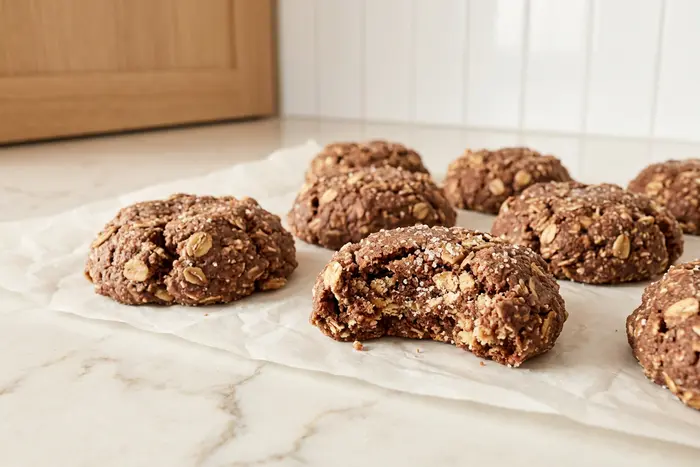
Your no bake cookies are grainy because sugar crystals formed during or after the boil. This happens when sugar doesn’t fully dissolve before boiling, when you stir the mixture while it’s boiling (which encourages crystals to form), or when the boil is too short and the sugar doesn’t reach the right temperature to stay dissolved as it cools.
No bake cookies are really a type of stovetop candy. You’re dissolving sugar into butter and milk, boiling it to a specific temperature, then stirring in oats and peanut butter so the mixture firms up as it cools. If any sugar stays undissolved at the start, or if crystals form during the boil, those grains stay in the finished cookie. They don’t melt away in the fridge.
The texture you’re after is smooth and fudgy, almost like a soft truffle with oats mixed in. When it goes wrong, you get a sandy, gritty bite that feels sugary on your tongue. It’s not dangerous and the cookies are still edible, but the texture is off enough that most people notice right away.
What Went Wrong? Match Your Cookies to the Cause
| What You See | Likely Cause | Quick Fix |
|---|---|---|
| Gritty texture throughout, cookies set fine | Sugar didn’t fully dissolve before the boil started | Next time, stir constantly over medium heat until the mixture is completely smooth and every grain disappears before you let it boil |
| Sugary crystals on the surface or in spots | Stirred the pot during the rolling boil, or sugar splashed onto the side of the pot and re-crystallized | Once the boil starts, don’t touch it with a spoon; wipe down the sides of the pot with a wet pastry brush if you see sugar crystals clinging there |
| Grainy and crumbly, didn’t set right | Boil was too short (under 60 seconds at a full rolling boil), so the sugar didn’t reach the temperature it needs to firm up smoothly | Reheat gently with a tablespoon of milk, bring back to a full rolling boil, and time exactly 60 seconds this time |
| Grainy and greasy or separated | Boiled too long or too hot, causing the fat to separate and the sugar to re-crystallize | Hard to rescue; crumble and use as an ice cream topping, or press into bars and chill |
Look at your cookies and match them to the row that fits. That’ll point you to the cause and the fix. Most of the time, it’s one of the first two: either the sugar never fully dissolved, or you stirred at the wrong moment.
Cause #1: Sugar Didn’t Fully Dissolve Before Boiling
If sugar grains are still floating in the butter and milk when the mixture starts to boil, they won’t dissolve during the boil. Instead, they stay as tiny crystals and get stirred into the oats and peanut butter, giving you that gritty texture all the way through the finished cookie.
This is the most common cause, and it usually happens because the heat was too high at the start, or you didn’t stir long enough before the boil. Sugar needs time and gentle heat to dissolve completely. If you crank the burner to high and let it boil right away, you’ll see a rolling boil on top while undissolved sugar sits on the bottom of the pot.
The fix for next time is simple: start on medium heat, and stir constantly with a wooden spoon or silicone spatula. You want to see the sugar melt into the liquid and the whole mixture turn smooth and glossy before a single bubble breaks the surface. It should look like melted chocolate milk, with no grains visible when you drag the spoon across the bottom of the pot.
This takes about two to three minutes of steady stirring.
Once it’s completely smooth, then you can let it come to a boil. If you skip this step and rush straight to the boil, you’re almost guaranteed to end up with grainy cookies.
Cause #2: Stirring During the Rolling Boil
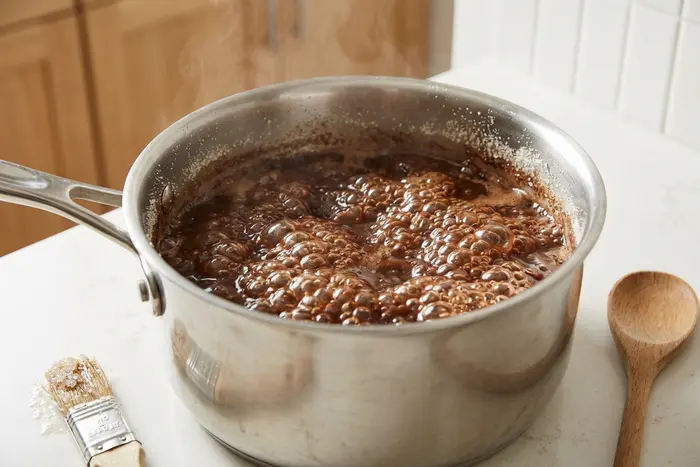
Once your mixture hits a full rolling boil, putting a spoon in it can cause sugar crystals to form. This is because stirring introduces cooler air and creates turbulence, which encourages dissolved sugar to grab onto itself and re-crystallize. It’s the same reason candy makers tell you never to stir fudge or caramel once it’s boiling.
I learned this the hard way. I used to stir the whole time, thinking it would prevent burning. Instead, I’d end up with sugary no bake cookies that had a gritty coating, especially around the edges. The grains would be visible on the surface, almost like a dusting of sand.
The rule is: once you see a full rolling boil with big bubbles covering the entire surface of the pot, take your spoon out and don’t touch it. Set a timer for exactly 60 seconds and let it boil undisturbed. The heat will keep everything moving on its own, and you won’t introduce the conditions that cause crystals to form.
If you see sugar crystals clinging to the side of the pot above the liquid line, dip a clean pastry brush in water and brush them down into the mixture. Those stray crystals can fall back in and seed more crystallization as the cookies cool, so it’s worth taking the extra second to wipe the sides clean.
Cause #3: Boil Was Too Short (Under 60 Seconds)
If you don’t boil the mixture long enough, the sugar won’t reach the temperature it needs to stay dissolved and firm up smoothly as it cools. Instead, it re-crystallizes into that grainy texture. The cookies might also stay too soft or crumbly, because the sugar didn’t cook enough to create the fudgy structure you’re after.
A full rolling boil means big, vigorous bubbles that cover the whole surface of the pot and don’t stop when you tilt the pan slightly. It’s not a gentle simmer with a few bubbles around the edge. Once you see that full boil, start your timer and let it go for exactly 60 seconds. Don’t stop early because you’re nervous about overcooking. That minute matters.
If you pulled the pot off the heat too soon and your cookies turned out grainy and soft, you can fix them. Scrape the mixture back into the pot, add a tablespoon of milk to loosen it, and heat it gently over medium heat, stirring until it’s smooth again. Then bring it back to a full rolling boil and time exactly 60 seconds.
Take it off the heat, stir in the oats and peanut butter again, and drop the cookies. They should set up smooth this time.
Use a timer. Don’t guess. I’ve done this enough times to know that what feels like a minute when you’re standing over a hot stove is usually closer to thirty seconds.
Cause #4: Old or Humid Sugar
Sugar that’s been sitting open in a humid kitchen can clump and develop tiny crystals before you even start cooking. When you add it to the pot, those clumps don’t always dissolve smoothly, and you end up with a grainy texture no matter how carefully you stir.
Humidity also affects the cookies as they cool. If the air in your kitchen is very humid, moisture can cause the sugar on the surface of the cookies to dissolve slightly and then re-crystallize as it dries, leaving a gritty coating.
The fix: use fresh granulated sugar from a sealed container, and store your finished cookies in an airtight container as soon as they’re set. If your kitchen is especially humid, add a small packet of food-safe silica gel to the container, or store the cookies in the fridge.
Can You Fix No Bake Cookies That Are Already Grainy?
Yes, if the cookies are grainy but set up fine otherwise, you can reheat them gently and re-boil the mixture. Scrape the cookies back into a pot, add one to two tablespoons of milk, and heat over medium-low, stirring constantly until everything melts back together and looks smooth. Bring it to a full rolling boil and time exactly 60 seconds, then drop the cookies again.
This works best if the graininess came from not boiling long enough or from undissolved sugar. If the cookies are grainy and also greasy or separated, reheating usually won’t fix the texture. In that case, crumble them up and use them as a topping for ice cream or yogurt, or press the crumbs into a pan, drizzle with melted chocolate, chill, and cut into bars.
You’ll get a different treat, but it won’t go to waste.
If the cookies are just slightly grainy but still taste good and hold their shape, you can also leave them as is. They’re not dangerous to eat, and some people don’t mind the texture. I’ve served batches like that at casual gatherings and most people still ate them happily, especially if I warned them the texture was a little different.
How to Prevent Grainy No Bake Cookies Next Time
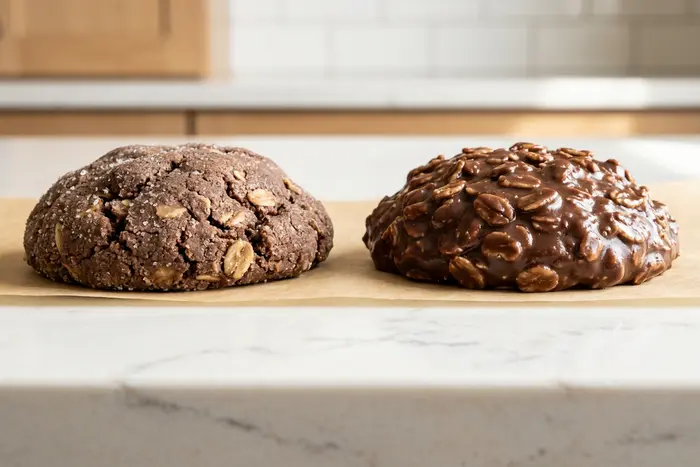
Prevent grainy no bake cookies by dissolving the sugar completely before the boil starts, never stirring once it’s boiling, and timing exactly 60 seconds at a full rolling boil. Use fresh sugar, medium heat, and an airtight container for storage. These five habits will give you smooth, fudgy cookies every time.
- Start on medium heat and stir constantly until the mixture is completely smooth and glossy, with no sugar grains visible, before you let it boil.
- Once the mixture reaches a full rolling boil, take your spoon out and don’t stir for the entire 60 seconds.
- Use a timer. Sixty seconds of a full rolling boil is not negotiable.
- Wipe down the sides of the pot with a wet pastry brush if you see sugar crystals clinging above the liquid line.
- Use fresh granulated sugar from a sealed container, and store finished cookies airtight to keep humidity out.
I follow this checklist every single time now, and I haven’t had a grainy batch in years. The difference is night and day.
For more help with no bake cookie problems, check out the full classic no bake cookies recipe with step-by-step photos and all my best tips. You’ll also find guides on fixing cookies that didn’t set, cookies that turned out too dry, and how to tell when the boil is exactly right.
Frequently Asked Questions
Why do my no bake cookies have a sandy texture?
Your no bake cookies have a sandy texture because sugar crystals formed during the boil or didn’t fully dissolve before boiling started. This happens when you stir during the rolling boil, don’t boil long enough, or rush the dissolving step at the beginning. The crystals stay in the finished cookies and create that gritty, sandy bite.
Can you fix grainy no bake cookies after they’re made?
Yes, you can fix grainy no bake cookies by reheating them. Scrape the cookies back into a pot, add one to two tablespoons of milk, and heat gently until smooth. Bring the mixture to a full rolling boil for exactly 60 seconds, then drop the cookies again. This works if the graininess came from undissolved sugar or a short boil.
Should you stir no bake cookies while they’re boiling?
No, you should not stir no bake cookies once the mixture reaches a full rolling boil. Stirring during the boil introduces cooler air and turbulence, which encourages sugar crystals to form and gives you a grainy texture. Stir constantly before the boil to dissolve the sugar, then leave the spoon out for the full 60 seconds of boiling.
Why are my no bake cookies gritty on top?
No bake cookies that are gritty on top usually have sugar crystals that formed on the surface, either from stirring during the boil or from humidity in the air. Sugar crystals clinging to the side of the pot can also fall onto the cookies as you drop them. Wipe the pot sides with a wet brush during cooking, and store finished cookies airtight.
Does humidity make no bake cookies grainy?
Yes, humidity can make no bake cookies grainy. Humid air causes sugar on the surface of the cookies to dissolve slightly and then re-crystallize, leaving a gritty coating. It can also make sugar clump in the container before you even start cooking. Use fresh sugar and store finished cookies in an airtight container to keep moisture out.