Best Oats For No Bake Cookies?
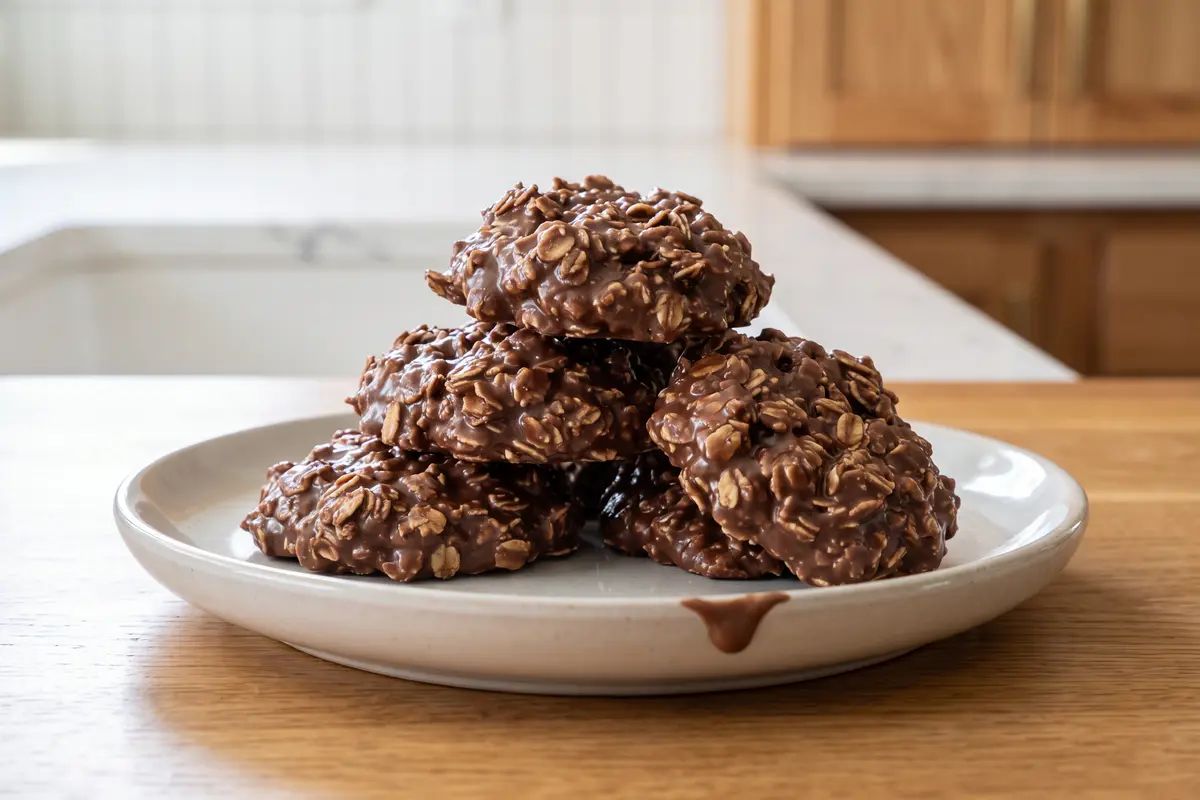
- Quick oats are the best oats for no bake cookies because they absorb the hot sugar mixture quickly and create a chewy, cohesive texture.
- Old fashioned oats stay too firm and make cookies that crumble apart instead of holding together.
- Quick oats are rolled thinner and cut smaller than old fashioned oats, so they soften faster in the brief time the mixture cools.
- If you only have old fashioned oats, pulse them in a food processor for 3 to 5 seconds to break them down closer to quick oat size.
- The oat type affects texture more than any other ingredient swap in no bake cookies.
I learned this the hard way when I grabbed the wrong canister from my pantry one afternoon. The cookies looked perfect as I dropped them onto the parchment, glossy and dark, but when I bit into one an hour later, it fell apart in my hand. The oats were still chewy and separate, like I was eating granola held together with a thin layer of chocolate instead of a cookie.
I’d used old fashioned oats instead of quick oats, and that one swap changed everything. The thick rolled oats didn’t absorb enough of the hot sugar mixture in the few minutes it took the cookies to set, so they stayed firm and the cookies never cohered. I’ve tested both types side by side since then, and the difference is dramatic every single time.
The cause most recipes never mention: the oat size determines how fast they soften, and no bake cookies cool too quickly for old fashioned oats to catch up. Here’s exactly what happens with each type and how to pick the right one every time.
Table of Contents
What Are the Best Oats for No Bake Cookies?
Quick oats are the best oats for no bake cookies because they absorb the hot chocolate peanut butter mixture quickly and create a chewy, cohesive texture that holds together when you pick up the cookie. Old fashioned oats stay too firm and make cookies that crumble apart instead of binding into a solid piece.
The difference comes down to how the oats are processed. Quick oats are rolled thinner and cut into smaller pieces than old fashioned oats, so they have more surface area and soften faster.
No bake cookies only stay hot for a few minutes after you mix in the oats, and that short window is enough time for quick oats to absorb moisture and bind with the sugar mixture, but not enough for the thicker old fashioned oats.
When you use old fashioned oats, each oat stays chewy and separate, and the cookie feels more like granola with a chocolate coating than a cohesive cookie. The texture is dry and crumbly, and the cookies fall apart when you try to pick them up or take a bite.
Quick Oats vs Old Fashioned Oats: What You’ll See
| Oat Type | Texture | How It Holds Together |
|---|---|---|
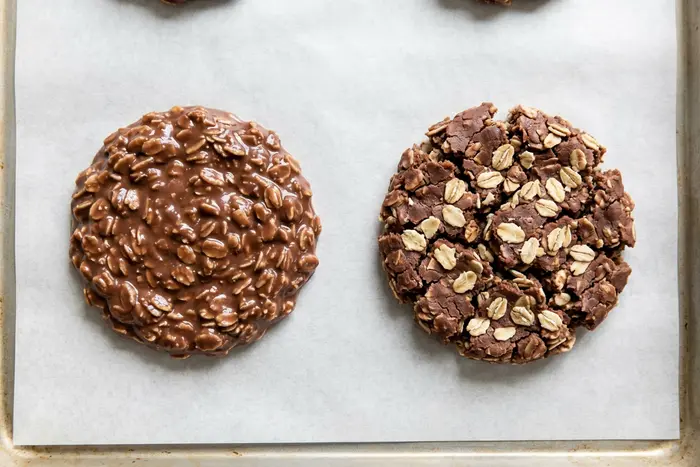
| Quick oats | Soft, chewy, cohesive; the oats blend into the mixture | Cookies hold their shape and stay intact when you pick them up |
| Old fashioned oats | Firm, separate, granola-like; each oat stays distinct | Cookies crumble and fall apart; the oats don’t bind with the chocolate mixture |
Use this table to match what you’re seeing in your cookies to the oat type you used. If your cookies are crumbly and the oats feel too chewy, you used old fashioned oats or a mix that included them.
Why Quick Oats Work Better (The Science of Absorption)
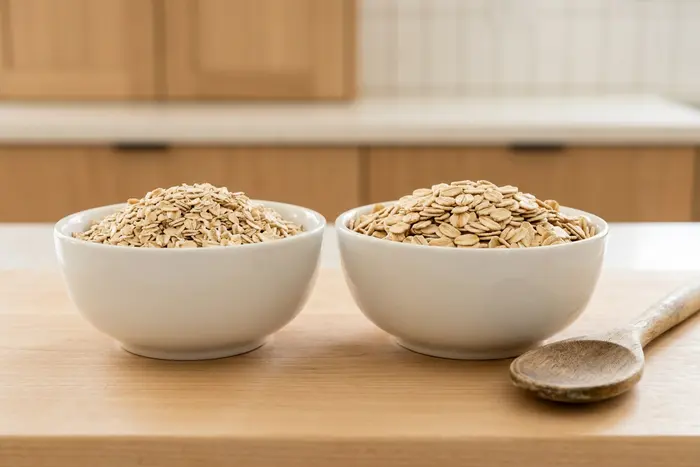
Quick oats work better for no bake cookies because they’re rolled thinner and cut smaller than old fashioned oats, which gives them more surface area to absorb the hot sugar mixture in the short time before the cookies cool and set.
When you pour the hot chocolate peanut butter mixture over the oats and stir, the oats start absorbing moisture immediately. Quick oats soften within a minute or two because they’re thin and small, and by the time you drop the cookies onto the parchment and they cool to room temperature, the oats have absorbed enough liquid to become tender and sticky.
That stickiness is what binds the cookies together.
Old fashioned oats are thicker and larger, so they need more time and more moisture to soften. In the few minutes it takes no bake cookies to set, old fashioned oats only soften on the outside. The center stays firm and chewy, and the oats never fully integrate with the chocolate mixture. The result is a cookie that feels like you’re biting into separate components instead of one unified texture.
The sugar mixture also firms up as it cools, which means the oats have a limited window to absorb moisture before the mixture hardens around them. Quick oats finish absorbing and softening before that window closes. Old fashioned oats don’t.
What Happens When You Use Old Fashioned Oats
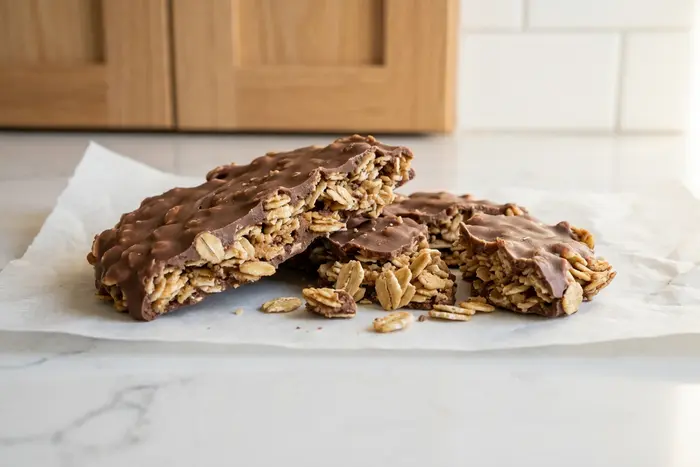
When you use old fashioned oats in no bake cookies, the cookies turn out crumbly and dry, with oats that stay chewy and separate instead of blending into a cohesive texture. The cookies fall apart when you pick them up, and each bite feels more like granola with a chocolate coating than a soft, chewy cookie.
The oats don’t absorb enough of the hot mixture in the short time before the cookies set, so they stay firm and distinct. The chocolate peanut butter mixture hardens around the oats instead of binding with them, and the cookies don’t hold together. You’ll see gaps and cracks where the oats didn’t stick to the mixture, and the cookies crumble into pieces when you try to eat them.
The flavor is fine, but the texture is wrong. The oats are too chewy and the cookies are too dry, and the whole thing feels like it’s missing the soft, fudgy quality that makes no bake cookies so good.
If you’ve already made a batch with old fashioned oats and they turned out crumbly, you can crumble them completely and use them as an ice cream topping or mix them into yogurt. They taste good; they just don’t work as cookies.
Can You Use Old Fashioned Oats If You Pulse Them First?
Yes, you can use old fashioned oats in no bake cookies if you pulse them in a food processor for 3 to 5 seconds to break them down into smaller pieces that are closer to the size of quick oats. This increases the surface area and helps the oats absorb the hot mixture faster, so the cookies hold together better.
Don’t pulse them into a powder or flour; you want them broken into smaller flakes that still have some texture. Pulse in short bursts and check after each one. If you go too far and turn them into oat flour, the cookies will turn out gummy and dense instead of chewy.
The texture won’t be exactly the same as cookies made with quick oats, but it’s close. The cookies will be a little heartier and the oats will be slightly more distinct, but they’ll hold together and have the right soft, chewy texture.
If you don’t have a food processor, you can put the oats in a zip-top bag and crush them with a rolling pin or the bottom of a heavy pan. You want to break them into smaller pieces, not pulverize them. It takes a little more effort, but it works.
How to Tell If Your Oats Are Quick Oats or Old Fashioned Oats
Quick oats are smaller, thinner, and more broken up than old fashioned oats. If you hold a pinch of oats in your hand, quick oats will look like small flakes with irregular edges, and old fashioned oats will look like whole, round, flat discs that are larger and thicker.
Quick oats are sometimes labeled as instant oats, but they’re not the same as the flavored instant oatmeal packets. Plain quick oats and plain instant oats work the same in no bake cookies. Just make sure the package says plain or unflavored, with no added sugar or flavorings.
If the package doesn’t say quick or old fashioned and you’re not sure, look at the oats themselves. Quick oats are smaller and more broken, and old fashioned oats are larger and more intact. If you’re still not sure, quick oats cook faster: they turn soft in a minute or two in boiling water, while old fashioned oats take 5 minutes or longer.
How to Prevent Crumbly No Bake Cookies Next Time
The best way to prevent crumbly no bake cookies is to use quick oats instead of old fashioned oats, and make sure you measure them correctly without packing the measuring cup. Use the scoop-and-level method: scoop the oats into the cup and level off the top with a knife, without pressing down.
Here are my top prevention tips for texture every time:
- Buy plain quick oats, not old fashioned oats or instant oatmeal packets with added flavoring or sugar.
- If you only have old fashioned oats, pulse them in a food processor for 3 to 5 seconds to break them into smaller pieces before adding them to the hot mixture.
- Measure the oats by scooping and leveling, not packing. Packed oats mean too much oat and not enough liquid, and the cookies turn out dry.
- Stir the oats into the hot mixture as soon as you take the pan off the heat, while the mixture is still hot enough to soften the oats quickly.
- Drop the cookies onto parchment within a minute or two of adding the oats, before the mixture cools and firms up too much. If the mixture hardens in the pan, the oats won’t have enough time to absorb moisture.
The oat type makes a bigger difference in texture than almost any other ingredient swap in no bake cookies. If you get the oats right, the rest of the recipe is much more forgiving.
I hope this clears up the oat question once and for all. It’s such a simple swap, but it makes all the difference between cookies that hold together and cookies that crumble into a mess. Now you know exactly which oats to grab every time.
What’s your go-to oat type for no bake cookies, and have you ever made the same mistake I did and used the wrong kind? Leave a comment and let me know, and save this guide on Pinterest so you have it next time you’re standing in front of your pantry trying to remember which canister to grab.
For the full classic recipe and more troubleshooting tips, check out my classic no bake cookies recipe. You’ll also find more help in my no bake cookie tips & troubleshooting guide, including what to do if your cookies won’t set, turn out too dry, or spread into a puddle.
Frequently Asked Questions
Can you use instant oats instead of quick oats for no bake cookies?
Yes, plain instant oats work the same as quick oats in no bake cookies because they’re processed the same way: rolled thin and cut small so they soften quickly. Just make sure you’re using plain instant oats, not the flavored instant oatmeal packets with added sugar, flavorings, or dried fruit. Those will change the flavor and sweetness of your cookies.
Why do my no bake cookies with old fashioned oats fall apart?
No bake cookies made with old fashioned oats fall apart because the oats are too thick and large to absorb enough moisture in the short time before the cookies set. The oats stay firm and separate, and the chocolate mixture hardens around them instead of binding with them, so the cookies crumble instead of holding together. Quick oats are thinner and smaller, so they soften and bind with the mixture before it cools.
Can you substitute quick oats for old fashioned oats in baked cookies?
You can substitute quick oats for old fashioned oats in baked cookies, but the texture will be softer and less chewy because quick oats break down more during baking. Old fashioned oats hold their shape and give baked cookies a heartier, chewier texture. For no bake cookies, though, quick oats are always the better choice because they soften faster and bind the cookies together.
What brand of oats is best for no bake cookies?
Any brand of plain quick oats works well for no bake cookies as long as the package says "quick oats" or "quick cooking oats." Store brands and name brands perform the same because the oats are processed the same way. Avoid flavored instant oatmeal packets or old fashioned oats unless you pulse the old fashioned oats in a food processor first to break them into smaller pieces.
How do you make no bake cookies less crumbly?
The best way to make no bake cookies less crumbly is to use quick oats instead of old fashioned oats, and make sure you’re boiling the sugar mixture long enough for it to thicken and bind the cookies together. A full rolling boil for 60 to 90 seconds is usually right. If your cookies are still crumbly, check that you’re not adding too many oats; measure by scooping and leveling, not packing the cup.