The Best Sourdough French Toast
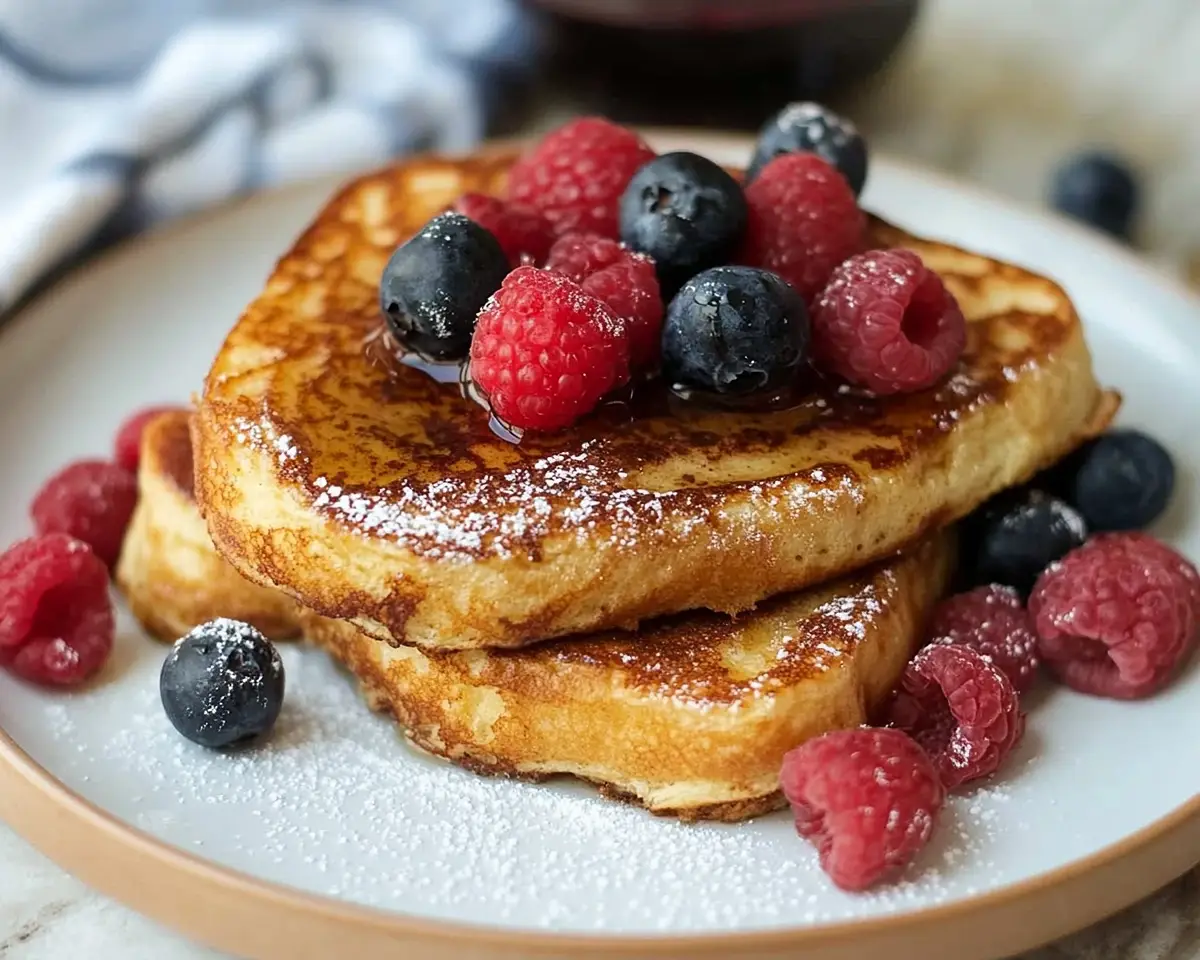
This sourdough French toast recipe turns tangy bread into golden, custardy breakfast magic. Ready in 20 minutes with simple ingredients you already have!
What Makes This Sourdough French Toast Special?
This sourdough French toast transforms thick-cut tangy bread slices into golden-crusted, custardy breakfast perfection using whole milk, brown sugar, vanilla extract, and warm cinnamon—creating that ideal contrast between crispy caramelized edges and a soft, pudding-like interior that’ll make you forget every other French toast you’ve ever tasted.
You know that feeling when you bite into perfectly cooked French toast and everything just clicks? That’s exactly what happens here. The sourdough’s natural tang plays beautifully against the sweet custard, while those thick slices soak up every drop of eggy goodness without falling apart.
I stumbled onto this combination almost by accident when I had leftover sourdough that was just starting to go stale. Turns out, day-old sourdough is practically begging to become French toast. If you’re into cozy breakfast vibes, you’ll definitely want to check out my blueberry pie smoothie protein for a complete morning spread.
Table of Contents
Why You’ll Love This Sourdough French Toast Recipe
French toast with sourdough bread brings something special to your breakfast table that regular bread just can’t match. Here’s why this version has become my Saturday morning staple.
The sourdough’s chewy texture and built-in tanginess create incredible depth. You’re not just getting sweet breakfast bread—you’re getting complexity, character, and that satisfying chew that keeps you coming back for another bite.
This recipe is ridiculously forgiving. Unlike delicate brioche that can turn soggy in seconds, sourdough holds its shape beautifully. According to King Arthur Baking, bread with a sturdy crumb structure absorbs custard more evenly, which explains why sourdough performs so well here.
It’s ready in about 20 minutes from start to finish. No overnight soaking, no complicated technique—just whisk, dip, cook, devour. Perfect for lazy weekend mornings when you want something special without the fuss.
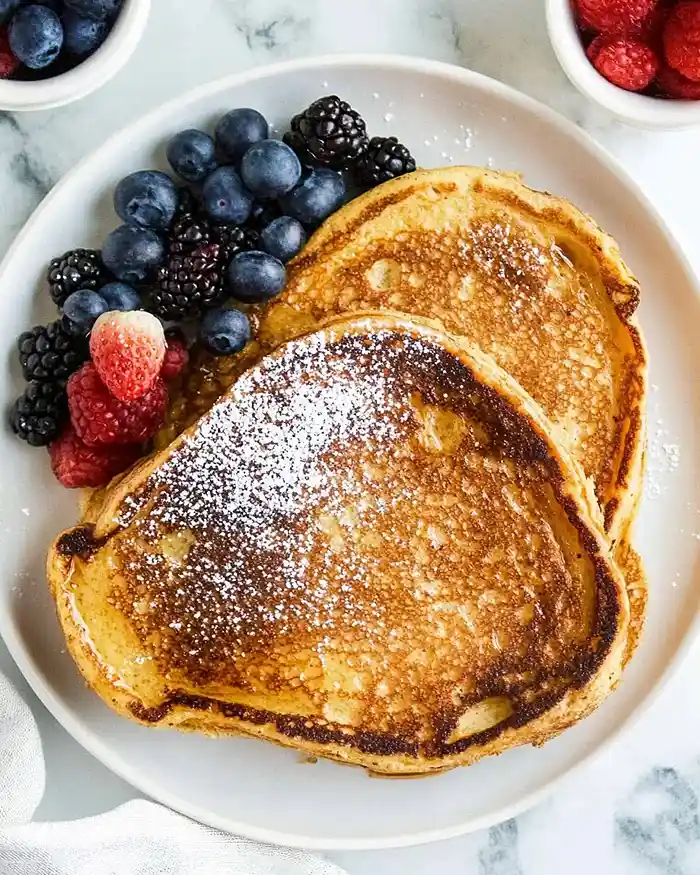
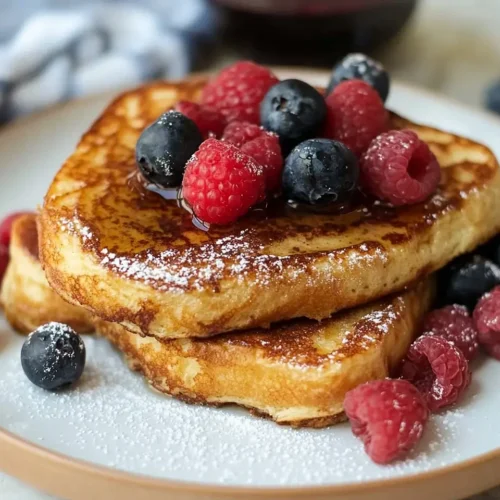
The Best Sourdough French Toast: Crispy Edges, Custardy Center Perfection
Equipment
- Shallow baking dish or pie pan
- Non-stick skillet or griddle
- Kitchen paper or paper towels
- Spatula
Ingredients
- 4 slices sourdough bread cut into 1 inch (2.5cm) thick slices and 6 inches (15cm) long
- 4 large eggs
- 1 cup whole milk 240 ml
- ¼ cup brown sugar 56 grams
- 3 teaspoons vanilla extract
- ½ teaspoon ground cinnamon
- 1 pinch salt
- ½ ounce unsalted butter 1 tablespoon / 15 grams
Instructions
- Preheat oven to 195°F (95°C). Have a baking sheet ready.
- Whisk together eggs, whole milk, brown sugar, vanilla extract, ground cinnamon and salt. There’s no need to incorporate air, simply make sure that there are no streaks of egg.
- Pour the egg mixture into a shallow pan that will snugly fit all the bread in one layer.
- Add the bread into the egg mixture and turn over until the bread has absorbed all the liquid.
- While the bread is soaking, heat a non-stick pan or skillet (hopefully one that holds two slices comfortably) on medium low.
- Add ½ of the butter and allow to foam up and almost brown then slide in two soaked slices of bread.
- Cook for about 3 minutes. After a minute or so check underneath that it is not browning too quickly.
- Flip the bread slices over and cook on the other side for 2 more minutes. Again, pay attention to the heat and adjust accordingly – if the french toast is cooking too quickly, reduce the heat; if it’s cooking too slowly, increase the heat.
- Once done, transfer the french toast to the baking sheet and into the oven to keep warm while you cook the remaining bread.
- Wipe out the pan with some kitchen paper, then add remaining butter and repeat heating the butter and cooking the french toast.
- Serve warm with butter, maple syrup, and fruit – or your choice of toppings.
Notes
Nutrition
Nutritional Peek
Here’s what you’re looking at per serving (without toppings):
| Nutrient | Per Serving |
|---|---|
| Calories | 285 |
| Protein | 12g |
| Carbs | 38g |
| Fat | 9g |
Ingredients for Sourdough Bread French Toast
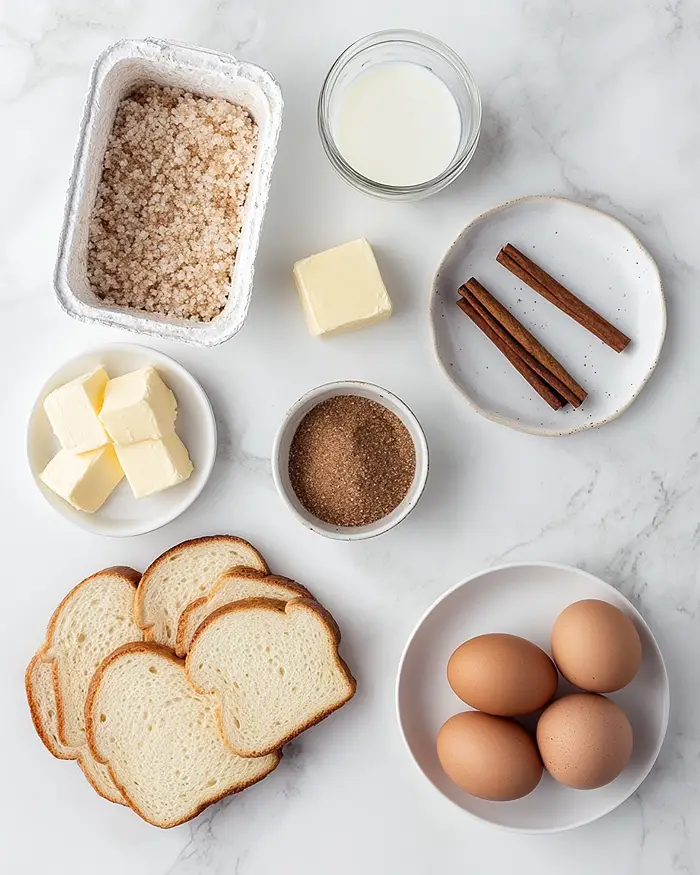
Making this sourdough french toast recipe starts with gathering simple ingredients you probably already have. The magic happens in how they come together.
| Amount | Ingredient |
|---|---|
| 4 slices | Sourdough bread (cut 1 inch/2.5cm thick, 6 inches/15cm long) |
| 4 large | Eggs |
| 1 cup (240 ml) | Whole milk |
| ¼ cup (56 grams) | Brown sugar |
| 3 teaspoons | Vanilla extract |
| ½ teaspoon | Ground cinnamon |
| Pinch | Salt |
| ½ ounce (1 tablespoon/15 grams) | Unsalted butter |
A quick note on the bread thickness: those chunky slices are key. Too thin and they’ll turn mushy; too thick and the center stays raw. Trust me, I learned this the hard way.
Equipment You’ll Need
Here’s what’ll make your life easier:
- Shallow baking dish or pie pan (for soaking the bread)
- Non-stick skillet or griddle (one that comfortably fits 2 slices)
- Whisk (for combining the custard)
- Baking sheet (to keep finished toast warm)
- Kitchen paper or paper towels (for wiping the pan between batches)
- Spatula (preferably thin and flexible for flipping)
Optional but lovely: a pastry brush for getting every last drop of custard onto the bread.
How to Make Sourdough French Toast Step by Step
Let’s walk through this sourdough french toast together, nice and easy.
Step 1: Prep your warming station. Preheat your oven to 195°F (95°C) and set out a baking sheet. This keeps your first batch warm and happy while you cook the rest—no sad, cold French toast here.
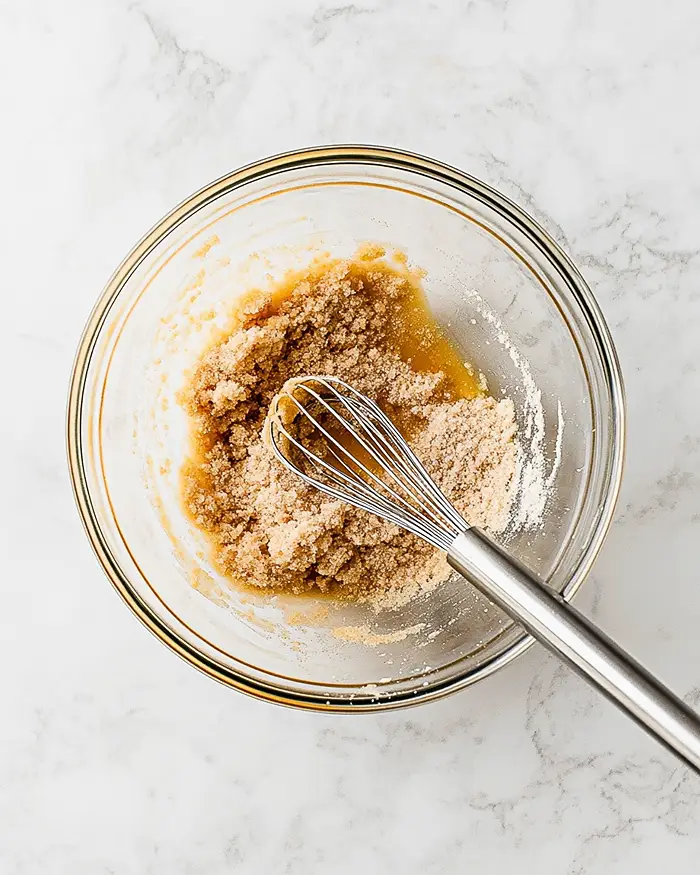
Step 2: Mix your custard. Whisk together the eggs, whole milk, brown sugar, vanilla extract, ground cinnamon, and salt in a bowl. You’re not making meringue, so don’t go crazy with the whisking. Just blend until there are no streaks of egg white floating around and everything looks uniform.
Step 3: Soak the bread. Pour your custard mixture into a shallow pan that’ll fit all four bread slices snugly in one layer. Add the sourdough slices and turn them over until they’ve absorbed all the liquid. The bread should feel heavy and thoroughly soaked but not falling apart—usually takes about 2-3 minutes of patient flipping.
Step 4: Heat your pan. While the bread soaks, set a non-stick pan or skillet over medium-low heat. This temperature is crucial—too hot and you’ll burn the outside before cooking the inside; too low and you’ll get pale, sad French toast.
Step 5: Cook the first batch. Add half the butter to your heated pan and let it foam up until it’s just starting to brown (that’s the moment when butter smells absolutely incredible). Slide in two soaked bread slices. Cook for about 3 minutes, but after a minute, peek underneath to make sure they’re browning evenly, not burning.
Step 6: Flip and finish. Turn the slices over and cook for 2 more minutes on the second side. Keep an eye on the heat—if they’re browning too fast, dial it down; too slow, bump it up. You want deep golden brown with crispy edges.
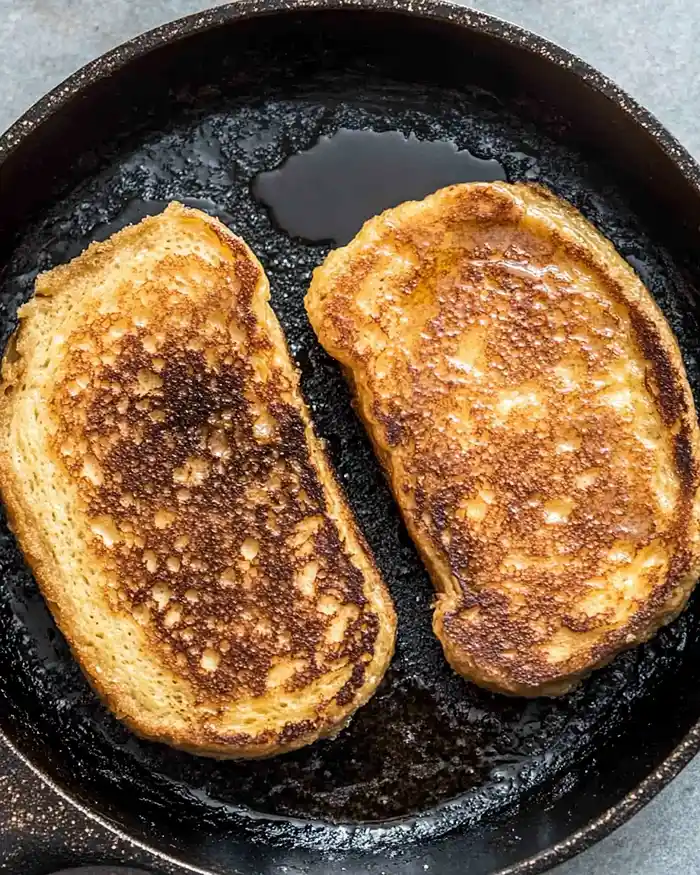
Step 7: Keep warm and repeat. Transfer the finished French toast to your baking sheet in the warm oven. Wipe out the pan with kitchen paper (this prevents burnt bits from ruining your next batch), add the remaining butter, and repeat the whole process with your last two slices.
Step 8: Serve immediately. Plate up your beautiful sourdough French toast while it’s hot. Top with butter, maple syrup, fresh fruit, or whatever makes your heart sing.
Pro Tips for Perfect French Toast Every Time
Starting with how to toast bread in oven techniques taught me something important: temperature control makes or breaks this recipe.
Use day-old or slightly stale bread whenever possible. Fresh bread gets too soggy and can fall apart during cooking. According to Serious Eats, bread that’s lost some moisture creates better structure because it has room to absorb the custard without becoming waterlogged—the cell structure stays intact rather than collapsing into mush.
Let your custard soak deeply but don’t rush it. I used to hurry this step and ended up with dry centers. Give each slice at least 30 seconds per side, turning and pressing gently so the liquid really penetrates.
Watch your pan temperature like a hawk. Medium-low feels painfully slow at first, but it’s the secret to cooking the egg custard all the way through without burning the surface. If you see dark brown spots forming within the first minute, your heat’s too high.
Don’t skip wiping the pan between batches. Those little bits of cooked egg and butter will burn and make your second batch taste bitter. A quick wipe with paper towels takes five seconds and makes a huge difference.
Troubleshooting Common French Toast Problems
Why is my French toast soggy instead of crispy? Your bread might be too fresh or your pan isn’t hot enough. Try using day-old bread and make sure you hear a gentle sizzle when the bread hits the butter. Also, don’t drown the bread—it should absorb the custard fully but still hold its shape.
What if my French toast is burning on the outside but raw inside? Lower your heat immediately. Medium-low is your friend here. If you’ve already got burnt toast, there’s no saving it, but for the next batch, reduce the temperature and give it an extra minute per side.
Can I make this if my sourdough is really fresh? Absolutely, though it’s trickier. You’ll need to soak for less time—maybe 15-20 seconds per side instead of 30. Fresh bread absorbs liquid faster and can turn to mush, so watch it carefully.
Why does my custard have scrambled egg bits? You whisked too vigorously or added the bread when the pan was too hot. For the custard, gentle whisking is plenty. For cooking, remember that medium-low heat and wait for the butter to just start browning before adding bread.
Creative Variations and Serving Ideas
This sourdough bread french toast is delicious as-is, but here’s where you can get playful.
Try a savory version by skipping the sugar and cinnamon, adding a pinch of black pepper and herbs instead, then topping with fried eggs and avocado. Sounds weird, tastes incredible.
Go full dessert mode with a dollop of whipped cream, fresh berries, and a drizzle of chocolate sauce. You’re basically eating cake for breakfast, and honestly, who’s going to stop you?
For a fall twist, swap the cinnamon for pumpkin pie spice and serve with candied pecans and apple compote. Pure cozy magic.
If you’re into stuffed French toast, slice your sourdough thicker (about 1.5 inches), cut a pocket in each piece, and fill with cream cheese and jam before soaking. It’s extra decadent and totally worth the effort.
How to Serve, Store, and Reheat Your French Toast
Serve your sourdough French toast immediately while it’s hot and the edges are still crispy. I love mine with salted butter melting on top, real maple syrup, and whatever fruit is in season—strawberries in summer, caramelized apples in fall.
For storage, let leftover French toast cool completely, then stack between layers of parchment paper in an airtight container. It’ll keep in the fridge for up to 3 days.
Reheating is simple: pop slices in a 350°F oven for about 5-7 minutes, or toast them briefly in a dry skillet over medium heat. The microwave works in a pinch but you’ll lose that lovely crispy texture. For frozen French toast, reheat straight from frozen in the oven at 375°F for 10-12 minutes.

No-Waste Kitchen Magic
Got leftover French toast that’s gone a bit stale? Cut it into cubes and make a quick bread pudding or a sweet breakfast panzanella with yogurt and fruit.
That extra custard mixture? Don’t toss it! Scramble it for eggy breakfast tacos or use it to make a small batch of baked custard in ramekins.
If your sourdough is getting seriously old and hard, cube it, toss with the custard mixture, and bake it as a French toast casserole. Nothing goes to waste in this kitchen.
Frequently Asked Questions
Can I freeze this sourdough french toast for meal prep?
Yes! Let the cooked French toast cool completely, then freeze in a single layer on a baking sheet before transferring to a freezer bag. It’ll keep for up to 2 months and reheats beautifully straight from frozen in the oven or toaster.
What’s the best substitute for whole milk in this recipe?
Half-and-half makes it richer and more custardy, while 2% milk works fine if that’s what you have. Non-dairy options like oat milk or almond milk work too, though they’ll give slightly less richness—add an extra tablespoon of butter to compensate.
Can I make sourdough french toast without eggs?
Traditional French toast really needs eggs for that custardy texture, but you can try a vegan version using mashed banana or flax eggs mixed with non-dairy milk. The texture will be different but still tasty.
Why did my french toast turn out tough and rubbery?
You probably overcooked it or used heat that was too high. The eggs overcook and turn rubbery when exposed to high heat for too long. Stick to medium-low heat and watch your cooking times carefully.
How do I know when the french toast is fully cooked inside?
The center should feel firm when you gently press it, and you shouldn’t see any liquid custard seeping out the sides. If you’re unsure, use an instant-read thermometer—the internal temperature should reach 160°F.
Can I use a different type of bread for this recipe?
Sure! Challah, brioche, or thick-cut white bread all work well. Each brings a different texture and flavor, though I think sourdough’s tanginess is unbeatable. Check out my ultimate brioche french toast recipe for a sweeter, more tender version.
The Perfect Weekend Breakfast Awaits
There you have it—the dreamiest sourdough French toast that’ll turn your weekend mornings into something special. Those crispy, caramelized edges, that soft custardy center, and that beautiful sourdough tang make every bite worth savoring.
I’d love to hear how yours turns out! Drop a comment below with your favorite toppings or any creative twists you tried. And if you snap a photo, tag me—I genuinely get excited seeing your kitchen victories.
Looking for more cozy breakfast inspiration? My easiest Instant Pot yogurt recipe pairs perfectly with this for a complete homemade breakfast spread.
Baked with love by Rebeccah Ellene.