New Orleans beignets recipe
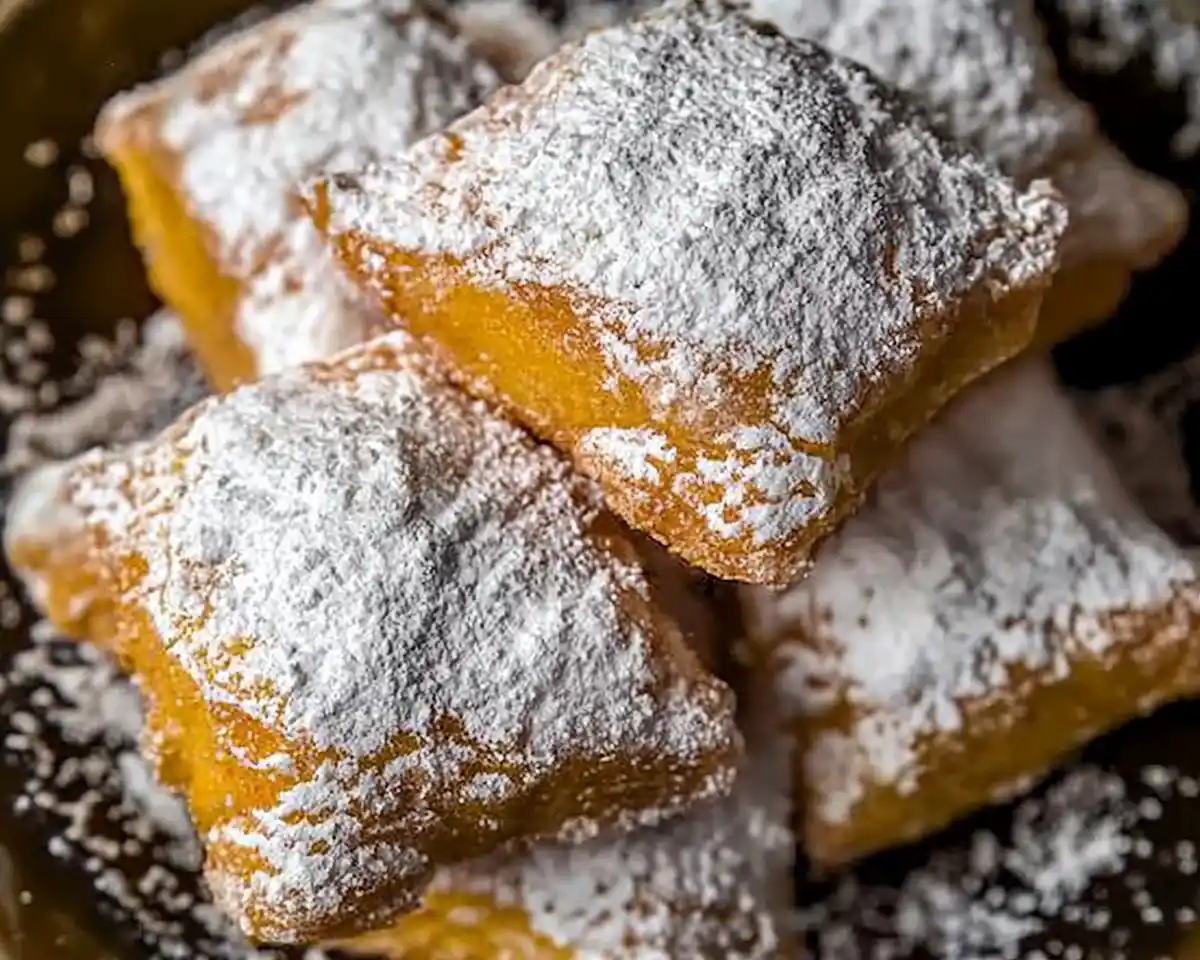
This New Orleans beignets recipe combines warm water, active dry yeast, bread flour, evaporated milk, and unsalted butter to create pillowy-soft fried dough that puffs into golden, crispy-edged squares, generously dusted with confectioners’ sugar for an authentic Cafe du Monde style experience with every addictive, melt-in-your-mouth bite.
The Magic Behind These Beignets
I’ll never forget my first bite of a beignet in the French Quarter—hot, puffy, and covered in so much powdered sugar that I looked like I’d been in a snowstorm. That moment changed everything for me.
These homemade beignets with powdered sugar capture that exact magic: tender, yeasty dough that fries up into golden clouds, with crispy edges and impossibly soft centers. If you’re craving more fried delights, you’ll absolutely love our crispy Italian deep-fried pasta dessert—it’s got that same irresistible golden crunch!
Table of Contents
Why You’ll Love These Classic French Quarter Beignets
These Cafe du Monde style beignets are about to become your new obsession, and here’s why:
They’re authentically New Orleans. This recipe uses bread flour instead of all-purpose, which gives you that characteristic chewy-yet-tender texture that makes real beignets so special. The evaporated milk adds richness that regular milk just can’t match.
The dough is surprisingly forgiving. I’ve made these countless times, and even on days when my kitchen feels more chaotic than a Bourbon Street parade, they still turn out beautifully. The overnight rest in the fridge actually makes the dough easier to handle.
They fry up in under a minute. Seriously! Once your oil hits that sweet spot of 360°F, these little squares puff up like magic. It’s the most satisfying thing to watch—they practically leap out of the oil.
They’re best shared (but nobody’s judging if you don’t). This recipe makes three dozen, which sounds like a lot until you realize how quickly they disappear. Pro tip: make a double batch and freeze half the dough for spontaneous beignet emergencies. Trust me, they happen.
Want another crowd-pleasing treat? Check out our sweetened condensed milk snowball cookies—they’ve got that same melt-in-your-mouth magic!
Nutritional Peek (Per Beignet)
Here’s a rough idea of what you’re getting in each heavenly bite:
| Nutrient | Amount |
|---|---|
| Calories | 185 kcal |
| Protein | 4g |
| Carbohydrates | 28g |
| Fat | 7g |
Remember, these are treats—enjoy them mindfully and savor every powdery bite!
What You’ll Need for Homemade Beignets with Powdered Sugar
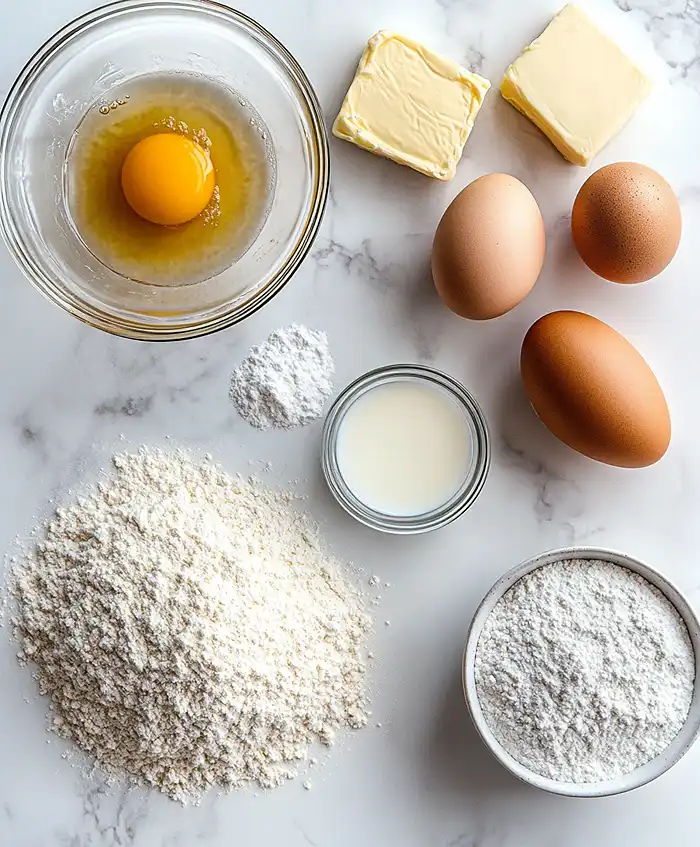
These classic French Quarter beignets start with simple ingredients that work together like a well-rehearsed jazz ensemble. Here’s your lineup:
| Amount | Ingredient |
|---|---|
| 1½ cups | warm water, between 110-115°F |
| ⅔ cup | granulated sugar |
| 2¼ tsp | active dry yeast (that’s one standard packet!) |
| 2 large | eggs, at room temperature—this really matters! |
| 1 cup | evaporated milk (don’t substitute regular milk here) |
| 2½ tsp | pure vanilla extract—I always use the real stuff |
| 7 cups | bread flour (higher protein = better puff) |
| 1½ tsp | salt |
| 5 tbsp | unsalted butter, at room temperature |
| 4 cups | peanut oil, for deep frying (vegetable oil works too) |
| 2 cups | confectioners’ sugar (buy extra—you’ll want it!) |
Yields: 3 dozen perfectly puffy beignets
Equipment You’ll Need
Essential tools:
- Stand mixer with paddle attachment (or a strong arm and wooden spoon)
- Medium mixing bowl for yeast mixture
- Large enameled cast-iron pan or deep fryer
- Candy or deep-fry thermometer (accuracy is key!)
- Rolling pin and lightly floured surface
- Sharp knife or pizza cutter for cutting squares
- Slotted spoon or spider strainer
- Large rimmed baking sheet lined with paper towels
- Fine-mesh sieve or sifter for that glorious powdered sugar dusting
Optional but helpful: Bench scraper for easy dough handling, plastic wrap for covering the bowl
How to Make This New Orleans Beignets Recipe
Let me walk you through this like we’re making them together in my kitchen. Don’t worry—this recipe is more forgiving than you’d think!
Step 1: Wake up the yeast
In a medium bowl, combine the warm water (110-115°F is your sweet spot—too hot and you’ll kill the yeast, too cold and nothing happens), granulated sugar, and active dry yeast. Whisk everything together until the sugar and yeast dissolve completely. Set this aside for about 10 minutes.
You’re looking for the mixture to get foamy and bubbly on top—that’s how you know your yeast is alive and ready to work its magic. If nothing happens after 15 minutes, your yeast might be expired or your water was the wrong temperature. Start over with fresh yeast.
Step 2: Build your dough base
In your stand mixer bowl fitted with the paddle attachment, beat the room-temperature eggs until they’re smooth and pale yellow with no visible streaks.
Add the pure vanilla extract and evaporated milk, beating until fully incorporated. Gradually add 3½ cups of bread flour, beating on medium speed until the mixture is smooth and thick—you’ll notice it starts to look like a very thick pancake batter at this point.
Step 3: Incorporate the yeast (carefully!)
Turn your mixer to low speed—this is important. Slowly pour in that foamy yeast mixture in a steady stream. If you dump it in too quickly, it’ll splash everywhere and make a mess (learned that one the hard way). Beat until everything’s smooth and well combined. The batter should look slightly thinner now and have a pleasant yeasty aroma.
Step 4: Add butter and remaining flour
Add the room-temperature unsalted butter in tablespoon-sized pieces, beating until each piece disappears before adding the next.
Now add the remaining 3½ cups of bread flour along with the salt. Beat on medium speed for about 2 minutes until the dough is smooth, cohesive, and pulls away from the sides of the bowl slightly. It should still be soft and slightly sticky—resist the urge to add more flour.
Step 5: The all-important rest
Cover the bowl tightly with plastic wrap, making sure it’s sealed well to prevent the dough from drying out. Refrigerate for at least 2 hours, though honestly, overnight is even better. This cold rest does two things: it develops flavor and makes the dough much easier to roll out. I usually make mine in the evening and fry them up for breakfast the next morning.
Step 6: Prep your frying station
Line a large rimmed baking sheet with three layers of paper towels—yes, three. You’ll need them to absorb all that oil. Set up your frying station with everything within reach: slotted spoon, thermometer, and that baking sheet.
In your large enameled cast-iron pan, heat 4 inches of peanut oil to exactly 360°F. This temperature is crucial—too low and they’ll be greasy, too high and they’ll brown before cooking through.
Step 7: Roll and cut
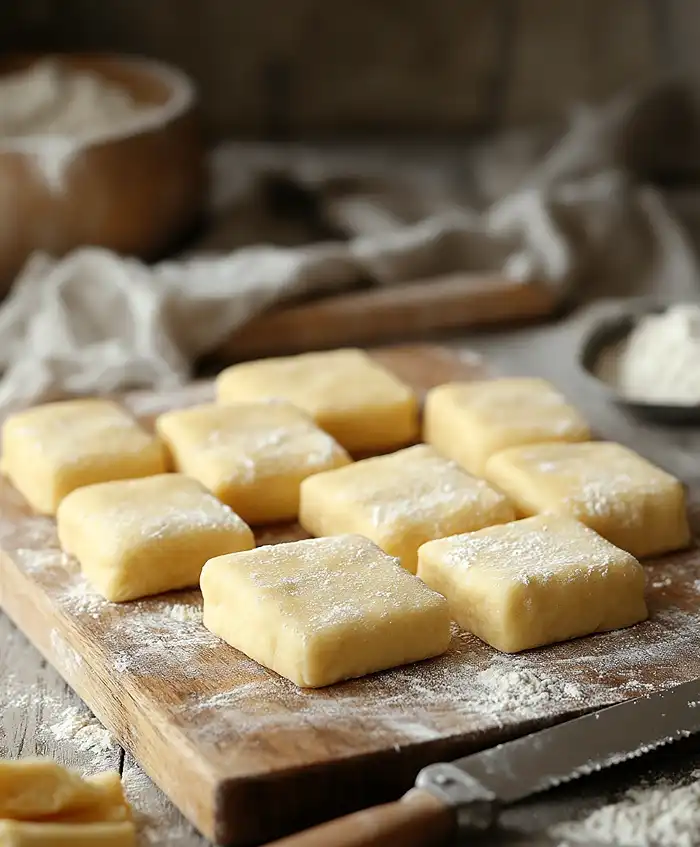
Remove your chilled dough from the refrigerator—it should feel firm and much less sticky now. On a lightly floured surface (emphasis on lightly—too much flour makes tough beignets), roll the dough out into a ¼-inch thick rectangle. Use a sharp knife or pizza cutter to cut 2½-inch squares. Don’t worry about perfection—slightly wonky squares still taste amazing.
Step 8: Fry to golden perfection
Working in batches of 4-5 squares (don’t overcrowd the pan or the temperature will drop), carefully slide the dough into the hot oil. Watch them transform—they’ll puff up almost immediately, which is the most satisfying thing ever.
Fry for about 45 seconds, then flip and fry for another 15 seconds until both sides are deep golden brown. Use your slotted spoon to transfer them to the prepared baking sheet. Repeat with remaining dough, making sure the oil returns to 360°F between batches.
Step 9: The grand finale
While the beignets are still warm, generously dust them with confectioners’ sugar using a fine-mesh sieve—and I mean generously. Don’t be shy here. The traditional serving is so covered in powdered sugar that you can barely see the beignet underneath. Serve immediately while they’re hot, puffy, and at their absolute best.
Pro Tips for Perfect Cafe du Monde Style Beignets
After making these classic French Quarter beignets more times than I can count, here’s what I’ve learned:
Temperature is everything. Room-temperature eggs and butter incorporate more evenly into the dough, creating a stable emulsion that results in better texture.
According to Serious Eats, a temperature difference greater than 10°C between ingredients can cause batters to break, resulting in a grainy, uneven texture. Cold eggs straight from the fridge will seize up your butter and create lumps. Warm them by placing them in a bowl of warm water for 5 minutes.
Don’t skip the overnight rest. Yes, 2 hours is the minimum, but 8-24 hours is ideal. The cold fermentation develops deeper, more complex flavors and makes the dough so much easier to handle. Plus, morning beignets made from dough you prepped the night before? That’s living your best life.
Maintain that oil temperature. Get yourself a good thermometer and actually use it. When the oil drops below 350°F, your beignets will absorb more oil and turn greasy. Above 370°F and they’ll brown too quickly on the outside while staying raw inside. I clip my thermometer to the side of the pan and check it between every batch.
Cut clean, confident squares. Use a sharp knife or pizza cutter and make decisive cuts—don’t saw back and forth. Sawing compresses the edges and prevents them from puffing properly. Also, avoid re-rolling scraps more than once; the dough gets tough with too much handling.
The first batch is your test run. Don’t be discouraged if your first few beignets aren’t perfect. Use them to dial in your oil temperature and timing. By the second batch, you’ll have it down to a science.
Troubleshooting Common Beignet Problems
Why aren’t my beignets puffing up?
This usually comes down to one of three things: your oil isn’t hot enough (it needs to be 360°F), your yeast was dead or the water was too hot when you activated it, or you’ve added too much flour during rolling. Make sure to test your yeast first—it should foam up nicely within 10 minutes.
What if my dough is too sticky to roll?
Pop it back in the fridge for another 30 minutes. The cold makes it much more manageable. You can also dust your work surface and rolling pin with a tiny bit more flour, but go easy—too much will make your beignets tough instead of tender.
Why are my beignets greasy?
Your oil temperature dropped too low. This happens when you add too many pieces at once or don’t wait for the temperature to recover between batches. Fry in smaller batches and give that oil time to heat back up to 360°F. Also make sure you’re using enough oil—4 inches deep is important for proper heat circulation.
Can I use all-purpose flour instead of bread flour?
You can, but your beignets won’t have quite the same chewy-tender texture that makes authentic New Orleans beignets special. Bread flour has more protein, which creates better structure and that characteristic chew. If you must substitute, use all-purpose, but know they’ll be slightly softer and more cake-like.
Why did my beignets turn out dense instead of light?
You probably overworked the dough or added too much flour. Beignet dough should be soft and just slightly tacky. If you knead it too much or add excess flour during rolling, you’ll develop too much gluten and end up with dense, bread-like results. Handle gently and use that refrigerator time to your advantage—cold dough handles better without extra flour.
Creative Variations & Twists
Once you’ve mastered the classic New Orleans beignets recipe, here are some fun ways to mix things up:
Filled beignets: Use a piping bag to inject chocolate ganache, vanilla pastry cream, or fruit preserves into the center after frying. Raspberry and Nutella are my personal favorites. Just make sure they’re completely cool first or your filling will turn into molten lava.
Cinnamon-sugar twist: Mix 1 cup granulated sugar with 2 tablespoons ground cinnamon and toss your hot beignets in this instead of powdered sugar. It’s like a French Quarter churro situation—absolutely delicious.
Chocolate-dusted version: Add 2 tablespoons of cocoa powder to your confectioners’ sugar for chocolate-dusted beignets. They’re extra decadent and pair beautifully with coffee.
Savory beignets: Skip the vanilla and sugar in the dough, add ½ teaspoon garlic powder and some grated Parmesan. Serve these warm with marinara for dipping. They’re perfect for game day!
Café au lait glaze: Mix 2 cups powdered sugar with 3 tablespoons strong coffee and 1 tablespoon milk to make a glaze instead of dusting with dry sugar. Dip warm beignets and let them set on a wire rack. This is next-level good.
How to Serve, Store & Reheat
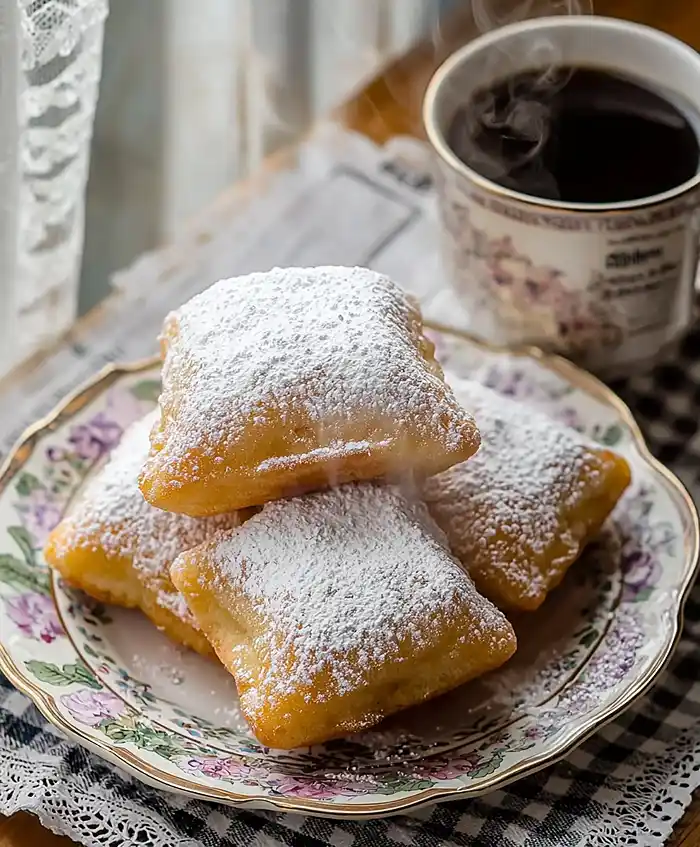
Serving suggestions
These homemade beignets with powdered sugar are best served immediately while they’re hot, puffy, and at peak deliciousness. Pile them on a platter and watch them disappear. Traditionally, they’re served with strong coffee or café au lait, and honestly, that combination is pure magic. The bitter coffee cuts through the sweet, powdery goodness perfectly.
Storage tips
Let’s be real—beignets are best eaten fresh. But if you have leftovers (rare, but it happens), store them in an airtight container at room temperature for up to 1 day. They’ll lose some of their puff and crispness, but they’re still tasty. Don’t refrigerate them as this makes them tough and chewy in all the wrong ways.
Make-ahead magic
Here’s my favorite trick: you can freeze the unfried dough! After cutting your squares, place them on a parchment-lined baking sheet and freeze until solid, then transfer to a freezer bag. They’ll keep for up to 3 months. Fry them straight from frozen—no thawing needed. Just add an extra 30 seconds to the cooking time. This way you can have fresh beignets whenever the craving hits.
Reheating instructions
If you need to reheat beignets, your best bet is a 350°F oven for about 5 minutes. This crisps them up nicely without making them greasy. The microwave will make them sad and soggy—don’t do it. You can also give them a quick 10-second refresh in the air fryer at 375°F if you have one.
No-Waste Kitchen Magic
I hate wasting food, so here are some creative ways to use up those inevitable odds and ends:
- Day-old beignets make incredible bread pudding. Tear them into chunks, soak in a custard mixture, and bake. The powdered sugar adds extra sweetness, so reduce the sugar in your custard recipe.
- Stale beignets can be pulsed in a food processor to make sweet breadcrumbs for coating fried ice cream or topping fruit crisps.
- Those dough scraps after cutting squares? Press them together gently (don’t knead), re-roll once, and cut more squares. They won’t puff quite as impressively, but they’ll still taste great. I usually fry these separately and snack on them while I’m cooking the pretty ones.
- Used frying oil can be cooled, strained through cheesecloth, and stored in a sealed container to reuse for other deep-frying projects within a month. Just smell it first—if it smells off, toss it.
Frequently Asked Questions
Can I make this New Orleans beignets recipe ahead of time?
Absolutely! In fact, making the dough ahead is ideal. Prepare it through step 5, refrigerate for up to 24 hours, then roll, cut, and fry when you’re ready. You can also freeze cut, unfried squares for up to 3 months and fry them directly from frozen—just add 30 seconds to the cooking time.
What’s the best oil temperature for frying beignets?
360°F is the magic number. Too low and they’ll be greasy; too high and they’ll brown before cooking through. Use a reliable thermometer and monitor it constantly, letting the oil recover to 360°F between batches. This is the single most important factor for perfect beignets.
Can I use a different type of flour for this recipe?
While you can substitute all-purpose flour, bread flour is really what gives these classic French Quarter beignets their authentic texture—slightly chewy on the outside, tender within. The higher protein content in bread flour creates better structure and that signature puff. If you must use all-purpose, the results will be softer and more cake-like.
Can I bake these instead of frying them?
Unfortunately, no. Beignets get their signature puff, crispy exterior, and tender interior from deep frying in hot oil. The rapid heat creates steam that puffs them up while crisping the outside. Baking will give you something more like a dinner roll than a beignet. If you’re looking for a baked option, I’d recommend trying a different pastry altogether.
Final Thoughts
There’s something absolutely magical about making your own New Orleans beignets at home. That moment when you pull them from the hot oil, watching them puff up golden and beautiful, then covering them in a snowstorm of powdered sugar—it never gets old. Whether you’re recreating a memory from the French Quarter or experiencing beignets for the first time, this recipe brings a little piece of New Orleans magic right into your kitchen.
I’d love to hear how your beignets turn out! Drop a comment below, snap a photo of your powdered-sugar-covered masterpiece, and share your experience.
Happy frying, and may your kitchen always smell like warm beignets and possibility!

New Orleans Beignets
Equipment
- Stand mixer with paddle attachment
- medium mixing bowl
- Large enameled cast-iron pan or deep fryer
- Candy or deep-fry thermometer
- Rolling Pin
- Sharp knife or pizza cutter
- Slotted spoon or spider strainer
- Large rimmed baking sheet
- Paper towels
- Fine-mesh sieve or sifter
- Bench scraper
Ingredients
For the Dough
- 1.5 cups warm water between 110-115°F
- 0.67 cup granulated sugar
- 2.25 teaspoons active dry yeast one standard packet
- 2 large eggs at room temperature
- 1 cup evaporated milk
- 2.5 teaspoons pure vanilla extract
- 7 cups bread flour
- 1.5 teaspoons salt
- 5 tablespoons unsalted butter at room temperature
For Frying and Serving
- 4 cups peanut oil for deep frying, vegetable oil works too
- 2 cups confectioners’ sugar for dusting
Instructions
- In a medium bowl, combine the warm water (110-115°F is your sweet spot—too hot and you’ll kill the yeast, too cold and nothing happens), granulated sugar, and active dry yeast. Whisk everything together until the sugar and yeast dissolve completely. Set this aside for about 10 minutes. You’re looking for the mixture to get foamy and bubbly on top—that’s how you know your yeast is alive and ready to work its magic. If nothing happens after 15 minutes, your yeast might be expired or your water was the wrong temperature. Start over with fresh yeast.
- In your stand mixer bowl fitted with the paddle attachment, beat the room-temperature eggs until they’re smooth and pale yellow with no visible streaks. Add the pure vanilla extract and evaporated milk, beating until fully incorporated. Gradually add 3½ cups of bread flour, beating on medium speed until the mixture is smooth and thick—you’ll notice it starts to look like a very thick pancake batter at this point.
- Turn your mixer to low speed—this is important. Slowly pour in that foamy yeast mixture in a steady stream. If you dump it in too quickly, it’ll splash everywhere and make a mess (learned that one the hard way). Beat until everything’s smooth and well combined. The batter should look slightly thinner now and have a pleasant yeasty aroma.
- Add the room-temperature unsalted butter in tablespoon-sized pieces, beating until each piece disappears before adding the next. Now add the remaining 3½ cups of bread flour along with the salt. Beat on medium speed for about 2 minutes until the dough is smooth, cohesive, and pulls away from the sides of the bowl slightly. It should still be soft and slightly sticky—resist the urge to add more flour.
- Cover the bowl tightly with plastic wrap, making sure it’s sealed well to prevent the dough from drying out. Refrigerate for at least 2 hours, though honestly, overnight is even better. This cold rest does two things: it develops flavor and makes the dough much easier to roll out. I usually make mine in the evening and fry them up for breakfast the next morning.
- Line a large rimmed baking sheet with three layers of paper towels—yes, three. You’ll need them to absorb all that oil. Set up your frying station with everything within reach: slotted spoon, thermometer, and that baking sheet. In your large enameled cast-iron pan, heat 4 inches of peanut oil to exactly 360°F. This temperature is crucial—too low and they’ll be greasy, too high and they’ll brown before cooking through.
- Remove your chilled dough from the refrigerator—it should feel firm and much less sticky now. On a lightly floured surface (emphasis on lightly—too much flour makes tough beignets), roll the dough out into a ¼-inch thick rectangle. Use a sharp knife or pizza cutter to cut 2½-inch squares. Don’t worry about perfection—slightly wonky squares still taste amazing.
- Working in batches of 4-5 squares (don’t overcrowd the pan or the temperature will drop), carefully slide the dough into the hot oil. Watch them transform—they’ll puff up almost immediately, which is the most satisfying thing ever. Fry for about 45 seconds, then flip and fry for another 15 seconds until both sides are deep golden brown. Use your slotted spoon to transfer them to the prepared baking sheet. Repeat with remaining dough, making sure the oil returns to 360°F between batches.
- While the beignets are still warm, generously dust them with confectioners’ sugar using a fine-mesh sieve—and I mean generously. Don’t be shy here. The traditional serving is so covered in powdered sugar that you can barely see the beignet underneath. Serve immediately while they’re hot, puffy, and at their absolute best.