Crispy Italian Deep Fried Pasta Dessert
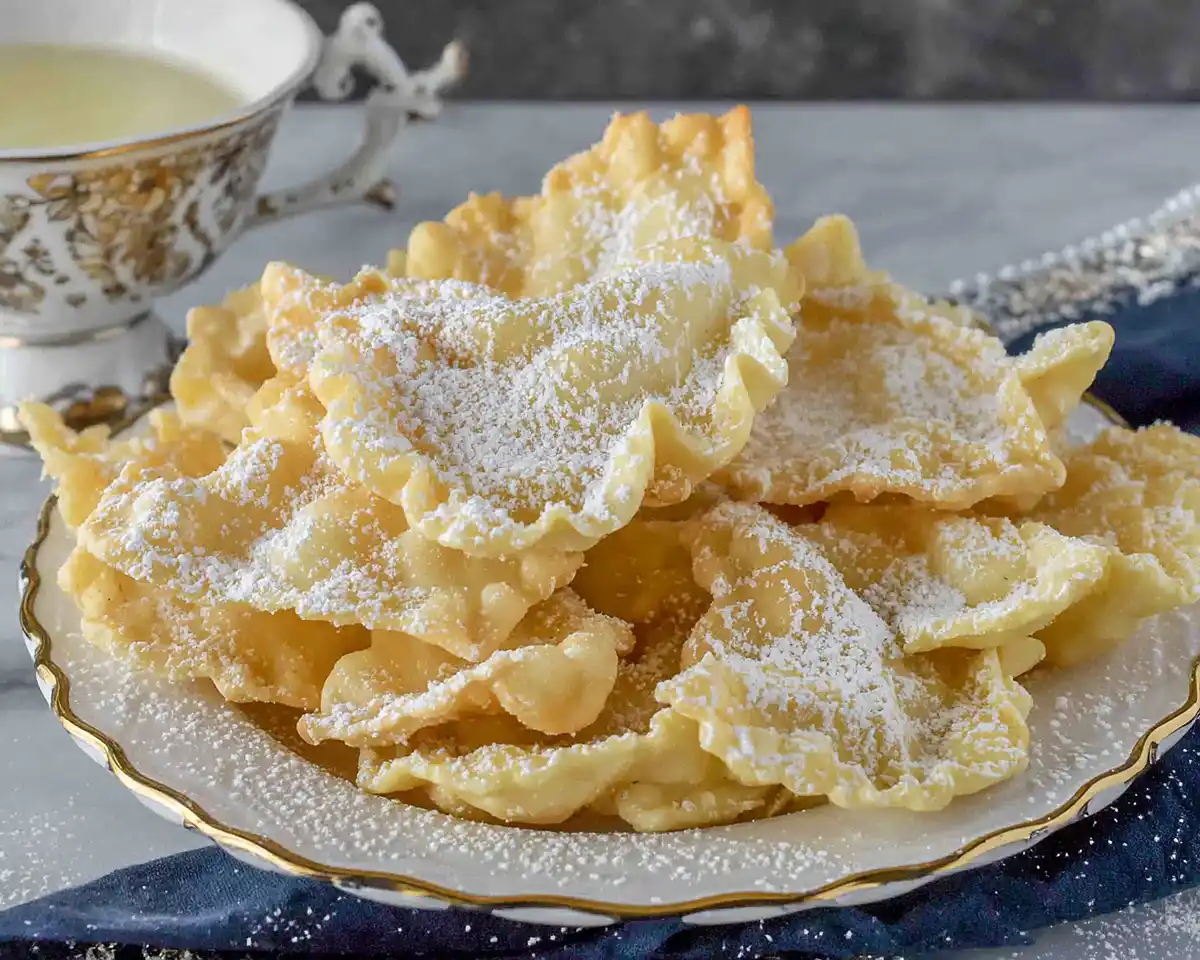
Discover authentic Italian Deep Fried Pasta Dessert ribbons dusted with powdered sugar. This sweet fried pasta dessert recipe yields 100 crispy, golden treats perfect for any celebration.
What Makes This Italian Deep Fried Pasta Dessert So Special?
This italian deep fried pasta dessert combines simple pantry staples—all-purpose flour, eggs, butter, brandy, and vanilla extract—into delicate, paper-thin ribbons that fry up golden and crispy in hot peanut oil, then get generously dusted with powdered sugar for an irresistibly sweet, crunchy treat with a hint of boozy warmth.
These Italian crostoli shatter perfectly with each bite, delivering that signature airy texture and subtle vanilla-brandy flavor that’s been gracing Italian carnival celebrations for centuries.
I first tasted crostoli at my friend Maria’s Carnevale party, and honestly? I couldn’t stop eating them. These crispy, twisted beauties are Italy’s answer to carnival treats, and they’re dangerously addictive. The way they practically dissolve on your tongue, leaving behind just a whisper of sweetness and that lovely brandy warmth—it’s pure magic.
Table of Contents
Why You’ll Love This Italian Crostoli Recipe
This fried pasta dessert italian style treat checks every box for the perfect crowd-pleaser. They’re incredibly light and crispy, not greasy like some fried desserts can be. You can make a massive batch—this recipe yields 100 pieces—so they’re perfect for parties, holidays, or just having around when you need something sweet.
I love how forgiving the dough is. Even if you’ve never used a pasta machine before, you’ll get the hang of it by your third ribbon. The dough rests for 30 minutes, which gives you time to clean up or pour yourself a glass of wine (just save some brandy for the recipe!).
Nutritional Peek
| Per Serving (1 piece) | Amount |
|---|---|
| Calories | 35 |
| Protein | 0.8g |
| Carbohydrates | 4g |
| Fat | 1.5g |
Ingredients for Your Sweet Fried Pasta Dessert
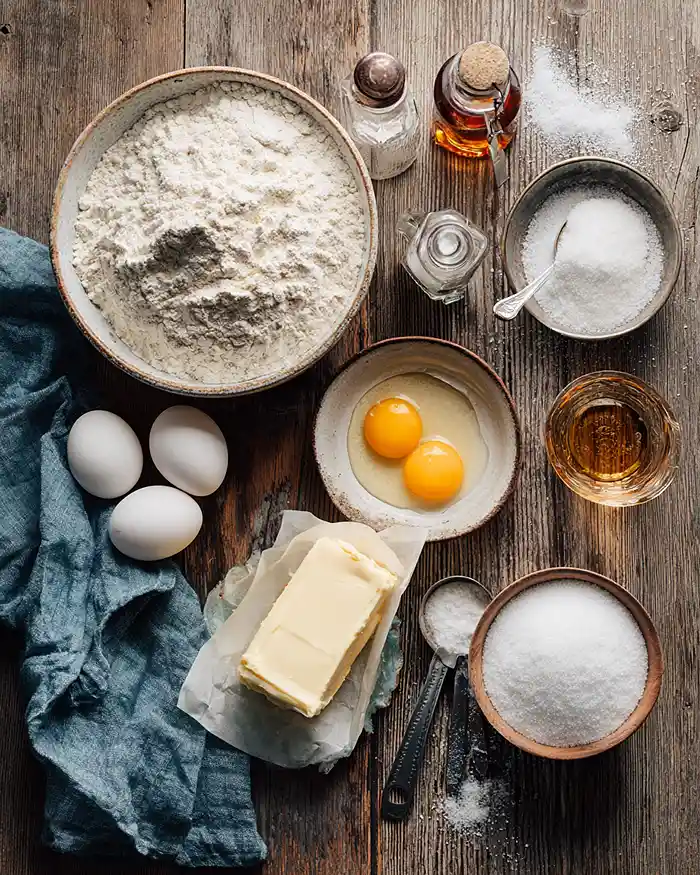
Ready to make authentic italian fried pasta dessert recipe magic happen? Here’s everything you need, and trust me, you probably have most of this in your pantry already.
| Amount | Ingredient |
|---|---|
| 2 cups (250 grams) | Plain all-purpose flour (See Note 1) |
| 2 whole | Eggs |
| 1 | Egg yolk |
| 2 tablespoons | Granulated white sugar |
| 2 tablespoons (1 oz/30g) | Butter, slightly softened |
| 1 tablespoon (15 mls) | Brandy (See Note 2) |
| 1 teaspoon | Vanilla extract—I always use pure, never imitation |
| Pinch | Salt |
| 2 cups | Peanut oil for frying (See Note 3) |
| As needed | Powdered sugar for dusting—be generous! |
Note 1: All-purpose flour works beautifully here. I’ve tried bread flour once, and they came out a bit chewier than I wanted, so stick with all-purpose.
Note 2: The brandy adds a subtle warmth and helps create that tender texture. You can substitute with grappa or even rum if that’s what you have. Check out our fluffy pandan cake recipe for another dessert that benefits from a touch of spirits.
Note 3: Peanut oil has a high smoke point, making it ideal for frying. You can also use vegetable or canola oil.
Equipment You’ll Need
Essential:
- Clean work surface or stand mixer with paddle and dough hook attachments
- Pasta machine (manual or KitchenAid attachment)
- Heavy, high-sided frying pan or deep fryer
- Instant-read thermometer (game-changer for perfect frying!)
- Two forks for turning
- Paper towels or wire rack for draining
Optional but helpful:
- Pastry wheel for cutting (makes pretty fluted edges)
- Spider strainer (easier than forks, honestly)
How to Make This Italian Deep Fried Pasta Dessert
Let’s get into making these gorgeous crostoli! I’m giving you both hand-mixing and stand mixer methods because everyone’s kitchen setup is different.
Making the Crostoli Dough—Hand Mixing Method
- Mound your all-purpose flour (2 cups/250 grams) directly onto a clean work surface and create a well in the center, like a little flour volcano. This classic Italian technique always makes me feel like a real pasta maker.
- Crack your eggs (2 whole eggs plus 1 egg yolk) into the well, then add the granulated white sugar (2 tablespoons), softened butter (2 tablespoons), brandy (1 tablespoon), vanilla extract (1 teaspoon), and a pinch of salt. The well keeps everything contained until you’re ready to mix.
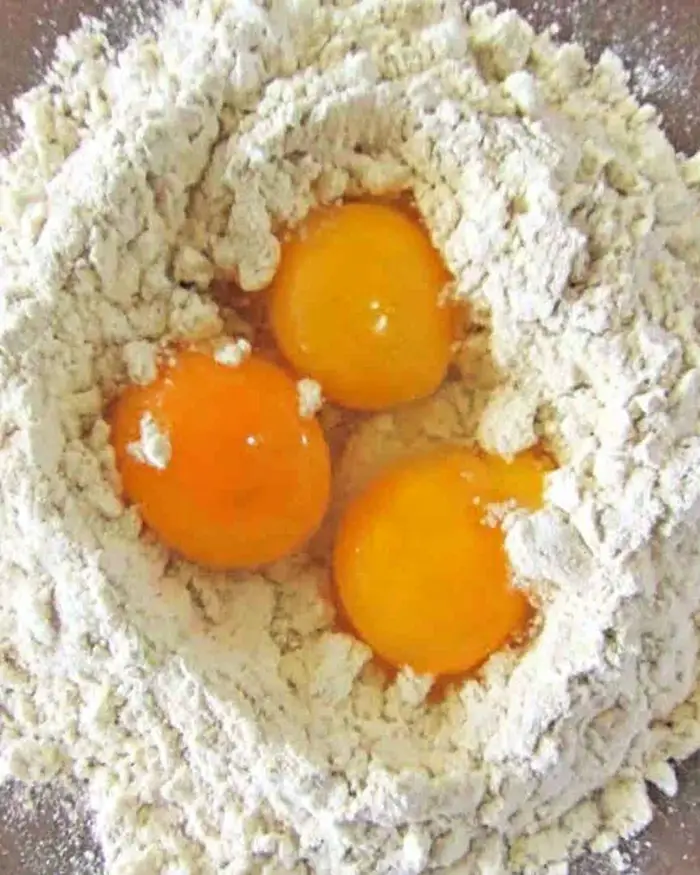
- Using your fingertips or a fork, gradually whisk the wet ingredients together, slowly incorporating flour from the inner walls of the well until everything starts coming together into a shaggy dough. If it feels too dry or crumbly, add another splash of brandy—dough should form a cohesive ball without being sticky.
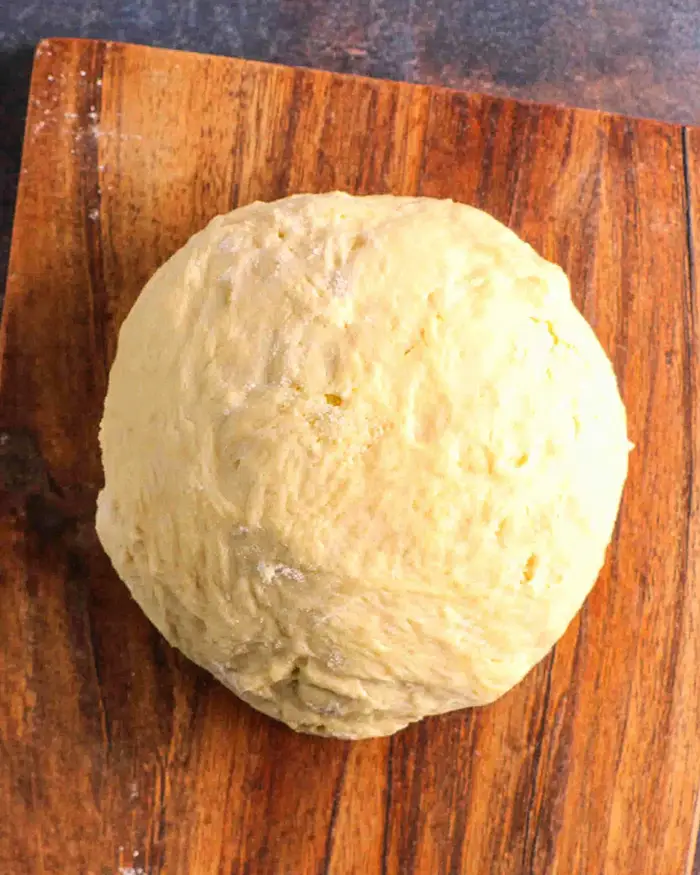
- Knead the dough for about 5 minutes until it transforms into a smooth, elastic ball that springs back slightly when you poke it. Your forearms might get a little workout, but that’s how you know you’re doing it right! Wrap in plastic wrap and let it rest for 30 minutes at room temperature.
Making the Crostoli Dough—Stand Mixer Method
- Add your all-purpose flour (2 cups/250 grams) to your stand mixer bowl and attach the paddle attachment. This method is perfect if you’re making multiple batches or just want to save your arms.
- Add the eggs (2 whole plus 1 yolk), softened butter (2 tablespoons), brandy (1 tablespoon), granulated white sugar (2 tablespoons), vanilla extract (1 teaspoon), and salt. Mix on low speed until everything comes together into a rough dough—this takes about 1-2 minutes.
- Switch to the dough hook attachment and knead on medium-low speed for about 5 minutes until the dough is smooth, elastic, and pulls cleanly away from the bowl sides. Wrap and rest for 30 minutes.
Rolling and Preparing Crostoli for Frying
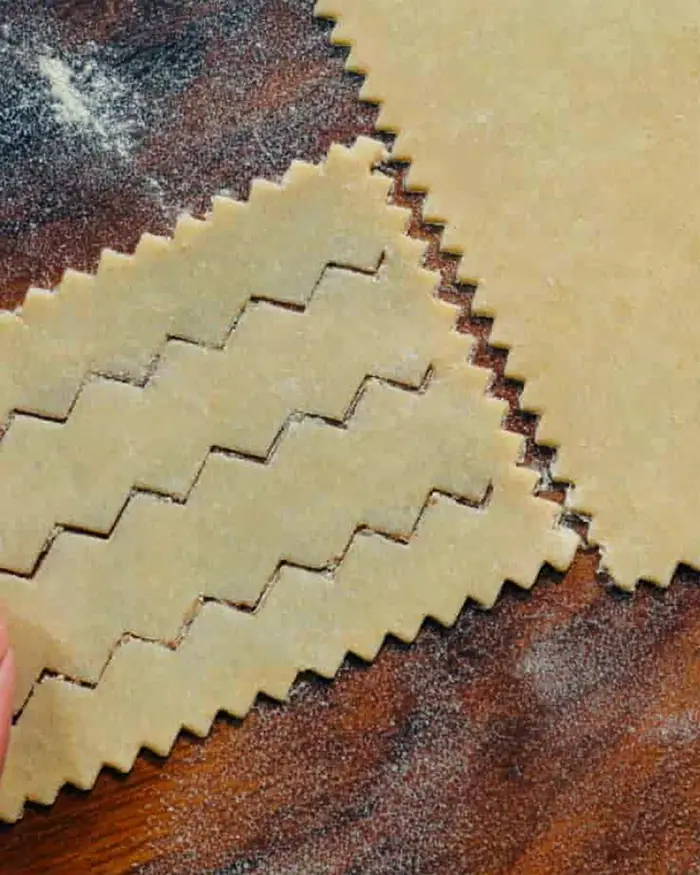
- Cut a small piece (about the size of a golf ball) from your rested “mother” dough, keeping the rest covered so it doesn’t dry out. Flatten this smaller piece slightly with your palm—you want it thin enough to fit through your pasta machine’s widest setting.
- Pass the dough through your pasta machine on the widest setting, then fold it in half and pass it through again. Repeat this folding and rolling process 5-6 times until the dough becomes silky smooth and develops that professional pasta texture (this builds gluten structure for strength).
- Now start reducing the thickness settings, one notch at a time, passing the dough through each progressively thinner setting once. Dust lightly with flour if the dough starts sticking—but don’t go overboard or your crostoli will taste floury.
- When you reach the finest setting on your pasta machine, pass the dough through twice (KitchenAid pasta roller users, this is especially important). The dough should be thin enough that you can almost see through it, like delicate parchment paper.
- Lay your thin pasta sheet on your work surface and cut it lengthwise into strips about 2 inches (5 cm) wide and 4-6 inches (10-15 cm) long. Make a small 1-inch slit in the center of each strip, then gently pull one end through the slit to create that classic twisted shape (it’s easier than it sounds, I promise).
Frying Your Crostoli to Golden Perfection
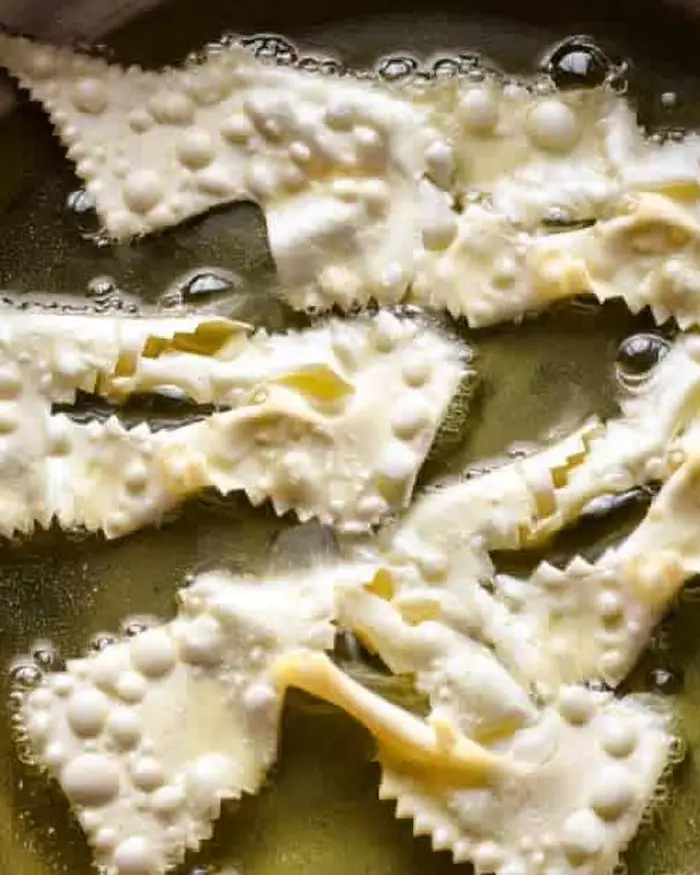
- Heat your peanut oil (2 cups) in a heavy, high-sided frying pan over medium-high heat until it reaches 350°F (180°C) on your instant-read thermometer. This temperature is crucial—too hot and they’ll burn before cooking through, too cool and they’ll absorb oil like sponges.
- Carefully slip 3-4 crostoli into the hot oil (don’t overcrowd, or the temperature will drop). They’ll immediately start bubbling and puffing up—this is exactly what you want to see!
- Work quickly because these cook fast—about 30 seconds per side, sometimes less. Use two forks to gently turn them once lots of bubbles have formed and the underside turns pale golden (if they’re dark brown, your oil is too hot). They should look like pale honey when done, not deep caramel.
- Remove the fried crostoli with your forks or spider strainer and drain on paper towels or a wire rack. They’ll feel slightly soft when hot but will crisp up beautifully as they cool—don’t panic if they seem tender at first!
- Once completely cooled, dust generously with powdered sugar using a fine-mesh sieve. I mean really generously—traditional crostoli should look like they’ve been caught in a snowstorm.
Pro Tips for Perfect Italian Fried Pasta Dessert
Starting with your crostoli recipe setup will make everything smoother. Room-temperature eggs and butter incorporate more evenly, creating a stable emulsion in your dough. According to Serious Eats, maintaining consistent oil temperature is critical for achieving the right texture—temperature drops when you add cold food cause oil absorption rather than surface crisping.
The resting period isn’t optional. Those 30 minutes allow the gluten to relax, making the dough much easier to roll paper-thin without it snapping back. I’ve tried rushing this step, and you end up wrestling with elastic dough that refuses to stay thin.
Your pasta machine is your best friend here. While you could roll these by hand with a rolling pin, getting them thin enough is genuinely challenging. The machine ensures uniform thickness, which means even cooking.
Test your oil temperature with one piece first. If it browns in under 20 seconds, your oil’s too hot. If it takes more than 45 seconds to turn golden, it’s too cool. That first piece is your sacrifice to the crostoli gods—use it to dial in the perfect temperature.
What If Things Don’t Go Perfectly?
Why is my dough too dry and crumbly? No worries—just add brandy one teaspoon at a time until it comes together. Different flours absorb liquid differently, and humidity plays a role too.
What if my crostoli are greasy instead of crispy? Your oil temperature dropped too low. Make sure you’re frying in small batches and letting the oil return to 350°F between batches. Also, drain them immediately on paper towels.
My crostoli are too brown or burnt—what happened? Oil was too hot. Reduce your heat and test the temperature with a thermometer. They should fry to pale gold, not deep brown.
The dough keeps springing back when I roll it—help! It needs more resting time. Cover it with a damp towel and give it another 15-20 minutes. Gluten needs time to relax.
Can I make the dough ahead? Absolutely! Wrap it tightly in plastic wrap and refrigerate for up to 24 hours. Just let it come to room temperature before rolling.
Fun Variations and Twists
This sweet fried pasta dessert is wonderfully versatile. Try adding lemon zest (about 1 tablespoon) to the dough for a bright citrus note that cuts through the richness. Orange zest works beautifully too, especially around the holidays.
For a booze-free version, replace the brandy with whole milk or orange juice. You’ll get a slightly different texture, but they’ll still be delicious. Our no-bake samoa cookies also offer flexibility for different dietary needs.
Want to get fancy? Drizzle cooled crostoli with melted dark chocolate or dust them with cinnamon-sugar instead of plain powdered sugar. Some Italian families add a touch of grated nutmeg to the dough for extra warmth.
You can cut them into different shapes too—straight ribbons, bow ties, or even leave them as rustic rectangles. The twisted shape is traditional, but the taste stays the same regardless of how they look.
How to Serve, Store, and Keep Them Fresh
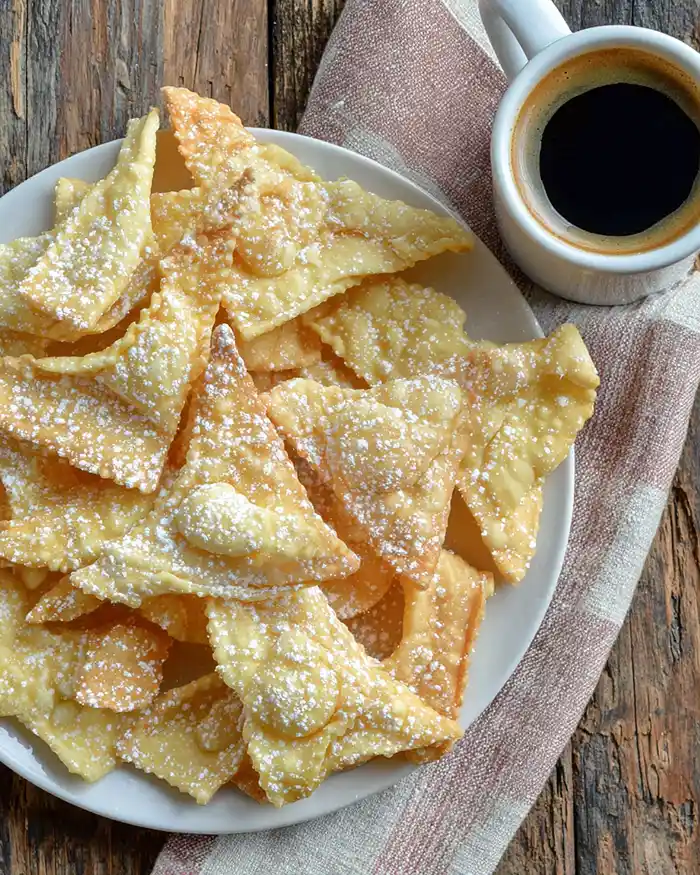
Serve your Italian crostoli piled high on a platter, with extra powdered sugar on the side for anyone who wants more sweetness. They’re perfect alongside espresso, cappuccino, or a sweet dessert wine like Vin Santo.
Store cooled crostoli in an airtight container at room temperature for up to two weeks. Layer them between sheets of parchment paper to prevent them from sticking together. They actually stay remarkably crisp if sealed properly.
Don’t refrigerate these—the moisture will make them soggy. If they do lose some crispness, you can refresh them in a 300°F oven for 3-5 minutes, but honestly, if you’re storing them properly, they’ll stay perfectly crispy.
Zero-Waste Kitchen Magic
Got leftover dough scraps after cutting? Roll them into a ball, let them rest for 10 minutes, then roll them out again. Nothing goes to waste in an Italian kitchen!
If your crostoli don’t all get eaten (unlikely!), crush them and sprinkle over ice cream or fold into whipped cream for an amazing texture contrast. They make fantastic edible decorations for other desserts too.
The frying oil can be strained through cheesecloth and reused for future frying projects. Just store it in a sealed container away from light.
Crostoli FAQs
Can I freeze this Italian deep fried pasta dessert?
Yes! Store completely cooled, undused crostoli in freezer bags for up to 3 months, then thaw at room temperature and dust with fresh powdered sugar before serving—they maintain their crispness beautifully.
What’s the best substitute for brandy in this crostoli recipe?
Use grappa, rum, or even limoncello for different flavor profiles, or replace with equal parts whole milk for an alcohol-free version that still produces tender, delicious results.
Why did my fried pasta dessert italian style come out tough?
You either over-kneaded the dough, rolled it too thick, or fried it at too low a temperature—aim for paper-thin dough and consistently hot oil at 350°F for the lightest, crispiest texture.
Can I make Italian crostoli without a pasta machine?
Technically yes, but rolling dough thin enough by hand requires serious arm strength and patience—if you’re serious about making these regularly, a pasta machine is worth the investment for consistent results.
How do I know when the oil is hot enough for frying?
Use an instant-read thermometer to confirm 350°F, or test with a small piece of dough—it should sizzle immediately and start bubbling actively within 5 seconds of hitting the oil.
Time to Make Some Magic!
There’s something deeply satisfying about making this italian deep fried pasta dessert from scratch. The way the dough transforms from a simple ball into delicate, golden ribbons, the sound of them crackling as they cool, and the inevitable powdered sugar mess that ends up on your counters and clothes—it’s all part of the joy.
I’d love to see your crostoli creations! Share your photos in the comments below and let me know if you tried any variations. Did you add citrus? Go wild with the shapes? I’m always curious to see how people make these recipes their own.
Looking for more fried treats? Check out our collection of easy eclair donuts for another indulgent adventure.
Baked with love by Rebeccah Ellene.
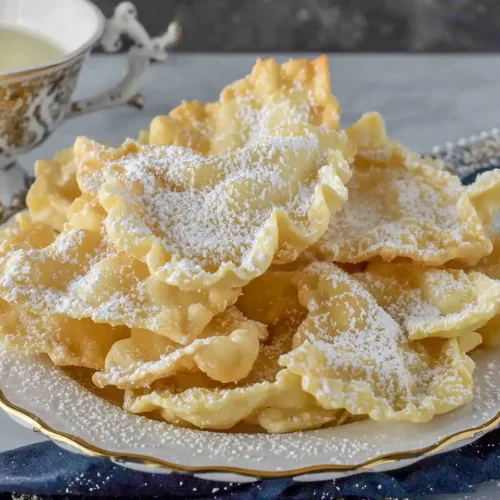
Crostoli (Italian Deep Fried Pasta Dessert)
Equipment
- Clean work surface or stand mixer
- Paddle attachment
- Dough hook attachment
- Pasta machine
- Heavy high-sided frying pan
- Instant-read thermometer
- Two forks
- Paper towels or wire rack
- Pastry wheel (optional)
- Spider strainer (optional)
Ingredients
For the Crostoli Dough
- 2 cups all-purpose flour 250 grams
- 2 whole eggs
- 1 egg yolk
- 2 tablespoons granulated white sugar
- 2 tablespoons butter 1 ounce/30 grams, slightly softened
- 1 tablespoon brandy 15 mls, can substitute with grappa or rum
- 1 teaspoon vanilla extract pure vanilla recommended
- 1 pinch salt
For Frying and Finishing
- 2 cups peanut oil for frying, can use vegetable or canola oil
- as needed powdered sugar for dusting
Instructions
- Mound your all-purpose flour (2 cups/250 grams) directly onto a clean work surface and create a well in the center, like a little flour volcano.
- Crack your eggs (2 whole eggs plus 1 egg yolk) into the well, then add the granulated white sugar (2 tablespoons), softened butter (2 tablespoons), brandy (1 tablespoon), vanilla extract (1 teaspoon), and a pinch of salt.
- Using your fingertips or a fork, gradually whisk the wet ingredients together, slowly incorporating flour from the inner walls of the well until everything starts coming together into a shaggy dough. If it feels too dry or crumbly, add another splash of brandy—dough should form a cohesive ball without being sticky.
- Knead the dough for about 5 minutes until it transforms into a smooth, elastic ball that springs back slightly when you poke it. Wrap in plastic wrap and let it rest for 30 minutes at room temperature.
- Alternative Stand Mixer Method: Add all-purpose flour to your stand mixer bowl with paddle attachment. Add the eggs, butter, brandy, sugar, vanilla extract, and salt. Mix on low speed until combined (1-2 minutes).
- Switch to the dough hook attachment and knead on medium-low speed for about 5 minutes until the dough is smooth and elastic. Wrap and rest for 30 minutes.
- Cut a small piece (about golf ball size) from your rested dough, keeping the rest covered. Flatten this piece slightly with your palm—you want it thin enough to fit through your pasta machine’s widest setting.
- Pass the dough through your pasta machine on the widest setting, then fold it in half and pass it through again. Repeat this folding and rolling process 5-6 times until the dough becomes silky smooth.
- Start reducing the thickness settings, one notch at a time, passing the dough through each progressively thinner setting once. Dust lightly with flour if the dough starts sticking.
- When you reach the finest setting on your pasta machine, pass the dough through twice. The dough should be thin enough that you can almost see through it, like delicate parchment paper.
- Lay your thin pasta sheet on your work surface and cut it lengthwise into strips about 2 inches (5 cm) wide and 4-6 inches (10-15 cm) long. Make a small 1-inch slit in the center of each strip, then gently pull one end through the slit to create that classic twisted shape.
- Heat your peanut oil (2 cups) in a heavy, high-sided frying pan over medium-high heat until it reaches 350°F (180°C) on your instant-read thermometer.
- Carefully slip 3-4 crostoli into the hot oil (don’t overcrowd). They’ll immediately start bubbling and puffing up.
- Fry for about 30 seconds per side, sometimes less. Use two forks to gently turn them once lots of bubbles have formed and the underside turns pale golden. They should look like pale honey when done, not deep caramel.
- Remove the fried crostoli with your forks or spider strainer and drain on paper towels or a wire rack. They’ll feel slightly soft when hot but will crisp up beautifully as they cool.
- Once completely cooled, dust generously with powdered sugar using a fine-mesh sieve.