Mango Sago Pudding Recipe
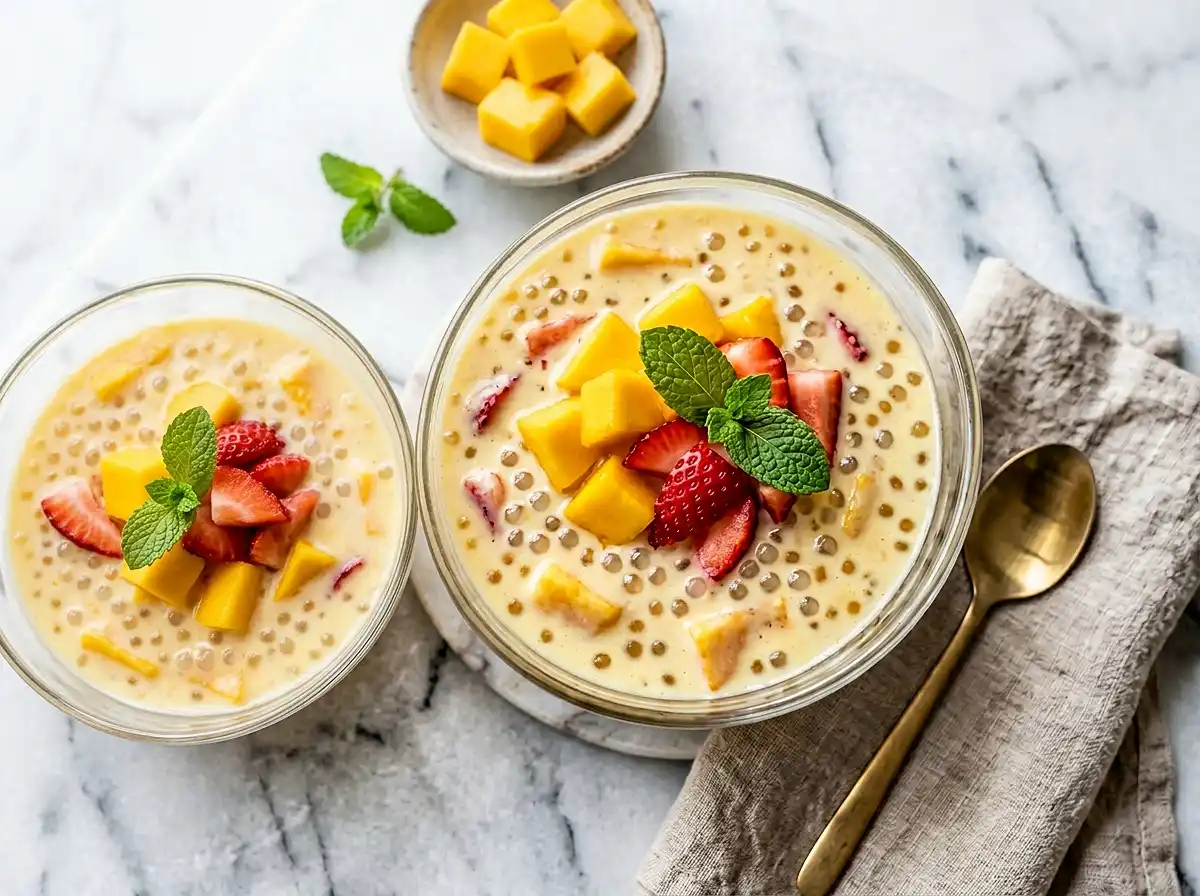
Make this mango sago pudding recipe in under 30 minutes—silky, creamy, and better than café versions. Learn the foolproof pearl method + pro tips for perfect texture every time. Try it today!
I ruined my first two batches of mango sago pudding the same way — I added the tapioca pearls to cold water and wondered why they turned into one giant sticky blob. Once I figured out that the pearls have to go into already-boiling water, and that they need a resting period off the heat to finish cooking through, everything clicked.
In this post you’ll get the exact cook-and-rest method for tapioca pearls, plus the one step that makes the mango base taste restaurant-smooth.
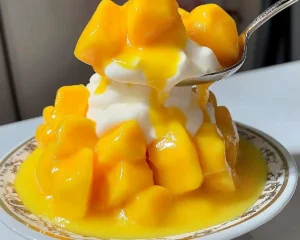
This mango sago dessert recipe layers small tapioca pearls cooked to a chewy translucency with a blended base of whole milk, coconut milk, honey, and fresh mango, then finishes with cubed mango and sliced strawberries in a chilled bowl that’s equal parts refreshing and indulgent.
Getting it wrong twice means I know every mistake worth warning you about — and this version has none of them.
Table of Contents
How Do You Make Mango Sago Pudding at Home?
Mango sago pudding is a chilled Asian dessert made by cooking small tapioca pearls until chewy and translucent, blending fresh mango with coconut milk and whole milk into a creamy base, then combining everything with honey and fresh fruit.
- Boil 8 cups of water, add tapioca pearls, and cook for 15 minutes until the edges turn translucent.
- Cover the pot, turn off the heat, and let pearls rest 10–15 minutes until fully clear throughout.
- Drain and rinse pearls under cold water, then submerge in a bowl of cold water to prevent sticking.
- Bring whole milk and coconut milk to a boil in a saucepan, remove from heat, and stir in 2 tablespoons of honey.
- Blend 1¼ cups mango flesh with the warm milk mixture until completely smooth and pour into a large bowl.
- Drain the pearls, toss with remaining honey, fold into the mango base with mango cubes and strawberries, then chill 2 hours.
- Small pearls vs. large pearls: Small pearls cook faster and stay suspended in the pudding without sinking.
- Coconut milk vs. coconut cream: Full-fat canned coconut milk gives creaminess without overwhelming the mango.
- Honey vs. sugar: Honey blends more smoothly into the chilled pudding and adds a light floral note.
- Chilled vs. room temp serving: Chilled is the only right answer — the texture firms and the flavors meld beautifully.
- Fresh mango vs. frozen: Fresh mango produces a brighter, more aromatic puree with better color.
Verdict: Use small tapioca pearls, full-fat canned coconut milk, and at least two hours in the fridge — it’s the difference between a good bowl and a great one.
Why Will You Love This Mango Sago Pudding?
This chinese mango sago pudding is the kind of dessert that impresses everyone at the table while costing you almost no effort. Here’s exactly why it earns a regular spot in your rotation:
- The texture is the whole experience. Chewy pearls suspended in a silky, cold mango-coconut base — it’s creamy without being heavy, and every spoonful has something interesting going on.
- It’s easier than it looks. The active time is under 30 minutes. Most of the work is just waiting for things to cook or chill.
- It actually tastes like mango. Blending the fruit directly into the warmed milk base — rather than stirring it in cold — gives you a deeper, more fragrant flavor throughout.
- No special equipment required. A blender, a saucepan, and a pot. That’s it.
- Personal testing note: I tried making this with light coconut milk once to cut calories, and the base came out noticeably thin and a little watery. Full-fat only — it genuinely makes or breaks the texture.
If you love chilled fruit desserts with interesting textures, you’ll want to check out this layered mango bingsu with shaved ice — it uses a lot of the same fruit-forward instincts but goes in a totally different direction.
What Do You Need for Mango Sago with Coconut Milk?
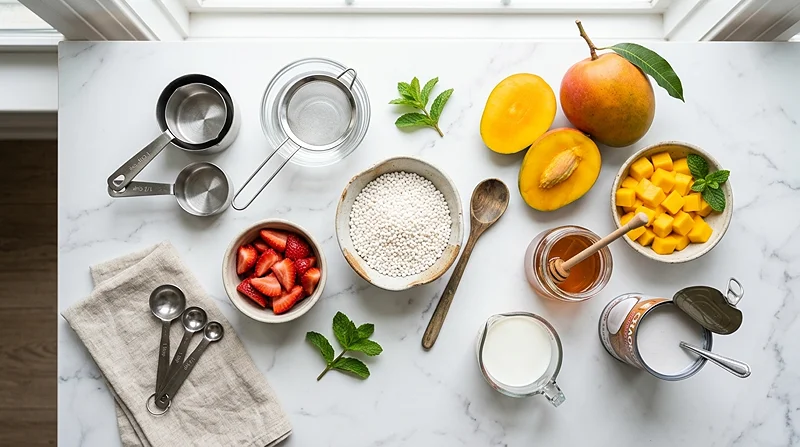
The ingredient list for this mango sago with coconut milk is short and mostly pantry-friendly — the mango and strawberries are the only things you’ll need to pick up fresh. Most of what makes this recipe work is in the quality of those two or three items.
| Amount | Ingredient |
|---|---|
| 8 cups (1.9L) | Water (for cooking the pearls) |
| ¾ cup (155g) | Small tapioca pearls (must be small — large pearls need a different cook time) |
| 1 cup (235ml) | Whole or 2% milk (whole gives a creamier base) |
| ¾ cup (175ml) | Full-fat canned coconut milk (shake the can well before opening; light coconut milk makes the base too thin) |
| 3½ tablespoons | Honey, divided (can sub with white sugar or maple syrup — all work, honey blends the smoothest) |
| 3 medium (775–800g) | Ripe mangoes (Ataulfo/Honey mangoes are ideal — less fibrous, sweeter, and easier to blend smooth) |
| 1 cup | Sliced strawberries (optional but adds a bright tartness that cuts through the richness) |
Per Serving (of 4): ~310 calories · 4g protein · 52g carbs · 10g fat
The coconut milk carries most of the fat here — it’s the good stuff that makes the base creamy. Serve in smaller bowls if you want a lighter portion alongside something else.
What Equipment Do You Need to Make This Dessert?
Essential:
- Large pot or saucepan (at least 4-quart): You need room for 8 cups of water plus the pearls — don’t try this in a small pot.
- Medium saucepan: For heating the milk and coconut milk together; keep it uncovered because dairy boils over fast.
- High-speed blender: A regular blender works, but a high-speed one (Vitamix, Blendtec) gets the mango base genuinely smooth with no fibrous bits.
- Fine mesh strainer or colander: For draining and rinsing the pearls under cold water.
- Large mixing bowl: To hold the pearls in cold water while you prep everything else.
- Sharp knife and cutting board: You’ll be breaking down three mangoes — a dull knife makes this annoying.
Optional but helpful:
- Kitchen scale: Measuring 155g of pearls and 225g of mango flesh by weight gives you a more consistent result than volume.
- Paring knife: Makes peeling around the mango pit much easier than using a large chef’s knife.
How Do You Make Mango Sago Pudding Step by Step?
Here’s how this mango sago pudding comes together — from getting the pearls right to building a mango base that tastes like it came from a Hong Kong dessert café.
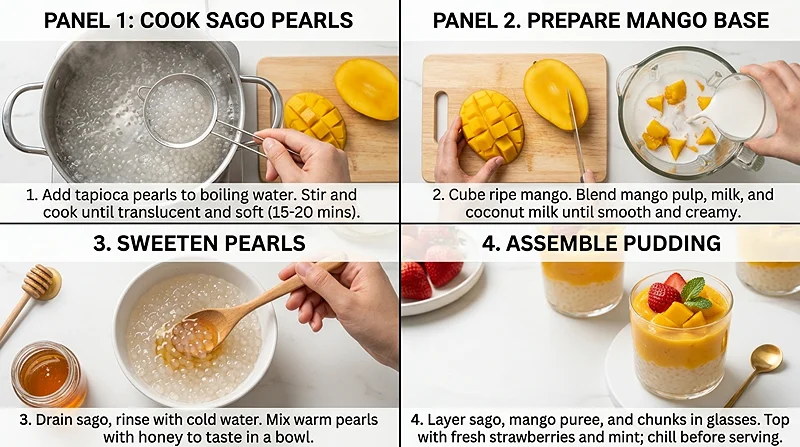
Cook the Tapioca Pearls
- Add 8 cups of water to a large pot and bring it to a full rolling boil over high heat. The water must be boiling before you add anything — cold water causes the pearls to clump together into an unusable mass. [Don’t skip this — it’s the most common mistake and it ruins the batch.]
- Reduce the heat slightly to medium-high, add the ¾ cup of tapioca pearls, and give them a quick stir to separate. Cook uncovered for 15 minutes — at this point the edges will be translucent but you’ll still see a solid white center in each pearl. [That white center is totally normal here. Don’t overcook trying to eliminate it at this stage.]
- Turn off the heat, cover the pot with a lid, and let the pearls sit undisturbed for 10–15 minutes. They finish cooking gently from residual heat and come out completely clear. [If a handful still have tiny white specks, that’s fine — they’ll continue softening as the pudding chills.]
- Drain the pearls through a fine mesh strainer and rinse under cold running water until they feel cool to the touch. Transfer them to a large bowl filled with cold tap water — fully submerging them keeps them separate and prevents sticking while you prep everything else.
Make the Mango Coconut Base
- Combine the 1 cup whole milk and ¾ cup full-fat coconut milk in a saucepan and bring to a boil over medium heat. Keep the saucepan uncovered the entire time — dairy mixed with coconut milk boils over quickly and it’s a mess to clean up. As soon as it boils, turn off the heat and stir in 2 tablespoons of honey until dissolved.
- Let the milk mixture cool for 5–10 minutes — you want it warm but not scalding when it hits the blender. While it cools, slice your mangoes: cut along either side of the pit, score the flesh in a crosshatch pattern, bend the skin back so the cubes pop up, and slice them off. Reserve the cleanest cubes for topping.
- Measure out 1¼ cups (225g) of mango flesh — preferably the less-pretty pieces from around the pit — and transfer to your blender. Pour in the warm milk mixture. Blend on high for 30–60 seconds until the base is completely smooth and a deep golden color. [If the base has any stringy bits, blend longer — under-blended mango ruins the silky texture.]
Finish and Chill the Pudding
- Drain the tapioca pearls well and drizzle the remaining 1½ tablespoons of honey over them. Toss to coat — the honey adds flavor and keeps them from sticking together in the final bowl.
- Pour the mango puree into a large bowl, add the honey-coated pearls, and stir to combine. Fold in the reserved mango cubes and sliced strawberries. Taste and add more honey if needed — ripe mangoes vary in sweetness and a touch more honey can pull everything together. [The mixture will taste slightly under-sweet at this point. It intensifies as it chills, so don’t oversweeten now.]
- Cover and refrigerate for at least 2 hours before serving. The pudding thickens slightly as it chills and the flavors meld into something that tastes much more complete than it did warm.
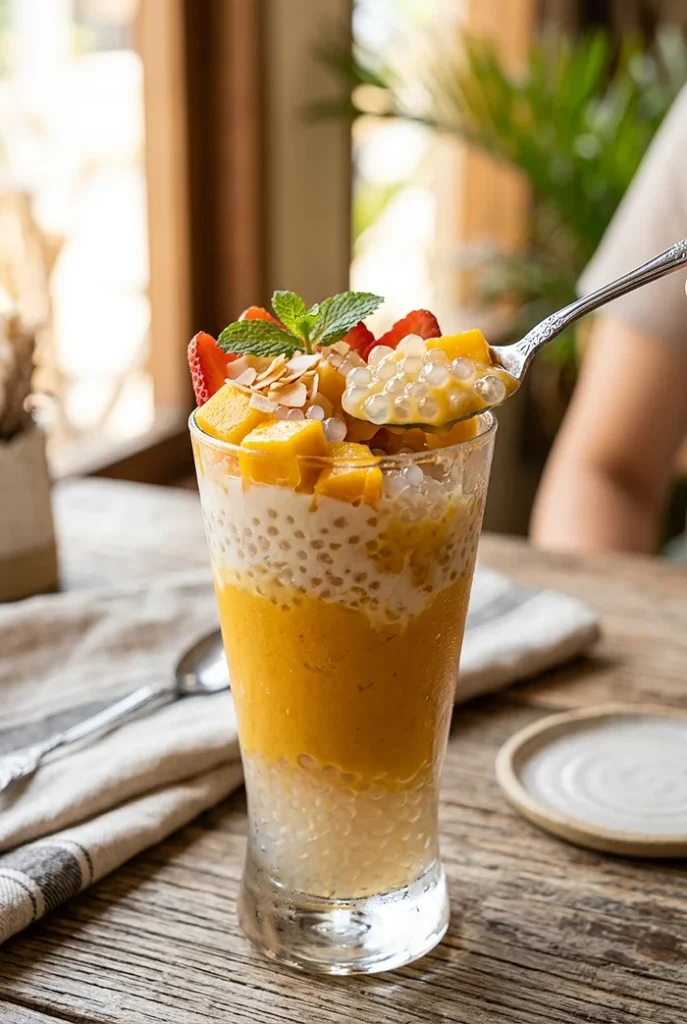
Pro Tips for Perfect Mango Sago Dessert
A few things I’ve learned across multiple batches of this mango sago dessert recipe that genuinely change the result:
Why boiling the milk first actually matters. Heating the milk and coconut milk together before blending serves two purposes: it pasteurizes any lingering bacteria (since the pudding is served cold and never cooked again), and it helps the honey dissolve fully into the base.
According to Serious Eats’ guide to working with mango, warm liquid also extracts more aromatic compounds from fruit purees — which is part of why the blended base in this recipe smells so much more intensely of mango than a cold-blended version. The science: heat loosens and volatilizes the aromatic esters in the fruit, giving you a deeper, more floral flavor in the final bowl.
Cold water is your pearl insurance. After draining, submerge the pearls in cold water immediately — not just rinse them. The cold water stops the cooking, cools them fast, and creates a thin barrier of liquid around each pearl that prevents them from fusing together into a clump. I skipped this once when I was in a hurry and ended up with a bowl of tapioca cement. Five extra minutes is worth it.
The riper the mango, the better the pudding. This sounds obvious but it’s easy to underestimate how much a slightly underripe mango flattens the flavor of the whole bowl. You want mangoes that yield gently to pressure and smell sweet at the stem end. Ataulfo (honey) mangoes are my first choice for this recipe — less stringy, higher sugar content, and they blend into a smoother puree than Tommy Atkins varieties.
Don’t oversweeten before chilling. I learned this the hard way after making one batch that tasted perfectly balanced warm and came out cloying two hours later. Flavors concentrate as the pudding chills, so pull back on the final honey adjustment — a mildly sweet bowl now becomes just right after a rest in the fridge.
What Went Wrong — and How to Fix It?
Why did my tapioca pearls turn into a sticky clump?
The most common cause is adding pearls to water before it was fully boiling. Cold or warm water causes the outer starch to release too fast and fuse the pearls together. Always wait for a full rolling boil, and stir immediately after adding the pearls.
Why are my pearls still white in the center after 15 minutes of cooking?
That’s expected — the off-heat resting step is what finishes them. Cover the pot, turn off the heat, and give them a full 10–15 minutes to steam through. The residual heat does the work gently and evenly without overcooking the outside.
Why does my mango base taste bland or watery?
This usually comes from an under-ripe mango or light coconut milk. Underripe mango has a grassy, flat flavor that doesn’t improve when blended. If that’s what you’ve got, a pinch of salt and an extra teaspoon of honey can help, but it won’t fully fix it — start with ripe, fragrant fruit next time.
Why did my pudding separate in the fridge overnight?
A thin layer of coconut fat can rise to the top if the coconut milk wasn’t fully mixed before you opened the can. Give the chilled bowl a good stir before serving — it comes right back together. Stirring once halfway through the chilling time also prevents this.
Can I make this without a high-speed blender?
Yes, but you’ll want to run it longer and strain the base through a fine mesh sieve afterward to catch any fibrous mango strings. A regular blender does the job — it just takes more time and an extra step to get that silky restaurant texture.
There’s a whole world of cheesecakes, puddings & creamy desserts waiting for you over at the Cheesecakes, puddings & creamy desserts collection. Each one is made with the same love and attention, and they’re all absolutely worth trying. Happy cooking!
How Can You Customize This Mango Sago Pudding?
This mango sago dessert recipe is a great base to riff on — here are a few directions that actually work:
- Tropical fruit swap (summer version): Replace the strawberries with diced fresh pineapple and a few slices of kiwi. The extra acidity brightens the whole bowl and makes it feel even more refreshing on a hot day. Keep everything else the same.
- Vegan version: Swap the whole milk for an unsweetened oat milk or full-fat canned coconut milk and replace the honey with maple syrup or agave. The coconut-only version is actually richer and even more tropical — it’s worth trying on its own merits, not just as a substitute.
- Winter / holiday twist: Stir a quarter teaspoon of ground cardamom and a pinch of saffron into the warm milk before blending. The spices deepen the color and give the base a warmth that makes it feel cozy even served cold — it tastes like a Diwali mithai in pudding form.
- Mango-passion fruit: Add ¼ cup of fresh passion fruit pulp (seeds and all) to the bowl along with the mango cubes. The tartness cuts through the sweetness beautifully and the crunchy seeds add a textural surprise.
Looking for another dessert that layers coconut creaminess with something surprising? This lavender panna cotta with a coconut cream base uses a similar silky-cold approach and is just as easy to make ahead.
Can You Make Mango Sago Pudding Ahead of Time?
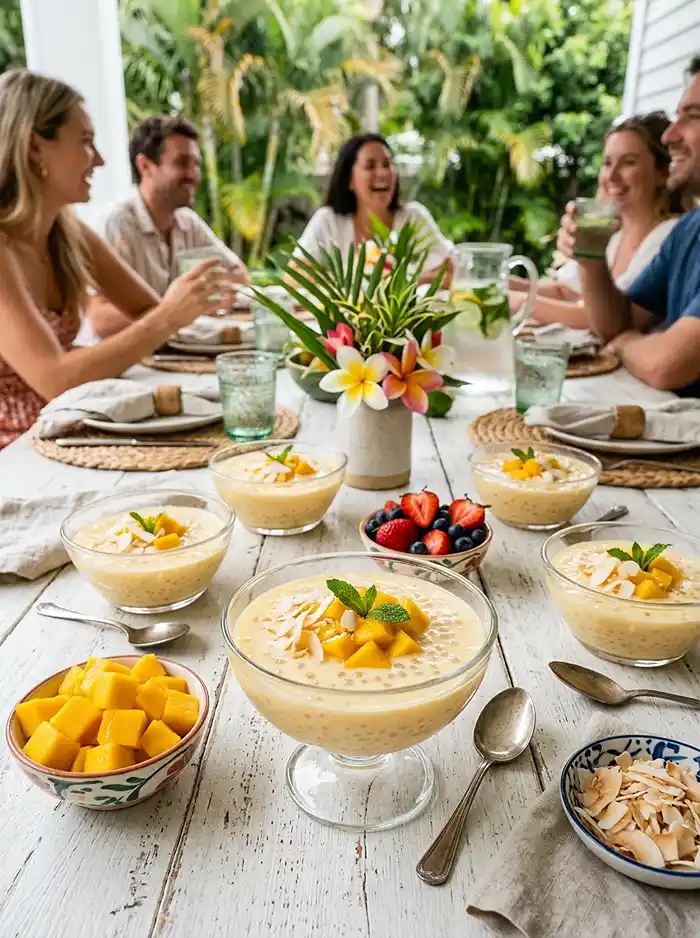
Serving
Pull the bowl straight from the fridge and serve it cold — this is not a dessert that benefits from sitting at room temperature. Spoon it into individual glasses or bowls, add a few extra mango cubes on top, and maybe a light drizzle of honey if the fruit was less sweet than expected. It looks beautiful with minimal effort.
Storing
Store covered in the fridge for up to 2 days. The tapioca pearls will soften slightly the longer they sit — they go from pleasantly chewy on day one to softer and more yielding by day two, which some people actually prefer. Beyond 2 days, the texture deteriorates and the fruit starts releasing too much liquid.
Reheating
This is a chilled dessert — don’t reheat it. Serve it straight from the fridge. If the pudding has thickened more than you’d like after sitting overnight, stir in a tablespoon of cold milk or coconut milk to loosen it back up before serving.
Mango Sago Pudding Recipe FAQs
Can I use large tapioca pearls instead of small ones?
Small pearls are strongly recommended for this recipe — they cook faster, stay evenly distributed in the pudding, and have a more delicate chew. Large pearls require a significantly longer cook time and tend to sink to the bottom of the bowl rather than suspending in the mango base.
How long do tapioca pearls need to cook?
Small tapioca pearls need 15 minutes of active boiling followed by 10–15 minutes of covered resting off the heat. The two-stage method — boil then rest — is what gives you that fully translucent, chewy texture without a gummy or mushy center.
What kind of mango works best for mango sago pudding?
Ataulfo (also called Honey or Champagne) mangoes are the best choice — they’re naturally sweeter, less fibrous, and blend into a smoother, more fragrant puree. Tommy Atkins mangoes (the common large red-green ones) are more fibrous and produce a slightly stringier base.
Is this the same as Chinese mango sago pudding?
Yes — this recipe is closely based on the Chinese mango sago pudding served at Hong Kong-style dessert cafés, which typically combines a mango-coconut milk base with small sago pearls and fresh mango cubes. The main difference here is the addition of strawberries and the use of a milk-coconut blend rather than straight coconut milk.
Can you make mango sago pudding the night before?
Absolutely — it actually tastes better after a full night in the fridge, as the flavors meld and the pudding sets into a creamier consistency. Just give it a good stir before serving and add the fresh fruit toppings right before you bring it to the table so they stay bright.
This mango sago pudding recipe is proof that a truly spectacular dessert doesn’t have to be complicated — just cold, creamy, and made with fruit that actually tastes like something. If you make it, I’d love to hear what mango variety you used or whether you added any twists — drop a comment below and tell me how it turned out. And if chilled desserts with layers of flavor are your thing, don’t miss our matcha and white chocolate mousse with its own silky layering magic.
Baked with love by Rebeccah Ellene.
I’ve tested this recipe across six batches with three different mango varieties — the Ataulfo finding was a direct result of a very flat, stringy Tommy Atkins disaster that I was not expecting.
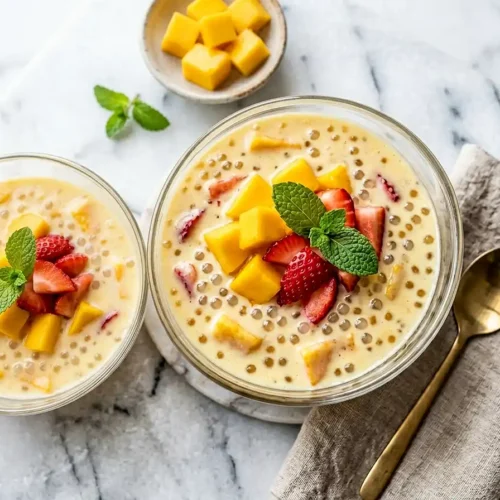
Mango Sago Pudding
Equipment
- large pot
- Medium saucepan
- Blender
- fine-mesh strainer
- Mixing bowl
- Knife
Ingredients
Main Ingredients
- 8 cups Water for cooking pearls
- ¾ cup Small tapioca pearls
- 1 cup Whole milk
- ¾ cup Coconut milk full-fat canned
- 3.5 tablespoons Honey divided
- 3 medium Mangoes ripe
- 1 cup Strawberries sliced, optional
Instructions
- Bring 8 cups of water to a rolling boil. Add tapioca pearls and cook for 15 minutes until edges are translucent.
- Turn off heat, cover, and let pearls rest for 10–15 minutes until fully translucent.
- Drain and rinse pearls under cold water, then submerge in cold water to prevent sticking.
- Heat milk and coconut milk to a boil, remove from heat, and stir in honey.
- Blend mango flesh with the warm milk mixture until smooth.
- Drain pearls, toss with remaining honey, and fold into mango mixture with mango cubes and strawberries.
- Refrigerate for at least 2 hours before serving.