Karpatka Cake Recipe
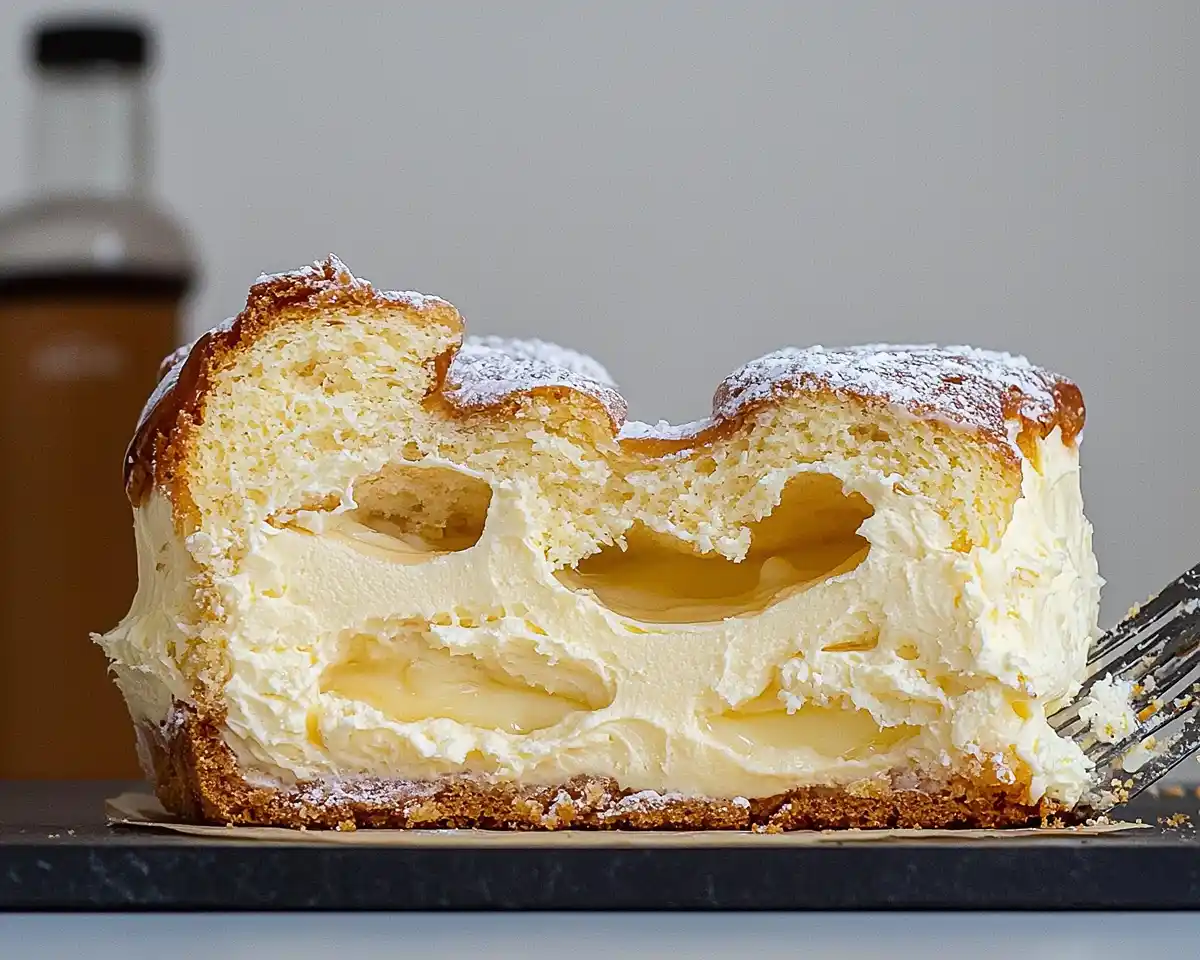
Discover authentic karpatka cake with crispy choux pastry layers and silky vanilla custard. This Polish kremowka delivers cloud-like texture in every bite!
What Makes This Karpatka Cake Special?
This karpatka cake combines golden pâte à choux pastry with luscious crème mousseline—a silky French buttercream folded into vanilla pastry cream—creating airy, crispy layers that sandwich an impossibly light custard filling. The textured top mimics the Carpathian Mountains, while each forkful delivers contrasting crunch and cream.
I first tasted karpatka at a tiny bakery in Kraków, and honestly? I’ve been chasing that magical combo of crispy-creamy ever since. The name literally means “Carpathian cake” because those bumpy, golden peaks are supposed to look like mountain ranges.
What makes this Polish karpatka cake so special is the technique—you’re basically making cream puffs, but as flat cake layers instead. If you love custard-filled pastries, you’ll also want to check out our silky Mont Blanc cake recipe for another European classic.
Table of Contents
Why You’ll Love This Karpatka Cake Recipe
This karpatka kremowka hits differently than regular layer cakes. The choux pastry stays crispy on top while softening slightly where it meets the custard, creating this incredible textural contrast that’s hard to find elsewhere.
You don’t need fancy piping skills here—just a spoon and some enthusiasm. The “messy” peaks are actually the goal, which means this is one of those rare fancy-looking desserts where imperfection is the perfection.
The crème mousseline is lighter than American buttercream but richer than plain pastry cream. It’s that French middle ground that makes you want to lick the bowl.
Nutritional Information Per Serving
| Nutrient | Amount |
|---|---|
| Calories | 285 |
| Protein | 5g |
| Carbohydrates | 24g |
| Fat | 19g |
Based on 12 servings
Gathering Your Karpatka Cake Recipe Ingredients
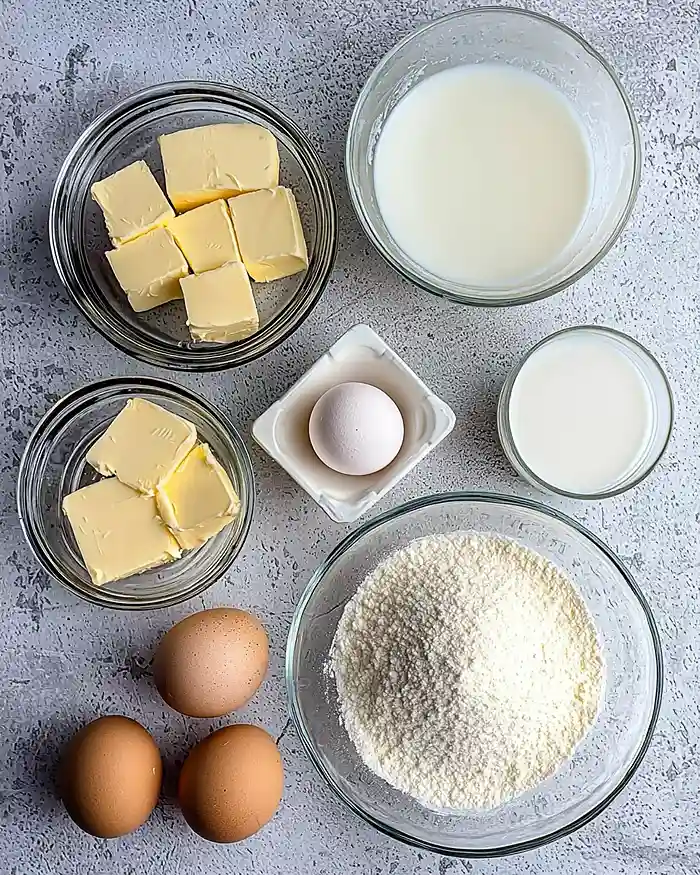
To make an authentic polish karpatka cake, you’ll need ingredients for three components: the pastry cream base, the choux pastry layers, and the butter-enriched mousseline. Room temperature butter and eggs are crucial here—cold ingredients just won’t cooperate.
Crème Pâtissière (Custard Base)
| Amount | Ingredient |
|---|---|
| 2 ½ cups | Whole milk |
| 150g (¾ cup) | Granulated sugar, divided |
| ½ teaspoon | Kosher salt |
| 50g (5 tablespoons) | Cornstarch |
| 4 | Large egg yolks |
| 2 teaspoons | Pure vanilla extract or vanilla bean paste (I prefer paste for those gorgeous specks!) |
Pâte à Choux (Choux Pastry)
| Amount | Ingredient |
|---|---|
| ¾ cup | Water |
| 85g (6 tablespoons) | Unsalted butter, room temperature |
| ¼ teaspoon | Kosher salt |
| 95g (¾ cup) | All-purpose flour |
| 3 | Large eggs |
Crème Mousseline (Butter Enrichment)
| Amount | Ingredient |
|---|---|
| 200g (14 tablespoons) | Unsalted butter, room temperature |
| 25g (2 tablespoons) | Granulated sugar |
Assembly
| Amount | Ingredient |
|---|---|
| As needed | Butter for greasing |
| For dusting | Confectioners’ sugar |
For more tips on working with custard-based fillings, check out our ultimate fudgy chocolate cream pie guide.
Essential Equipment
You’ll need:
- Two 9-inch springform pans (or one if you’re baking in batches)
- Medium saucepan
- Stand mixer with paddle and whisk attachments
- Heat-proof mixing bowl
- Whisk (preferably a balloon whisk)
- Offset spatula or back of a spoon
- Parchment paper
- Wire cooling rack
Nice to have:
- Digital thermometer (really helps with temperature matching)
- Kitchen scale for precise measurements
How to Make Karpatka Cake: Step-by-Step
Making karpatka cake involves three main stages, and honestly, the process is easier than it looks. Just take your time with the custard—it needs your full attention for those few minutes of whisking.
Making the Crème Pâtissière
1. Heat 2 ½ cups milk, half the sugar (about 75g), and ½ teaspoon salt in a saucepan over medium heat until tiny bubbles form around the edges and steam rises. Don’t let it boil or you’ll have a milk volcano situation.
2. While the milk heats, whisk together the remaining 75g sugar and 50g cornstarch in a heat-proof bowl until no lumps remain. Add 4 egg yolks and whisk vigorously until the mixture is smooth and pale yellow—it’ll be quite thick and paste-like at this stage.
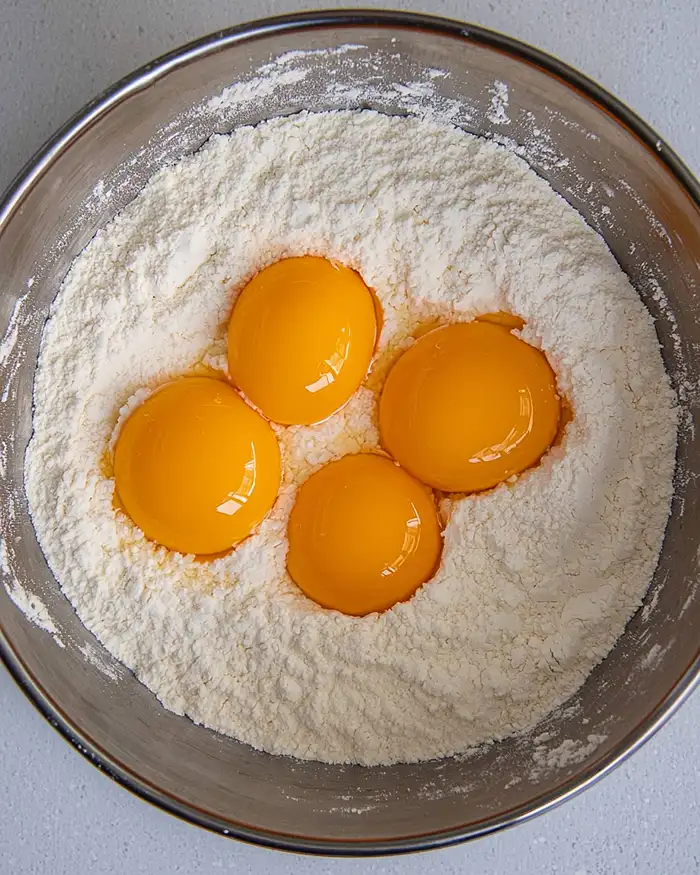
3. Once the milk is steaming, remove it from heat and very slowly drizzle about ½ cup into the egg mixture while whisking constantly. This tempering step prevents scrambled eggs (trust me, I learned this the hard way). Pour the tempered egg mixture back into the saucepan with the remaining milk, stirring to combine.
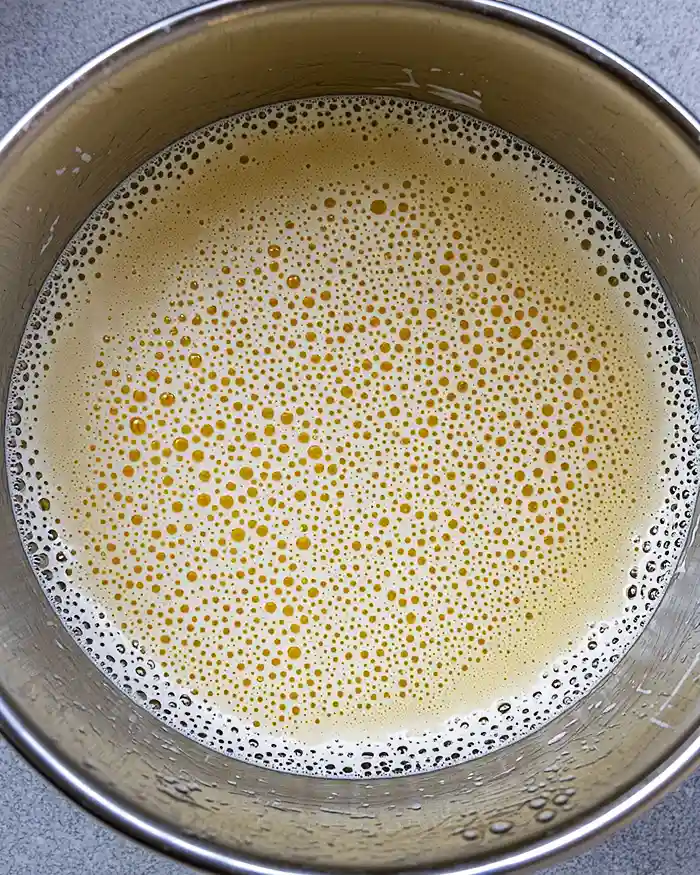
4. Return the saucepan to medium-low heat and whisk continuously for 5 to 9 minutes until the custard thickens to a pudding-like consistency. Your arm will get tired, but keep whisking—any break in whisking can create lumps or cause curdling. You’ll know it’s ready when the whisk leaves trails that hold their shape for a second before disappearing.
5. Remove from heat and whisk in 2 teaspoons vanilla extract or paste until fully incorporated. The vanilla blooms beautifully in the warm custard.
6. Transfer the custard to a large, shallow container (a 9×13 baking dish works great) and press plastic wrap directly onto the surface to prevent that dreaded skin from forming. Let it cool to room temperature on your counter—this is important because cold custard won’t incorporate smoothly with butter later.
Making the Pâte à Choux
7. Preheat your oven to 400°F (200°C) with the rack in the center position. Generously butter the bottom and sides of two 9-inch springform pans, then line the bottoms with parchment circles—the butter acts like glue to keep the parchment in place while you spread the sticky dough.
8. Combine ¾ cup water, 85g butter, and ¼ teaspoon salt in a medium saucepan over medium heat. Once the butter melts completely and the mixture starts to bubble, immediately remove from heat and dump in all 95g flour at once. Stir quickly with a wooden spoon—adding flour all at once prevents lumps from forming.
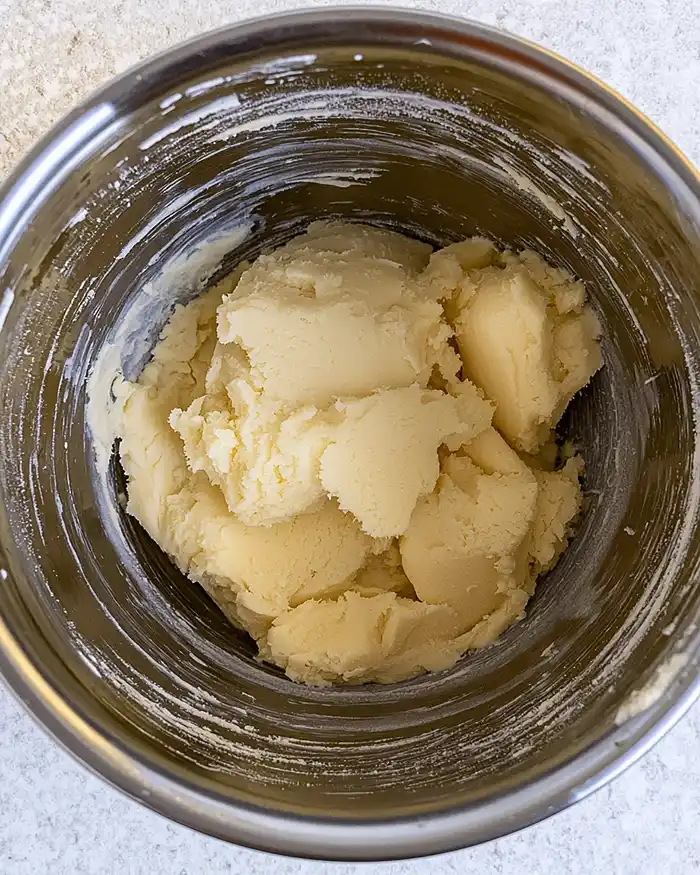
9. Reduce heat to medium-low and return the pan to the burner. Stir constantly, pressing and turning the dough against the pan bottom until it forms a cohesive ball and leaves a thin white film on the bottom of the pan.
This drying step is crucial for proper puff—it can take anywhere from 2 to 10 minutes depending on your pan and stove, so watch for the visual cue (that white residue) rather than timing it.
10. Transfer the hot dough to your stand mixer bowl fitted with the paddle attachment. Let it cool for about 10 minutes—it should still feel quite warm but not scorching hot (around 130-140°F if you’re checking with a thermometer).
Start the mixer on medium-low and add eggs one at a time, letting each incorporate fully before adding the next. The dough will look broken and weird after the first egg, but keep faith—it comes together beautifully.
11. The finished batter should be smooth, glossy, and thick enough that when you lift the paddle, the batter falls in a long V shape rather than running off in a thin stream. If it’s too runny, your pastry won’t puff properly.
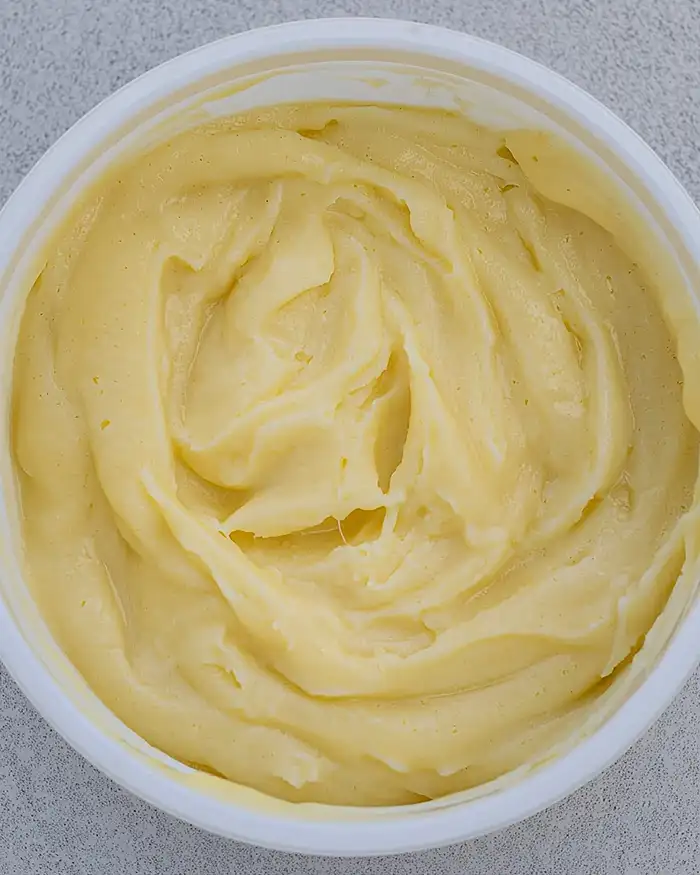
12. Divide the dough evenly between your two prepared pans (I weigh it for precision—about 210g per pan). Use the back of a spoon or offset spatula to spread it roughly, creating uneven peaks, valleys, and swirls. These texture variations are what make karpatka look like mountain ranges, so embrace the chaos!
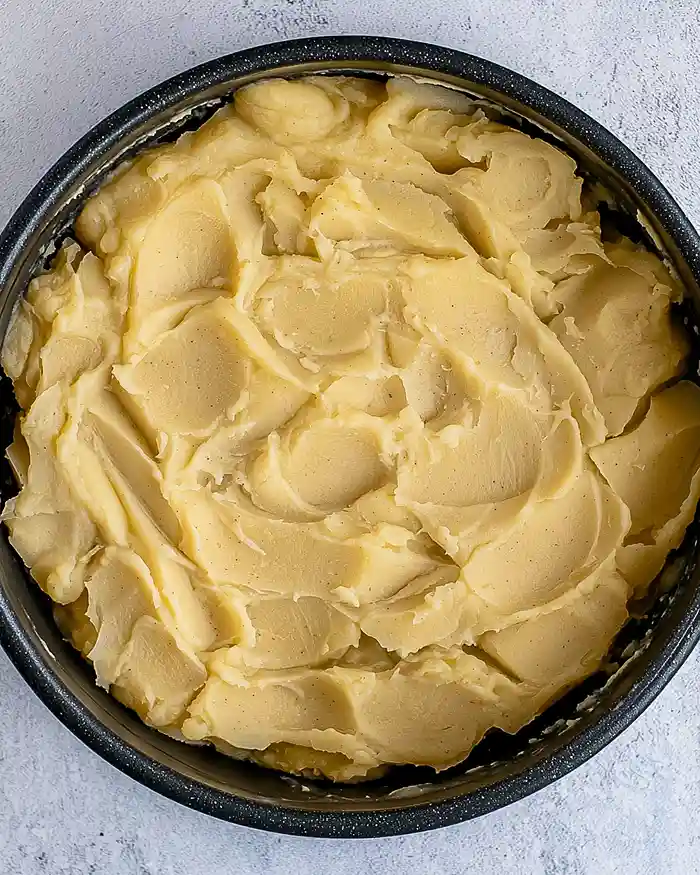
13. Bake for 24 to 28 minutes until the pastry is deeply golden brown all over and puffed dramatically. Don’t open the oven door early or the steam will escape and your layers will deflate. The pastry should sound hollow when tapped gently.
14. Cool the layers in their pans for 10 minutes, then carefully remove the springform rings and transfer the pastry layers to a wire rack to cool completely. If you’re using one pan, repeat the process with the remaining batter.
Making the Crème Mousseline
15. Before starting, make sure both your butter and pastry cream are at room temperature (around 70-75°F). Temperature matching is critical here—if they’re more than 10 degrees apart, the mixture can break and become grainy.
16. In your stand mixer fitted with the whisk attachment, beat 200g room-temperature butter and 25g sugar on medium-high speed for 2 to 3 minutes until pale, fluffy, and almost doubled in volume. It should look like buttercream frosting at this stage.
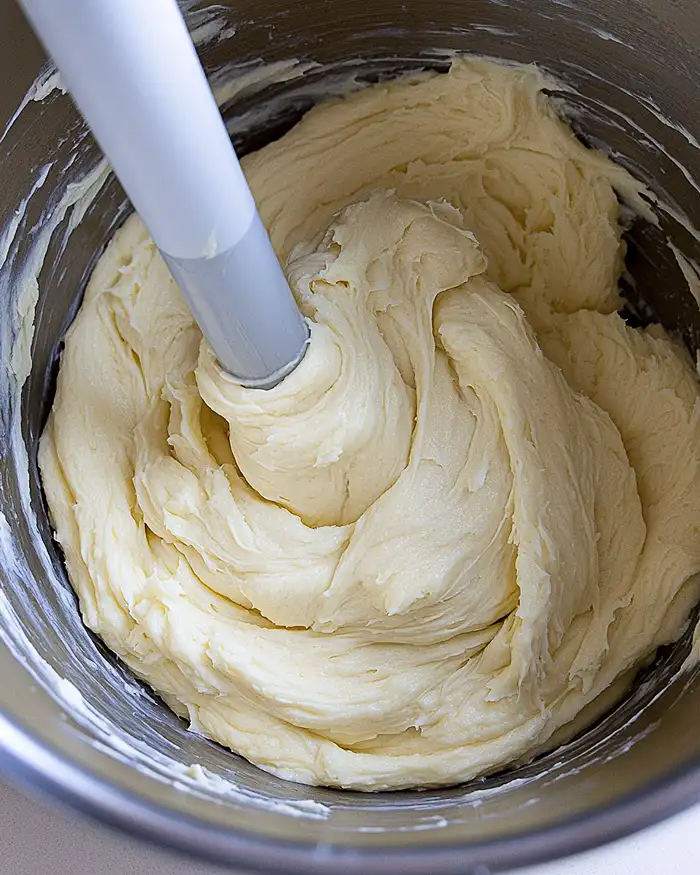
17. Give your cooled crème pâtissière a quick whisk in its bowl to loosen it and break up any stiffness. With the mixer running on medium-low, add the pastry cream to the butter mixture one heaping spoonful at a time, letting each addition incorporate before adding more. This gradual process prevents the mixture from breaking.
18. Once all the pastry cream is incorporated, increase speed to medium-high and beat for about 5 minutes until the crème mousseline is light, airy, and holds soft peaks. It should look almost mousse-like. If your cakes are still cooling, press plastic wrap against the surface and leave it at room temperature.
Assembly
19. Place the clean springform ring on your serving plate. For easier removal later, line the inside of the ring with a wide strip of parchment paper that extends above the rim slightly—this creates a handle you can pull when unmolding.
20. Choose the flatter of your two choux layers (usually one puffs more than the other) and place it inside the ring, flat side down. Spread all of the crème mousseline evenly over the top using an offset spatula, taking it right to the edges. Top with the second choux layer, pressing down very gently to help everything adhere.
21. Refrigerate for at least 1 hour and up to 3 hours to let the filling set properly. When you’re ready to serve, carefully remove the springform ring and peel away the parchment paper. Dust the top generously with confectioners’ sugar—use a fine-mesh sieve for an even, snow-like effect.
Pro Tips for Perfect Karpatka Kremowka
Temperature matching is everything. When making the crème mousseline, butter and pastry cream must be within a few degrees of each other. According to Serious Eats’ guide to emulsified sauces, a temperature difference greater than 10°C causes fats to solidify or separate, resulting in a grainy, broken texture instead of silky smoothness.
Don’t skip the drying step for choux. That white film on the pan bottom isn’t just for show—it indicates you’ve evaporated enough moisture for proper puffing. Underdried dough stays dense and heavy.
Embrace the peaks. I used to try making my choux layers smooth, but rough, uneven texture is actually traditional and helps create more surface area for that satisfying crunch.
Check your oven temperature. My oven runs 25 degrees cool, which I discovered when my first batch took 35 minutes to brown. An oven thermometer is worth every penny.
What If Things Go Wrong?
Why is my custard lumpy? You probably stopped whisking for too long or had the heat too high. Whisk it through a fine-mesh strainer to remove lumps, or blend it smooth with an immersion blender.
What if my choux pastry didn’t puff? This usually means the dough was either too wet (eggs added when dough was too hot) or you didn’t dry it enough in the pan. The consistency should be thick enough to hold a V shape when lifted.
Why did my crème mousseline split or look curdled? Temperature mismatch is the culprit. If it breaks, try warming the bowl slightly with your hands or a warm towel while beating—sometimes it’ll come back together. If not, start over with room-temperature ingredients.
Can I fix deflated choux layers? Once they’ve deflated, there’s no bringing them back. But you can use them anyway—they’ll just be flatter and less dramatic. The taste is still incredible!
Fun Variations on Classic Karpatka Cake
Chocolate karpatka: Add 2 tablespoons cocoa powder to the choux dough and fold melted dark chocolate into the finished crème mousseline for a decadent twist.
Coffee lovers’ version: Replace 2 tablespoons of milk in the custard with espresso or strong coffee. The gentle coffee flavor pairs beautifully with vanilla.
Berry-filled delight: Spread a thin layer of raspberry or strawberry jam on the bottom choux layer before adding the custard. For more berry inspiration, explore our cream cheese icing recipe for red velvet cake.
Individual portions: Pipe the choux into 3-inch circles to make personal-sized karpatkas—perfect for parties!
How to Serve and Store Your Karpatka Cake
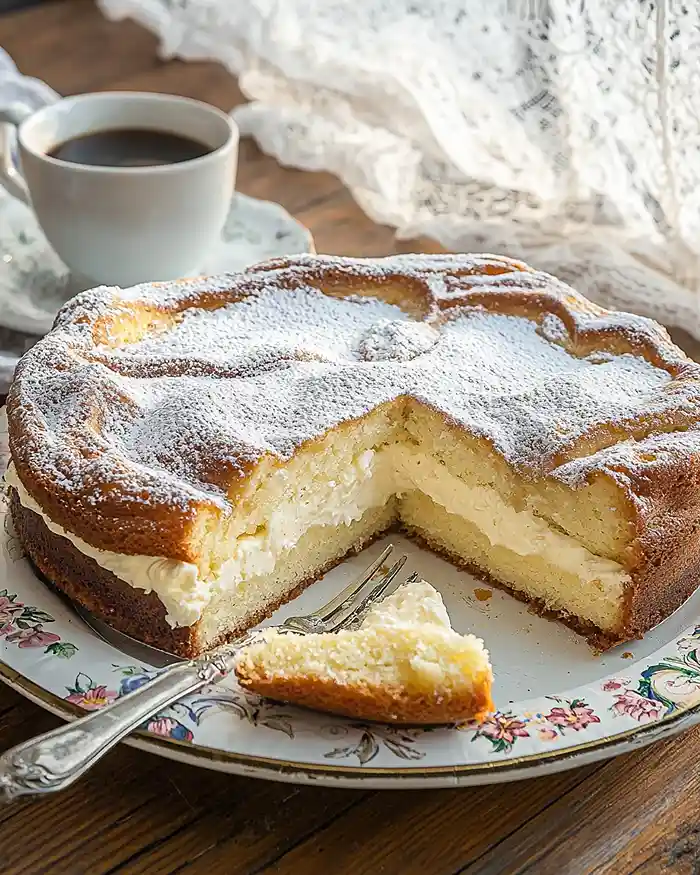
Serving: Let the karpatka sit at room temperature for about 15 minutes before slicing—the filling softens slightly and becomes even more luscious. Use a sharp serrated knife and wipe it clean between cuts for neat slices.
Storage: Cover loosely with plastic wrap or store in an airtight container in the refrigerator for up to 3 days. The choux will soften over time, but honestly? Some people prefer it that way.
Freezing: I don’t recommend freezing assembled karpatka because the custard texture changes, but you can freeze the baked choux layers (wrapped tightly) for up to 1 month. Thaw, make fresh custard, and assemble.
Zero-Waste Kitchen Tips
Save those egg whites: You’ve got 4 egg whites left from the custard—perfect for making meringue cookies, adding to morning scrambles for extra protein, or whipping into an egg white omelet.
Repurpose leftover choux: If you have extra dough or broken layers, tear them into pieces, toast lightly, and use as a textured topping for ice cream or yogurt parfaits.
Frequently Asked Questions About Karpatka Cake
Can I make this karpatka cake recipe ahead of time?
Absolutely! You can make the choux layers up to 2 days ahead and store them wrapped at room temperature. Make the custard base a day ahead and refrigerate, then bring to room temperature before finishing the mousseline. Assemble 3-6 hours before serving for best texture.
What’s the best substitute for vanilla bean paste in polish karpatka cake?
Pure vanilla extract works perfectly—use the same amount. You can also scrape the seeds from half a vanilla bean for an extra-luxurious touch with visible specks throughout.
Why did my karpatka cake layers sink in the middle?
Opening the oven door too early releases steam and causes collapse. Also, underbaked choux (pale rather than golden brown) hasn’t set its structure and will sink as it cools.
Can I use a different pan size for this karpatka kremowka?
Yes! An 8-inch pan works if you increase baking time by 3-5 minutes and stack slightly thicker layers. For a 10-inch pan, reduce baking time and expect thinner, crispier layers.
How do I know when the crème pâtissière is thick enough?
It should coat the back of a spoon thickly, and when you draw a line through it with your finger, the line should hold without the custard running back together.
The Final Slice
This karpatka cake brings a little piece of Polish baking tradition into your kitchen with its dramatic mountain-peak appearance and that irresistible contrast between crispy pastry and silky-smooth custard. It’s one of those desserts that looks like you spent all day in the bakery, but really? You’ve just mastered a few classic French techniques.
I’d love to see your karpatka creations! Drop a photo in the comments or share what you think of those crispy-creamy layers. And if you’re riding the custard-filled pastry wave, don’t miss our other European classics on the site.
Baked with love by Rebeccah Ellene
This karpatka cake recipe creates 12 generous servings of authentic Polish kremowka with crispy choux pastry layers and velvety crème mousseline filling. Perfect for special occasions or whenever you want to impress with minimal fuss!
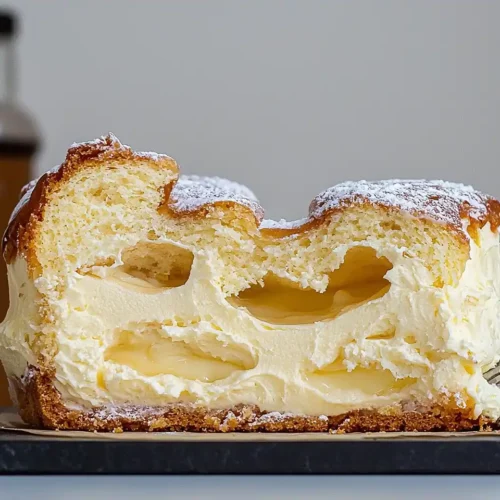
Karpatka Cake
Equipment
- Two 9-inch springform pans
- Medium saucepan
- Stand mixer with paddle attachment
- Stand mixer with whisk attachment
- Heat-proof mixing bowl
- Balloon whisk
- Offset spatula
- Digital thermometer
- fine-mesh sieve
Ingredients
Crème Pâtissière (Custard Base)
- 2 ½ cups whole milk
- 150 g granulated sugar divided (3/4 cup)
- ½ teaspoon kosher salt
- 50 g cornstarch 5 tablespoons
- 4 large egg yolks
- 2 teaspoons pure vanilla extract or vanilla bean paste
Pâte à Choux (Choux Pastry)
- ¾ cup water
- 85 g unsalted butter room temperature, 6 tablespoons
- ¼ teaspoon kosher salt
- 95 g all-purpose flour 3/4 cup
- 3 large eggs
Crème Mousseline (Butter Enrichment)
- 200 g unsalted butter room temperature, 14 tablespoons
- 25 g granulated sugar 2 tablespoons
Assembly
- butter for greasing
- confectioners’ sugar for dusting
Instructions
- Heat 2 1/2 cups milk, half the sugar (about 75g), and 1/2 teaspoon salt in a saucepan over medium heat until tiny bubbles form around the edges and steam rises. Don’t let it boil.
- While the milk heats, whisk together the remaining 75g sugar and 50g cornstarch in a heat-proof bowl until no lumps remain. Add 4 egg yolks and whisk vigorously until the mixture is smooth and pale yellow—it’ll be quite thick and paste-like at this stage.
- Once the milk is steaming, remove it from heat and very slowly drizzle about 1/2 cup into the egg mixture while whisking constantly. This tempering step prevents scrambled eggs. Pour the tempered egg mixture back into the saucepan with the remaining milk, stirring to combine.
- Return the saucepan to medium-low heat and whisk continuously for 5 to 9 minutes until the custard thickens to a pudding-like consistency. Keep whisking—any break in whisking can create lumps or cause curdling. You’ll know it’s ready when the whisk leaves trails that hold their shape for a second before disappearing.
- Remove from heat and whisk in 2 teaspoons vanilla extract or paste until fully incorporated.
- Transfer the custard to a large, shallow container and press plastic wrap directly onto the surface to prevent skin from forming. Let it cool to room temperature on your counter—this is important because cold custard won’t incorporate smoothly with butter later.
- Preheat your oven to 400°F (200°C) with the rack in the center position. Generously butter the bottom and sides of two 9-inch springform pans, then line the bottoms with parchment circles—the butter acts like glue to keep the parchment in place.
- Combine 3/4 cup water, 85g butter, and 1/4 teaspoon salt in a medium saucepan over medium heat. Once the butter melts completely and the mixture starts to bubble, immediately remove from heat and dump in all 95g flour at once. Stir quickly with a wooden spoon—adding flour all at once prevents lumps from forming.
- Reduce heat to medium-low and return the pan to the burner. Stir constantly, pressing and turning the dough against the pan bottom until it forms a cohesive ball and leaves a thin white film on the bottom of the pan. This drying step is crucial for proper puff—it can take anywhere from 2 to 10 minutes depending on your pan and stove, so watch for the visual cue (that white residue) rather than timing it.
- Transfer the hot dough to your stand mixer bowl fitted with the paddle attachment. Let it cool for about 10 minutes—it should still feel quite warm but not scorching hot. Start the mixer on medium-low and add eggs one at a time, letting each incorporate fully before adding the next.
- The finished batter should be smooth, glossy, and thick enough that when you lift the paddle, the batter falls in a long V shape rather than running off in a thin stream.
- Divide the dough evenly between your two prepared pans (about 210g per pan). Use the back of a spoon or offset spatula to spread it roughly, creating uneven peaks, valleys, and swirls. These texture variations are what make karpatka look like mountain ranges, so embrace the chaos!
- Bake for 24 to 28 minutes until the pastry is deeply golden brown all over and puffed dramatically. Don’t open the oven door early or the steam will escape and your layers will deflate.
- Cool the layers in their pans for 10 minutes, then carefully remove the springform rings and transfer the pastry layers to a wire rack to cool completely.
- Before starting, make sure both your butter and pastry cream are at room temperature (around 70-75°F). Temperature matching is critical here.
- In your stand mixer fitted with the whisk attachment, beat 200g room-temperature butter and 25g sugar on medium-high speed for 2 to 3 minutes until pale, fluffy, and almost doubled in volume.
- Give your cooled crème pâtissière a quick whisk in its bowl to loosen it. With the mixer running on medium-low, add the pastry cream to the butter mixture one heaping spoonful at a time, letting each addition incorporate before adding more.
- Once all the pastry cream is incorporated, increase speed to medium-high and beat for about 5 minutes until the crème mousseline is light, airy, and holds soft peaks.
- Place the clean springform ring on your serving plate. For easier removal later, line the inside of the ring with a wide strip of parchment paper that extends above the rim slightly.
- Choose the flatter of your two choux layers and place it inside the ring, flat side down. Spread all of the crème mousseline evenly over the top using an offset spatula, taking it right to the edges. Top with the second choux layer, pressing down very gently.
- Refrigerate for at least 1 hour and up to 3 hours to let the filling set properly. When you’re ready to serve, carefully remove the springform ring and peel away the parchment paper. Dust the top generously with confectioners’ sugar—use a fine-mesh sieve for an even, snow-like effect.