Jiggly Japanese Cheesecake
Master the perfect jiggly Japanese cheesecake with this fail-proof method—no cracks, no collapse, just cloud-like texture every time. Follow the exact steps and bake it right on your first try. Try it now!
Jiggly Japanese cheesecake is one of those recipes where most people fail the first time not because it’s complicated, but because they skip one small detail that changes everything.
In this guide, you’ll get the exact timing, technique, and temperature tricks that took me three test batches to figure out — so you don’t have to waste a single egg.
This jiggly Japanese cheesecake is made from cream cheese, unsalted butter, whole milk, and a soft meringue folded in with care, then baked low and slow in a water bath until the top turns golden and the center trembles like the world’s fluffiest cloud.
I first had a version of this at a tiny café in Osaka, served warm on a paper plate with nothing else. I came home completely obsessed, spent weeks trying to get that same impossible softness, and finally landed on the method you’ll find below.
Table of Contents
How Do You Make Jiggly Japanese Cheesecake at Home?
Jiggly Japanese cheesecake is a light, soufflé-style cake made by folding cream cheese batter into whipped egg white meringue and baking it slowly in a water bath until it’s cloud-soft, barely sweet, and trembles at the center.
- Line a 20 cm round cake pan with parchment and preheat the oven to 150°C with a water bath inside.
- Melt cream cheese, butter, and whole milk together in a saucepan over low heat until completely smooth.
- Sift cornstarch and flour into the warm cream cheese mixture, then whisk until lump-free.
- Add egg yolks one at a time to the batter, mixing thoroughly after each addition.
- Whip egg whites with superfine sugar to soft — not stiff — peaks using a stand or hand mixer.
- Fold the meringue gently into the batter, pour into the pan, and bake in the water bath until golden and just set.
- Soft peaks vs. stiff peaks: Soft peaks give a lighter, bouncier crumb; stiff peaks can make the cake crack or deflate.
- Water bath vs. dry bake: Water bath keeps the oven humid and prevents surface cracks; dry baking causes uneven rise.
- Pastry flour vs. all-purpose flour: Pastry flour has less protein and makes a softer, more delicate crumb.
- Serve warm vs. chilled: Warm gives maximum jiggle and airiness; chilled is denser but still delicious and sliceable.
- Loose-base pan vs. solid pan: Solid pan is safer in a water bath; loose-base needs thorough foil wrapping or water seeps in.
Use a solid 20 cm round pan, pull the cheesecake while it still has a gentle jiggle in the center, and serve it warm — that’s when the texture is at its absolute best.
Why You’ll Love This Japanese Jiggly Cheesecake Recipe
This fluffy Japanese cheesecake is proof that the lightest desserts are often the most memorable ones.
- The texture is unlike anything else. It’s not dense like New York cheesecake and not hollow like a soufflé — it’s somewhere impossibly in between, with a softness that feels like eating warm, sweetened air.
- It’s more forgiving than it looks. The steps sound precise, but once you get your oven dialed in, this cake is incredibly consistent. The water bath does most of the heavy lifting.
- The ingredient list is short. Cream cheese, butter, eggs, milk, a little flour and sugar — that’s it. No specialty items, no obscure techniques you’ve never heard of.
- It beats any boxed or bakery version hands down. Store-bought Japanese cheesecake is often overbaked, rubbery, and under-seasoned. Homemade means you control the jiggle.
- One testing note: I found that pulsing granulated sugar in a blender to make it finer — even just 10 seconds — made a noticeable difference in how smoothly the meringue came together. It’s a small step that’s genuinely worth doing.
If you love simple but stunning bakes, the easy 2-ingredient Japanese cheesecake on Dessert Haven is a great low-effort version to try alongside this one.
What Do You Need to Make This Recipe?
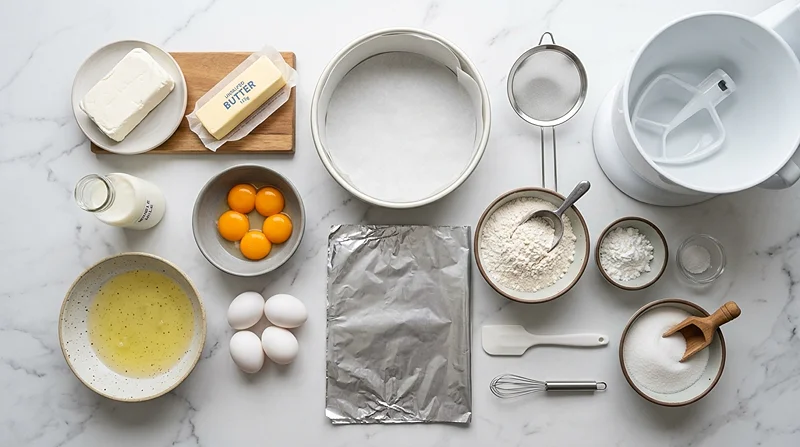
This Japanese cotton cheesecake recipe is built on simple pantry staples — here’s everything, measured for 8 servings.
| Amount | Ingredient |
|---|---|
| 226 g (1 cup) | Full-fat cream cheese — Philadelphia works best; low-fat versions make the batter watery |
| 55 g (¼ cup) | Unsalted butter |
| 120 g (½ cup) | Whole milk — don’t substitute skim or the batter won’t set properly |
| 40 g (⅓ cup) | All-purpose flour — pastry flour is ideal if you have it; lower protein = softer crumb |
| 15 g (2 tbsp) | Cornstarch |
| Pinch | Salt |
| 5 medium | Eggs, yolks and whites separated — room temperature eggs whip more easily |
| 75 g (⅓ cup) | Granulated sugar — superfine or blender-pulsed works best for smooth meringue |
Per Serving (estimated): ~230 cal · 6g protein · 18g carbs · 15g fat. A single slice is rich enough to satisfy without going overboard — enjoy it warm and you’ll rarely want seconds of anything else.
What Equipment Do You Need?
- 20 cm (8-inch) round cake pan (solid base): Essential. A solid pan is safest for water bath baking — no foil gymnastics required.
- Parchment paper: Essential. Line the bottom and sides so the cake releases cleanly when you flip it.
- Large roasting pan or deep baking dish: Essential. This is your water bath — it needs to be big enough to hold the cake pan with space around the sides.
- Medium saucepan: Essential. For melting the cream cheese, butter, and milk together over low heat.
- Fine mesh sieve: Essential. Sifting the flour and cornstarch directly into the batter keeps it lump-free.
- Stand mixer or hand mixer with whisk attachment: Essential. You need consistent, controlled speed to build the meringue properly.
- Rubber spatula: Essential. For folding — a wide, flexible spatula is everything here.
- Digital oven thermometer: Highly recommended. Most ovens run 10–20°F off their dial, and this cake is sensitive to temperature.
- Loose-base pan (with foil wrapping): Optional. Works fine if wrapped thoroughly in two layers of heavy-duty foil.
How Do You Make Jiggly Japanese Cheesecake Step by Step?
Making jiggly Japanese cheesecake is really about three careful moments: building the batter, building the meringue, and knowing when to pull the cake.
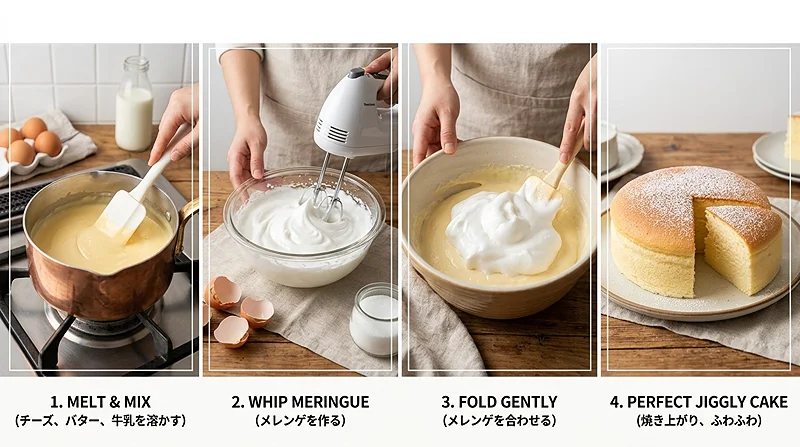
- Prep the pan and oven. Line a 20 cm solid round cake pan with parchment paper on the bottom and sides. Place a deep roasting pan in the oven filled with enough hot water to reach halfway up the cake pan. Preheat to 150°C (300°F). (If using a loose-base pan, wrap it in two tight layers of heavy-duty foil now — one gap and you’ll get a soggy bottom.)
- Make the sugar finer. If your sugar is on the coarser side, pulse it in a blender for 10 seconds to get it closer to superfine. Measure out your amount after pulsing, not before.
- Separate your eggs. Cold eggs separate more cleanly, but room temperature whites whip better — separate cold, then let the whites sit out for 15 minutes. Make sure not even a speck of yolk gets into the whites or they won’t whip properly.
- Melt the cream cheese base. Combine cream cheese, butter, and whole milk in a medium saucepan over low heat. Stir constantly with a spatula until the mixture is completely smooth and no lumps remain, then remove from heat immediately. (Don’t rush this over higher heat — the cream cheese can scorch on the bottom and you’ll taste it.)
- Add the dry ingredients. Sift the cornstarch, salt, and flour directly into the warm cream cheese mixture. Whisk gently until the batter is completely smooth and glossy.
- Add the egg yolks. Add them one at a time, whisking thoroughly after each one before adding the next. The batter should look rich and pale yellow when all five are in.
- Whip the meringue. Start whipping the egg whites on low speed. Once they look foamy, begin adding sugar one tablespoon at a time. Increase the speed gradually as you add sugar and stop the moment you reach soft peaks — the tips should curl over gently when you lift the whisk. (Stiff peaks = trouble. An over-beaten meringue doesn’t fold smoothly and can cause cracking. If you’re unsure, stop early.)
- Fold the meringue into the batter. Add the meringue to the cream cheese batter in three additions, folding with a wide rubber spatula in slow, deliberate arcs from the bottom of the bowl up and over. You want it just combined — a few streaks are fine. Overmixing deflates the air you just worked to build.
- Fill the pan and bake. Pour the batter into the prepared pan from a low height to avoid air bubbles. Place it in the water bath and bake at 150°C for 30 minutes with the oven door closed. Then crack the door open slightly and bake for another 20 minutes. Close the door again and finish with a final 20 minutes. Total: 70 minutes. Use a digital thermometer to confirm your oven is holding steady. (Watch for a golden-brown top — fully colored but not dark. If it’s browning too fast, reduce by 5°C and add a few minutes.)
- Test and remove. The cheesecake is ready when the top is evenly golden, the sides look set, and there’s a slow, even jiggle in the center — not a liquid slosh. Remove it from the water bath, let it sit for 5 minutes, then flip it gently onto a plate and flip it back right-side up onto a serving plate. Serve immediately while it’s still warm.
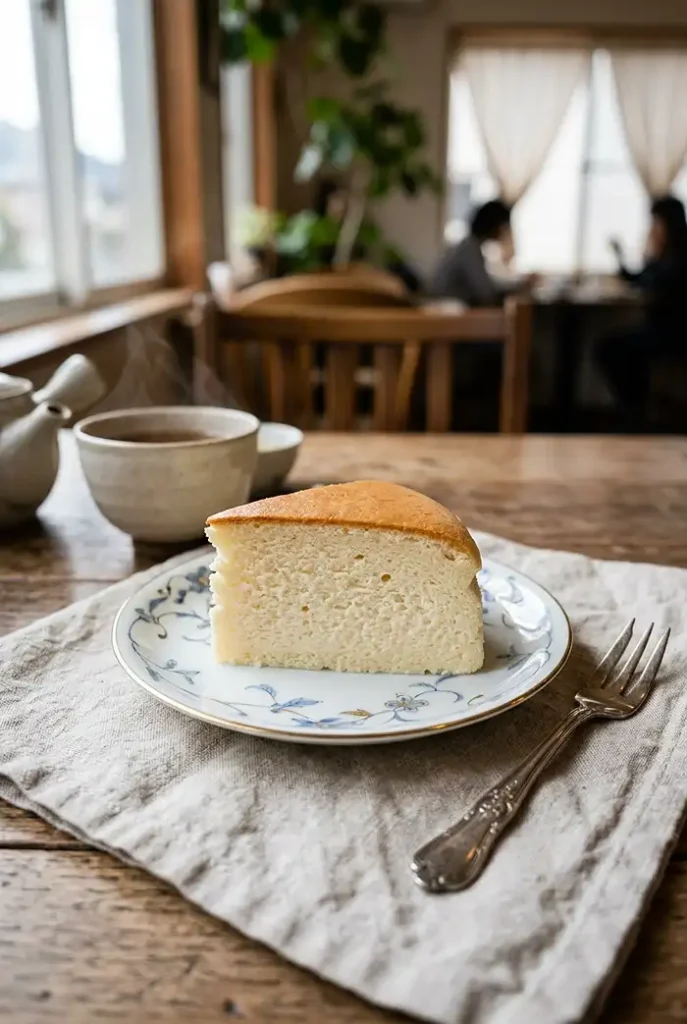
Pro Tips for Perfect Japanese Cotton Cheesecake
Japanese cotton cheesecake rewards patience and punishes shortcuts — here’s what actually makes the difference.
Soft peaks are non-negotiable. According to King Arthur Baking’s guide to meringue science, the protein structure in egg whites tightens as they whip — soft peaks mean the air bubbles are still large and flexible, which is exactly what you need for a cake that rises gently and stays tender.
Stiff peaks lock those bubbles into a rigid foam that can crack under heat expansion. Pull your whites early and the cake will thank you.
Your oven is probably lying to you. I put a cheap digital thermometer in my oven and discovered it ran 18°C hotter than the dial said. At true 150°C this cake bakes beautifully; at what I thought was 150°C, the top was cracking and the inside was rubbery. A thermometer costs less than a block of cream cheese and will save you entire batches.
The water bath isn’t optional. It keeps the oven environment humid, which slows the surface from setting too fast and gives the interior time to cook through gently. Skipping it almost always results in a cracked top and a dense, uneven crumb. Fill the bath with hot water — not cold — so the oven temperature doesn’t drop when you slide the pan in.
Low-protein flour is worth seeking out. All-purpose flour works, but pastry flour has a lower protein content, which means less gluten development and a softer, more delicate interior. I tested both back to back, and the pastry flour version had a noticeably more tender crumb. If you bake regularly, it’s worth keeping a bag on hand.
Troubleshooting: When Something Goes Wrong
Why Did My Cheesecake Crack on Top?
Almost always, this is a temperature issue — either the oven was too hot, the meringue was beaten too stiff, or the water bath ran dry partway through. Next time, verify your oven temperature with a thermometer, stop whipping at soft peaks, and start with hot water in the bath.
Why Did My Cheesecake Deflate After Baking?
Some shrinkage is normal and completely fine — this is a soufflé-style cake and it will settle slightly as it cools. Major collapse usually means the cake was underbaked or the meringue was over-folded. The center should jiggle but not slosh when you pull it from the oven.
Why Is the Texture Rubbery Instead of Fluffy?
Rubbery texture usually comes from one of two things: overbaking or over-mixing when folding the meringue in. Pull the cake while there’s still movement in the center, and fold just until the batter is combined — a few pale streaks are better than a deflated mix.
Why Did Water Get Into My Cheesecake?
This happens when a loose-base pan isn’t wrapped well enough. Use two full layers of heavy-duty foil, pressing it up high on the sides, and check for gaps before the pan goes into the water bath. A solid pan completely eliminates this risk.
Can I Make This Without a Stand Mixer?
Yes, a hand mixer works perfectly — it just takes a bit longer to build the meringue. Go low to start, add the sugar slowly, and watch the texture rather than the clock. The result is exactly the same.
Variations and Ways to Customize
This fluffy Japanese cheesecake is wonderful on its own, but it takes beautifully to a few thoughtful twists.
- Matcha Japanese Cheesecake: Sift 8–10 g of ceremonial-grade matcha powder in with the flour and cornstarch. The bitterness of the matcha plays perfectly against the gentle sweetness of the cake, and the color comes out a soft, muted green. Use high-quality matcha here — lower grades turn brown and taste dusty when baked.
- Yuzu or Lemon Zest: Add the finely grated zest of one lemon or a teaspoon of yuzu juice to the cream cheese base when you melt it. It brightens the flavor without changing the texture at all — a small addition that makes the whole thing feel a little more awake.
- Holiday Spice Version: Add a half teaspoon of cinnamon and a pinch of cardamom to the dry ingredients for a warm, fragrant winter version. It pairs beautifully with a light dusting of powdered sugar right before serving.
- Gluten-Free Version: Replace the all-purpose flour with a certified gluten-free 1:1 baking flour. The cornstarch already helps with structure, so the swap works well. For a full breakdown of gluten-free baking swaps that hold up in delicate recipes, see our matcha Basque cheesecake with gluten-free tips.
Can You Make Jiggly Japanese Cheesecake Ahead of Time?
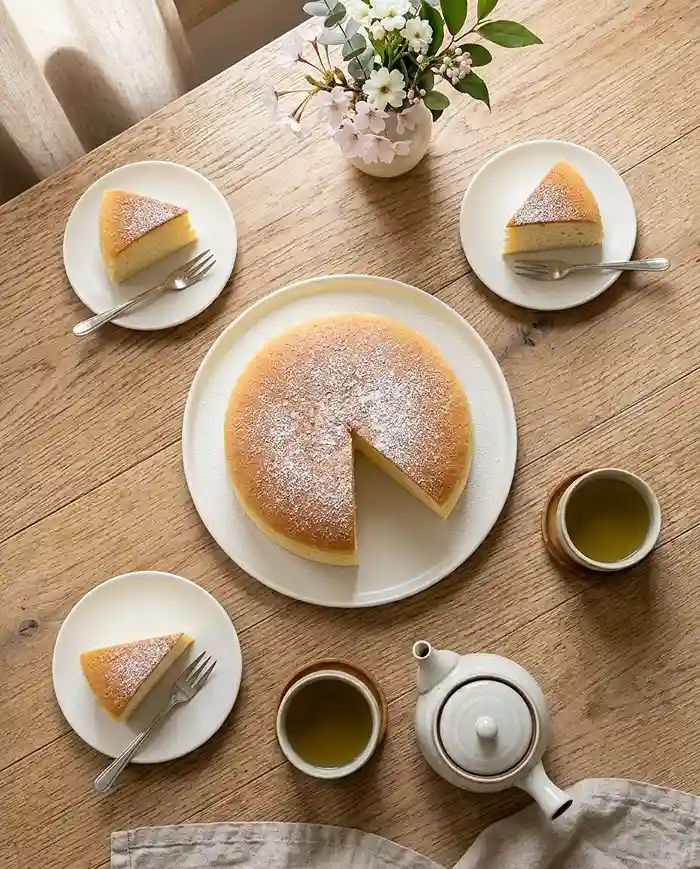
Serving
This cheesecake is at its absolute peak the moment it comes out of the oven — warm, wobbling, impossibly soft. Serve it immediately on a plate with nothing else, or with a light dusting of powdered sugar if you want to dress it up.
A drizzle of strawberry sauce or a few fresh berries on the side are the only additions it really needs.
Storing
Store leftovers in an airtight container in the refrigerator for up to 2–3 days. Be honest with yourself: the airy, jiggly texture is a warm-from-the-oven thing. Cold, it becomes denser and more like a classic cheesecake — still delicious, but a different experience.
Reheating
To bring slices back to life, reheat uncovered in a 150°C (300°F) oven for 8–10 minutes until just warmed through. Avoid the microwave — it makes the texture uneven and steamy in a way that doesn’t do this cake any favors.
Frequently Asked Questions
How Do You Know When Japanese Cheesecake Is Done Baking?
Look for a golden-brown top and a slow, even jiggle in the center when you gently nudge the pan — it should move as one piece, not slosh like liquid. The sides should look fully set and slightly pulled from the edges of the pan.
Can You Use Low-Fat Cream Cheese in Japanese Cheesecake?
It’s not recommended. Full-fat cream cheese has the fat content needed to give the batter body and richness — low-fat versions introduce extra water that thins the batter and makes the texture soft in the wrong way. Stick with full-fat for best results.
Why Is Superfine Sugar Better for This Recipe?
Superfine sugar dissolves faster into the egg whites as they whip, which means a smoother, more stable meringue with smaller, more uniform air bubbles. Larger granules can leave undissolved sugar in the foam, which weakens the structure. Pulse regular granulated sugar in a blender for 10 seconds if you don’t have superfine on hand.
Is Japanese Cheesecake Supposed to Jiggle?
Yes — the signature jiggle is intentional and is how you know it’s baked correctly. The center should move slowly and evenly when you nudge the pan, almost like a firm jelly. This means the interior is fully set but still holding its airy, custardy texture.
What Is the Difference Between Japanese Cheesecake and Regular Cheesecake?
Regular cheesecake is dense, rich, and set firm with eggs and cream cheese baked directly. Japanese souffle cheesecake uses a meringue folded into the cream cheese base, which gives it a much lighter, airier crumb that’s closer to a chiffon cake in texture — far less heavy, and meant to be eaten warm.
Make It, Share It, Keep Coming Back to It
Jiggly Japanese cheesecake is one of those recipes that earns a permanent place in your rotation — not because it’s easy, but because the result is unlike anything else you can make at home.
If you give it a go, leave a comment below and tell me how it turned out, or ask anything you ran into — I read every single one.
And if you’re in the mood to keep baking, the Basque cheesecake cupcakes with the burnt-top method are an easy next step with a completely different kind of drama.
Baked with love by Rebeccah Ellene. This recipe went through three full test batches before the timing and temperature were locked in — the 70-minute split-door method in step 9 came directly from that testing, and it’s the detail that makes the most difference.
Jiggly Japanese Cheesecake
Equipment
- 20 cm round cake pan (solid base)
- Large roasting pan
- Medium saucepan
- fine-mesh sieve
- stand mixer or hand mixer
- Digital oven thermometer
Ingredients
Main Ingredients
- 226 g Full-fat cream cheese Philadelphia preferred
- 55 g Unsalted butter
- 120 g Whole milk
- 40 g All-purpose flour pastry flour preferred
- 15 g Cornstarch
- 1 pinch Salt
- 5 medium Eggs separated
- 75 g Granulated sugar superfine preferred
Instructions
- Line a 20 cm round cake pan with parchment and preheat the oven to 150°C with a water bath inside.
- Melt cream cheese, butter, and milk together over low heat until smooth.
- Sift flour, cornstarch, and salt into the mixture and whisk until smooth.
- Add egg yolks one at a time, mixing thoroughly after each addition.
- Whip egg whites with sugar to soft peaks.
- Fold the meringue gently into the batter in batches.
- Pour batter into pan and bake in water bath at 150°C for 70 minutes using staged door opening.
- Remove when golden with a gentle jiggle in the center, cool slightly, then serve warm.