Basbousa Cake
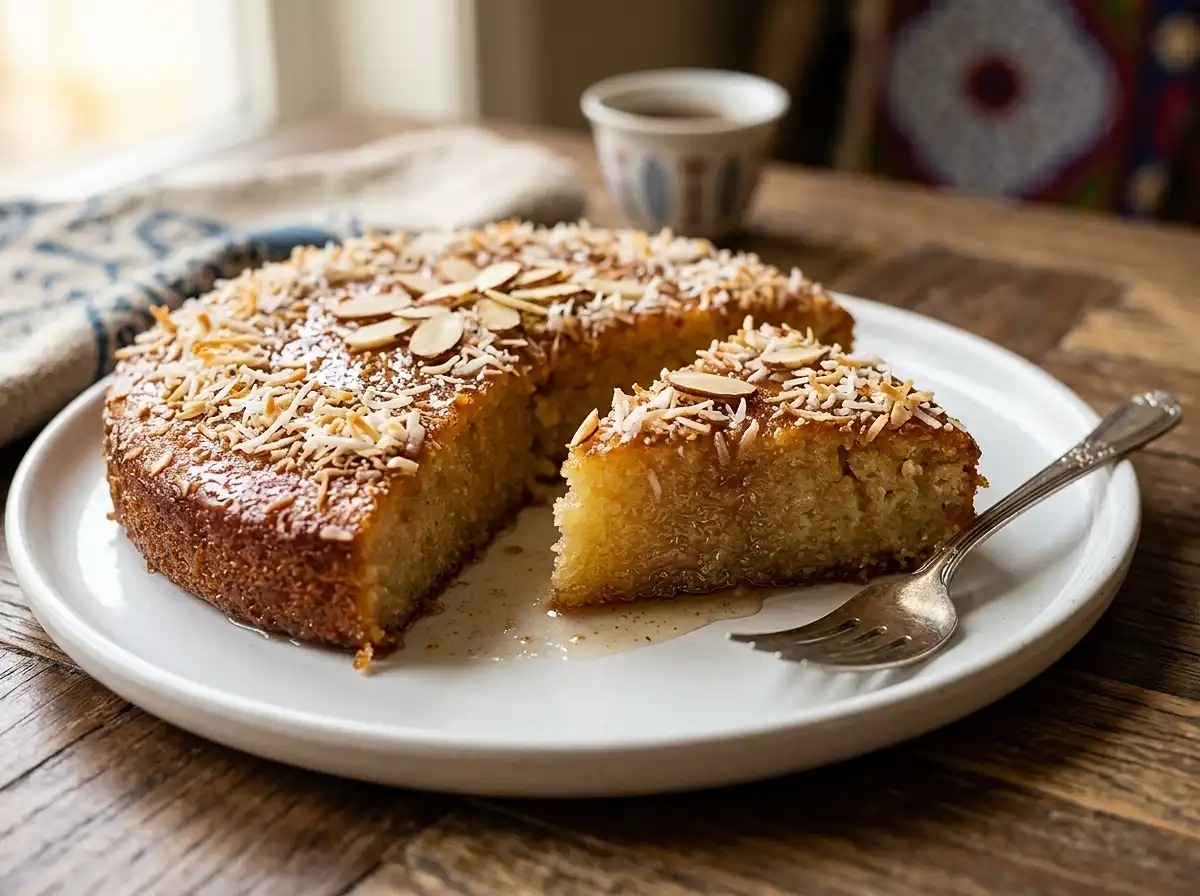
Discover why this Egyptian basbousa cake stays impossibly moist for days. Our foolproof recipe guarantees golden, syrup-soaked perfection. Try it today!
What Is Basbousa Cake?
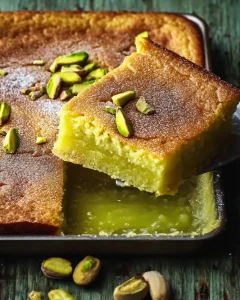
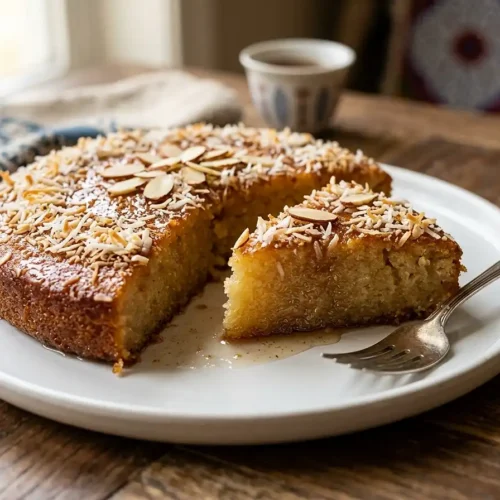
This basbousa cake features a tender, golden crumb made from fine and coarse semolina combined with creamy Greek yogurt, melted butter, and sweetened shredded coconut, then drenched in warm cinnamon-infused simple syrup that soaks into every crevice.
Topped with sliced almonds and coconut flakes, this egg-free Egyptian dessert delivers a uniquely satisfying texture—slightly grainy yet melt-in-your-mouth moist—with subtle sweetness that deepens over time.
I first tried basbousa at a tiny bakery in my neighborhood, and the moment that syrup-soaked bite hit my tongue, I was completely hooked. There’s something magical about how the semolina absorbs all that fragrant syrup while maintaining just enough texture to keep things interesting.
This semolina yogurt cake has been a staple across the Middle East for centuries, known by different names—haresa, namoura, revani—depending on where you are. If you love syrup-soaked desserts, you’ll also want to check out our matcha tres leches cake for another gorgeous milk-drenched creation.
Why You’ll Love This Basbousa Cake Recipe
This basbousa cake recipe is about to become your new favorite no-fuss dessert, and here’s exactly why it deserves a permanent spot in your recipe rotation.
First, it’s completely egg-free. The combination of yogurt and semolina creates all the structure and moisture you need—no eggs required. This makes it naturally friendly for anyone avoiding eggs while still delivering incredible texture.
The make-ahead factor is a dream. As King Arthur Baking notes, basbousa is the perfect crowd-feeding dessert to make in advance because it stays soft and flavorful for days. In fact, it often tastes even better the next day once the syrup has fully penetrated every bit of cake.
The ingredient list is refreshingly simple. No specialty items here—just pantry staples like semolina, yogurt, butter, and sugar that you probably already have on hand. For another simple-yet-stunning Middle Eastern treat, explore our buttery Lebanese maamoul cookies.
Nutritional Peek
| Per Serving (8 servings) | Amount |
|---|---|
| Calories | ~380 |
| Protein | 5g |
| Carbohydrates | 62g |
| Fat | 14g |
Note: Values are approximate and may vary based on specific ingredients used.
Ingredients for Egyptian Basbousa Cake
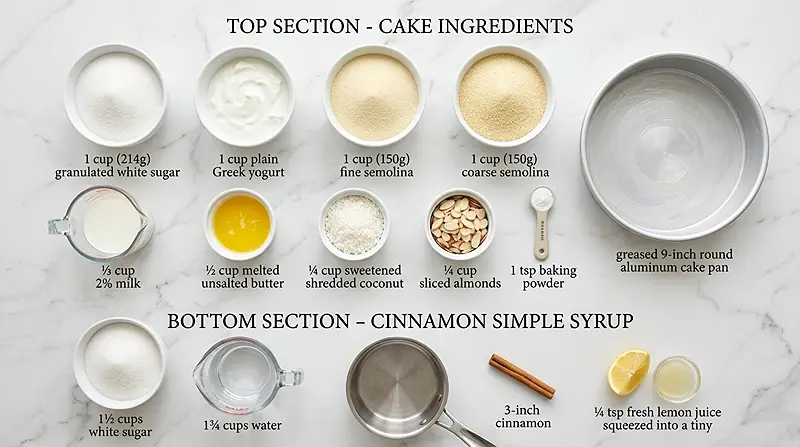
For this egyptian basbousa cake, you’ll need two components: the semolina batter and a fragrant cinnamon syrup. Everything comes together quickly, and the results are absolutely worth it.
For the Cake
| Amount | Ingredient | Notes |
|---|---|---|
| 1 cup (214g) | Granulated sugar | |
| 1 cup | Plain Greek yogurt | Full-fat works best for moisture |
| 1 cup (150g) | Fine semolina | Creates smooth texture |
| 1 cup (150g) | Coarse semolina | Adds that signature slight grain |
| 1 teaspoon | Baking powder | Fresh for best rise |
| ⅓ cup | 2% milk | Room temperature |
| ½ cup | Butter, melted | Unsalted preferred |
| ¼ cup | Sweetened shredded coconut | Or coconut chips |
| ¼ cup | Sliced almonds | For topping |
For the Cinnamon Simple Syrup
| Amount | Ingredient | Notes |
|---|---|---|
| 1½ cups | Sugar | |
| 1¾ cups | Water | |
| 1 | Cinnamon stick | Or ½ tsp ground cinnamon |
| ¼ teaspoon | Lemon juice | Prevents crystallization |
For more Middle Eastern dessert inspiration, see our silky tahini cream dessert.
Equipment You’ll Need
Essential tools:
- 9-inch round cake pan
- Large mixing bowl
- Rubber spatula
- Small saucepan for syrup
- Measuring cups and spoons
Optional but helpful:
- Kitchen scale for precise semolina measurements
- Pastry brush for greasing
- Wire cooling rack
How to Make Basbousa Cake: Step-by-Step
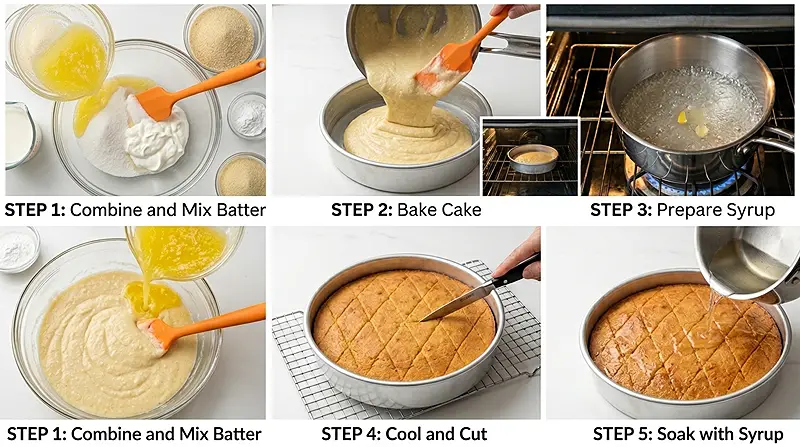
Making this basbousa cake is wonderfully straightforward—no mixer required, no complicated techniques. Just simple stirring, baking, and that glorious syrup pour.
Preparing the Cake
- Preheat and prep your pan. Set your oven to 350°F (175°C) and generously grease a 9-inch round cake pan with butter. This ensures easy release after the syrup soak.
- Combine sugar and yogurt. In a large mixing bowl, use a rubber spatula to stir together the granulated sugar and Greek yogurt until the sugar begins to dissolve and the mixture is smooth.
- Add the dry ingredients. Pour in both the fine and coarse semolina, baking powder, and milk. Stir everything together until you have a thick, evenly combined batter—it will look grainy and slightly wet, which is exactly right.
- Incorporate the melted butter. Add the melted butter and stir until fully incorporated. The batter should be thick but spreadable, with a slightly gritty texture from the semolina.
- Bake until golden. Transfer the batter to your prepared pan and use a spatula to smooth the top evenly. Bake for 40-45 minutes until the cake is golden brown on top. If you want extra color, pop it under the broiler for 2-3 minutes—but watch it like a hawk to prevent burning!
Making the Cinnamon Syrup
- Simmer the syrup while the cake bakes. In a small saucepan over medium-high heat, combine the sugar, water, and cinnamon stick. Bring to a boil, stirring until the sugar dissolves completely, about 3-5 minutes.
- Reduce and finish. Remove from heat and stir in the lemon juice (this prevents the syrup from crystallizing later). Let the syrup cool completely and remove the cinnamon stick before using.
The Magic Soak
- Pour cool syrup over hot cake. This is crucial: as soon as the basbousa comes out of the oven, pour the cooled syrup evenly over the hot cake. The pan may fill up dramatically and the cake might even float for a moment—don’t panic! The hot cake will absorb the cool syrup beautifully.
- Let it rest. Allow the cake to cool completely, at least 1 hour, so the syrup fully absorbs into every bit of semolina. Patience pays off here.
- Top and serve. Either serve directly from the pan or run a knife around the edges and invert onto a serving plate. Scatter the shredded coconut and sliced almonds over the top, slice into 8 wedges, and enjoy!
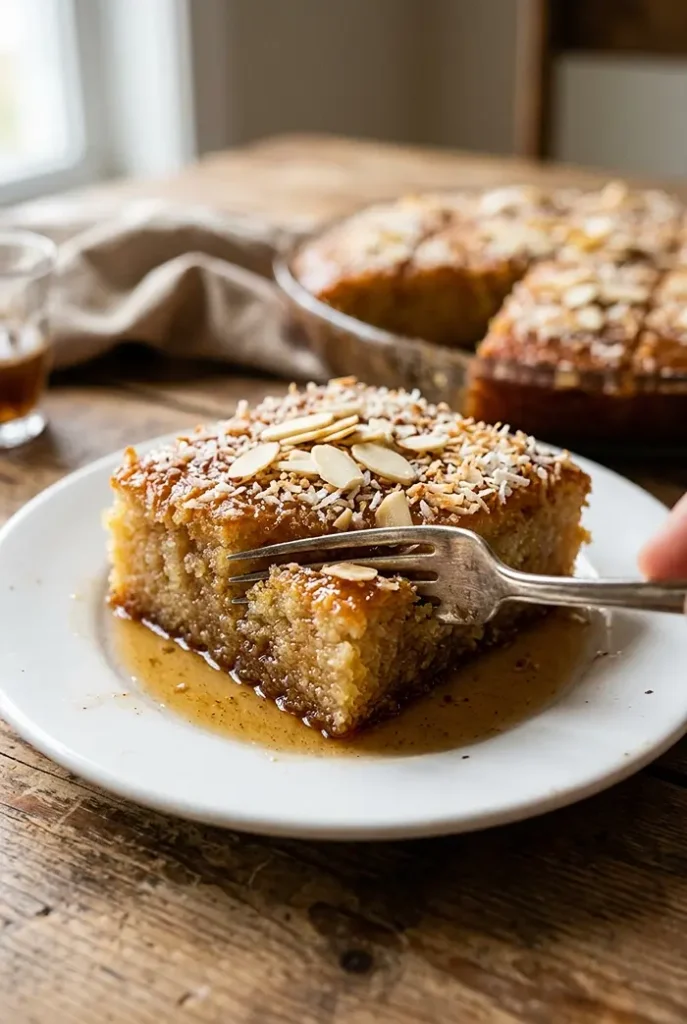
Pro Tips for the Perfect Semolina Basbousa Cake
Creating a flawless semolina basbousa cake comes down to a few key techniques I’ve learned through plenty of trial and error.
Use both fine and coarse semolina. This combination is the secret to basbousa’s signature texture—the fine semolina creates a tender crumb while the coarse semolina provides that distinctive slight grain that makes this cake so satisfying. Using only one type changes the texture entirely.
Temperature contrast is everything. The cool syrup on hot cake technique isn’t optional—it’s essential. According to traditional Middle Eastern baking wisdom, this temperature difference helps the cake absorb syrup more efficiently. Hot syrup on hot cake creates a soggy exterior, while cool syrup penetrates evenly throughout.
Don’t overmix the batter. Semolina doesn’t develop gluten like wheat flour, but overmixing can still compress the air in your batter. A few stirs with a spatula until just combined is all you need.
Give it time to soak. I know it’s tempting to dive in immediately, but basbousa really does taste better after resting. That hour of cooling time allows the syrup to distribute evenly and the flavors to meld.
Troubleshooting Your Basbousa Cake
Why is my basbousa cake dry?
Your cake likely needed more syrup or didn’t absorb it properly. Make sure to pour the cooled syrup over the cake immediately while it’s still hot from the oven. If it’s already cooled and dry, warm some additional syrup and pour it over—the cake will still absorb it, just less evenly.
What if my basbousa is too sweet?
Traditional basbousa is quite sweet! To reduce sweetness, use only ¾ of the syrup next time. You can also add extra lemon juice to the syrup for more balance, or serve with unsweetened whipped cream.
Why didn’t my cake brown properly?
Semolina cakes brown slowly. If your cake is cooked through but still pale after 45 minutes, the broiler trick works wonders—just 2-3 minutes to achieve that gorgeous golden top. Stay nearby and watch carefully!
My syrup crystallized—what happened?
Sugar syrup crystallizes when disturbed during cooling or when it lacks an acidic element. The lemon juice in this recipe prevents that. If it happens anyway, gently reheat the syrup to dissolve the crystals before using.
Can I make basbousa without coconut?
Absolutely! Simply omit the coconut from both the batter and topping. The cake will still be delicious—many traditional recipes don’t include coconut at all.
Variations & Twists on Basbousa Cake
Ready to customize your basbousa with syrup? Here are some delicious directions to explore.
Rose water syrup: Replace the cinnamon stick with 1 tablespoon of rose water added after removing from heat. This creates a more traditional Egyptian flavor profile.
Orange blossom version: Add 1 tablespoon of orange blossom water to your syrup and a teaspoon of orange zest to the batter for a citrus-floral twist.
Cream-filled basbousa: Pour half the batter into the pan, spread a layer of thick cream or ashta, then top with remaining batter. Bake as usual.
Pistachio topping: Swap the almonds for crushed pistachios for a more vibrant presentation and slightly different nutty flavor.
For another stunning semolina-based dessert, explore our silky Middle Eastern ice cream.
Serving, Storage & Reheating
Best Way to Serve
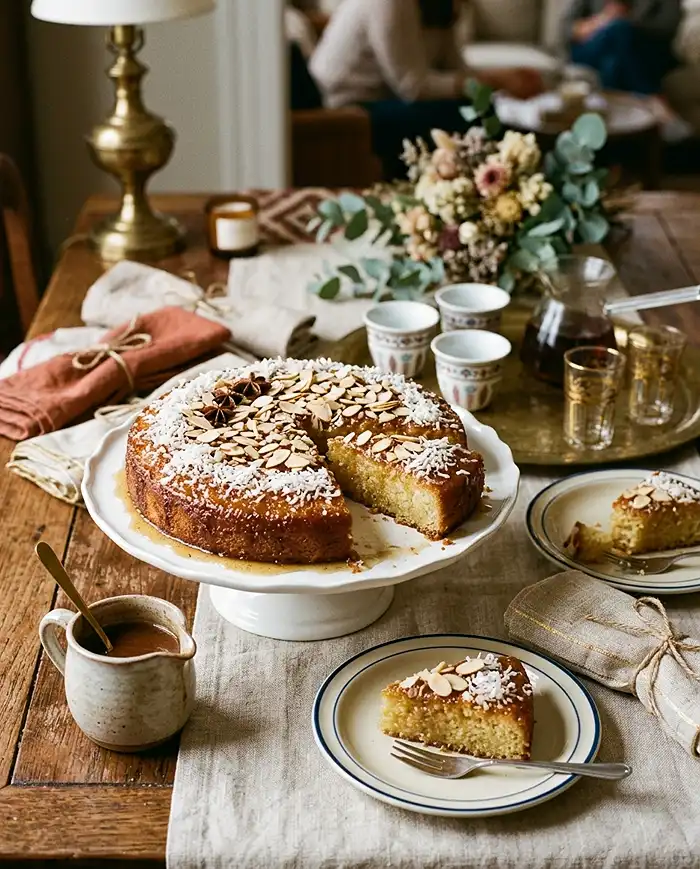
Serve this semolina yogurt cake at room temperature for the best texture. It pairs beautifully with a dollop of unsweetened whipped cream, a scoop of vanilla ice cream, or simply on its own with strong Arabic coffee or mint tea.
Storage Tips
Cover tightly and store at room temperature for up to 3 days—the syrup acts as a natural preservative and keeps the cake incredibly moist. For longer storage, refrigerate for up to 1 week. The texture actually improves over time as flavors meld.
Reheating
If refrigerated, let slices come to room temperature before serving, or warm briefly in the microwave (10-15 seconds) to restore that fresh-from-the-oven softness. Don’t overheat or the syrup will become too runny.
No-Waste Kitchen Magic
- Extra syrup? Drizzle it over Greek yogurt, pancakes, or ice cream. It also makes a fantastic cocktail sweetener.
- Leftover semolina? Use it to make homemade pasta, bread, or another batch of basbousa (you’ll want to!).
- Cake crumbs from slicing? Mix with a bit of cream cheese for quick cake truffles, or sprinkle over ice cream.
- Stale basbousa? Crumble and layer with fresh fruit and cream for a Middle Eastern-inspired trifle.
Frequently Asked Questions
Can I freeze basbousa cake?
Yes! Wrap individual slices or the whole cake tightly in plastic wrap, then aluminum foil, and freeze for up to 3 months. Thaw overnight in the refrigerator and bring to room temperature before serving. The texture holds up remarkably well.
What’s the best substitute for semolina in basbousa?
Cream of wheat (farina) is the closest substitute, though the texture will be slightly different. Some bakers use a combination of fine cornmeal and all-purpose flour in a pinch, but the result won’t be quite as authentic.
Why is my basbousa cake dense instead of fluffy?
Basbousa isn’t meant to be fluffy like a Western cake—it should be dense and moist. However, if it’s unpleasantly heavy, your baking powder may have been old, or the batter was overmixed. Fresh baking powder and gentle stirring help.
Can I make basbousa cake without yogurt?
Yes—substitute with the same amount of sour cream, buttermilk, or even coconut cream for a dairy-free version. The yogurt adds tang and moisture, so choose a substitute with similar properties.
How long should basbousa soak in syrup?
At minimum, let it soak for 1 hour before serving. For best results, let it sit for 3-4 hours or overnight. The longer it soaks, the more evenly the syrup distributes throughout the cake.
What’s the difference between basbousa and namoura?
They’re essentially the same dessert! Basbousa is the Egyptian name, while namoura is the Lebanese and Syrian term. Regional variations may include different syrups (rose water vs. orange blossom) or toppings (almonds vs. pine nuts), but the base semolina cake is the same.
Time to Bake This Golden Beauty!
There you have it—everything you need to create a gorgeous basbousa cake that’ll transport you straight to a Middle Eastern pastry shop. This syrup-soaked semolina beauty is proof that simple ingredients, treated right, can create something absolutely extraordinary.
I’d love to see your creations! Share your photos in the comments and tell me what syrup variations you’ve tried. And if you’re hungry for more Middle Eastern-inspired sweets, don’t miss our buttery Lebanese maamoul cookies for another traditional treat.
Baked with love by Rebeccah Ellene.
Basbousa Cake
Equipment
- 9-inch round cake pan
- Small saucepan
Ingredients
For the Cake
- 1 cup granulated sugar 214g
- 1 cup plain Greek yogurt full-fat works best
- 1 cup fine semolina 150g
- 1 cup coarse semolina 150g
- 1 teaspoon baking powder
- ⅓ cup 2% milk
- ½ cup butter melted
- ¼ cup sweetened shredded coconut or coconut chips
- ¼ cup sliced almonds for topping
For the Cinnamon Simple Syrup
- 1 ½ cups sugar
- 1 ¾ cups water
- 1 cinnamon stick
- ¼ teaspoon lemon juice
Instructions
- Preheat the oven to 350°F (175°C) and generously grease a 9-inch round cake pan with butter.
- In a large mixing bowl, use a rubber spatula to stir together the granulated sugar and Greek yogurt until the sugar begins to dissolve and the mixture is smooth.
- Add both the fine and coarse semolina, baking powder, and milk. Stir everything together until you have a thick, evenly combined batter.
- Add the melted butter and stir until fully incorporated. The batter should be thick but spreadable.
- Transfer the batter to your prepared pan and use a spatula to smooth the top evenly. Bake for 40-45 minutes until the cake is golden brown on top. If needed, broil for 2-3 minutes for extra color, watching carefully to prevent burning.
- While the cake bakes, prepare the syrup. In a small saucepan over medium-high heat, combine the sugar, water, and cinnamon stick. Bring to a boil, stirring until the sugar dissolves completely, about 3-5 minutes.
- Remove from heat and stir in the lemon juice. Let the syrup cool completely and remove the cinnamon stick before using.
- As soon as the basbousa comes out of the oven, pour the cooled syrup evenly over the hot cake. The pan may fill up and the cake might float momentarily—this is normal. Let it absorb.
- Allow the cake to cool completely, at least 1 hour, so the syrup fully absorbs into every bit of semolina.
- Either serve directly from the pan or run a knife around the edges and invert onto a serving plate. Top with the shredded coconut and sliced almonds. Cut into 8 slices and enjoy!