Chocolate Mirror Glaze Cake (Easy Ganache Recipe)
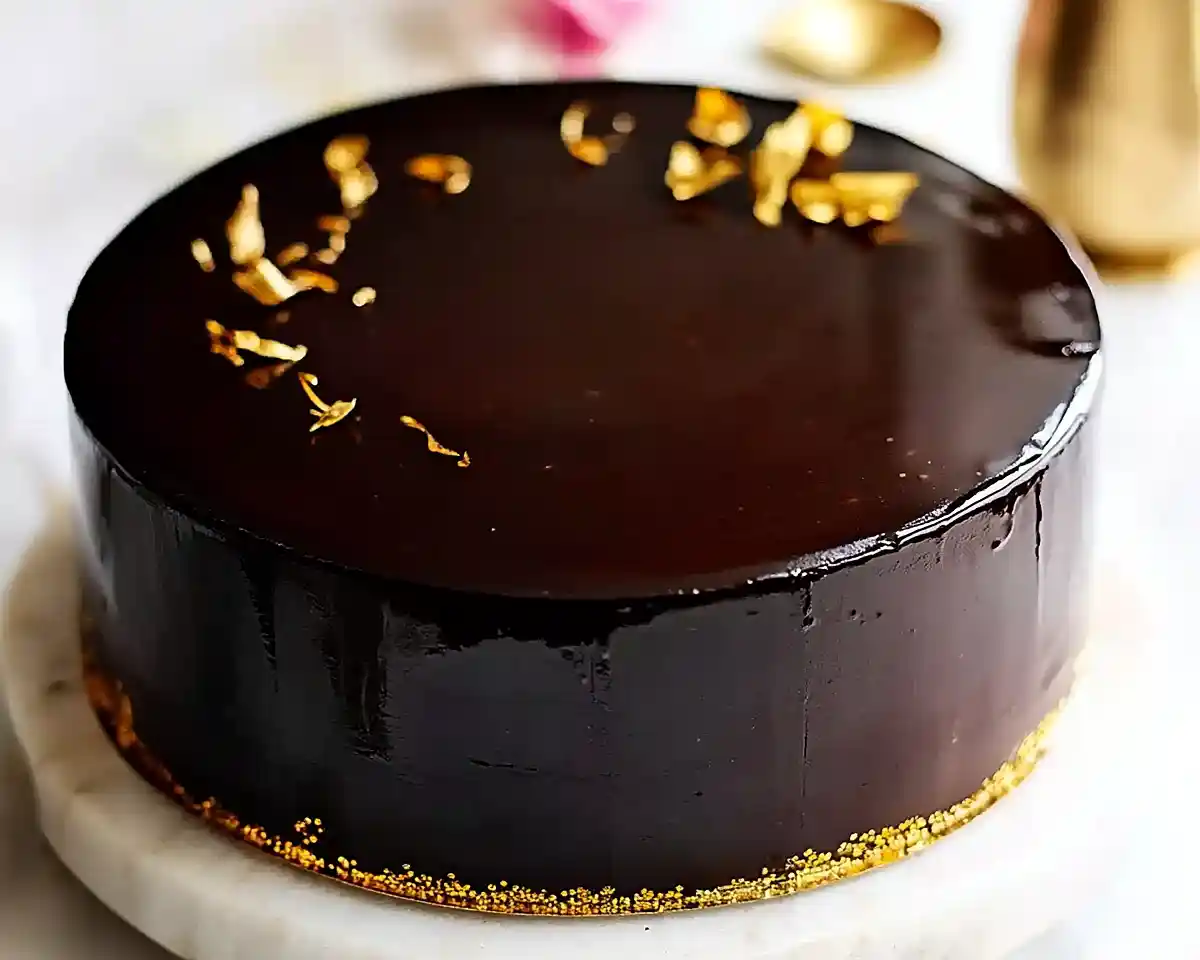
Create a stunning chocolate ganache recipe mirror glaze cake with this foolproof guide. Silky ganache meets glossy mirror finish for bakery-perfect results.
This chocolate ganache recipe mirror glaze combines bloomed gelatin, dutch-processed cocoa powder, and heavy cream to create an impossibly glossy, reflective finish over silky dark chocolate ganache frosting—delivering that jaw-dropping mirror effect with intense chocolate depth and a velvety smooth pour.
I’ll never forget the first time I saw a mirror glaze cake in a fancy bakery window. It looked like someone had poured liquid glass over chocolate, and I just stood there thinking, “There’s no way I could make that at home.” Spoiler alert: I was completely wrong, and you’re about to discover why this chocolate ganache mirror glaze recipe is way more achievable than it looks.
The secret? Patience and temperature control. Once you nail those two things, you’ll be creating bakery-quality chocolate ganache cakes that make people gasp when you bring them to the table. If you love working with chocolate, you’ll also want to check out our rich chocolate fudge frosting guide for even more silky chocolate inspiration.
Table of Contents
Why You’ll Love This Mirror Glaze Chocolate Ganache Recipe
This mirror glaze chocolate ganache recipe delivers that “wow” factor without requiring pastry school credentials. The glossy finish literally reflects like a mirror, and underneath, you’ve got layers of moist chocolate cake wrapped in smooth dark chocolate ganache.
Here’s why this recipe has become my go-to showstopper. First, it’s more forgiving than you’d think—the glaze hides a multitude of frosting sins (we’ve all been there with the lumpy buttercream). Second, the chocolate flavor is ridiculously intense without being too sweet. Third, it actually keeps well, so you can make it ahead for special occasions.
I learned most of my ganache techniques from years of trial and error, but King Arthur Baking’s guide on working with chocolate really helped me understand why tempering chocolate properly matters. The science makes a difference when you’re trying to get that professional finish.
Plus, once you master this technique, you can apply it to our silky chocolate topping method for smaller desserts. The possibilities are honestly endless, and your Instagram feed will thank you.
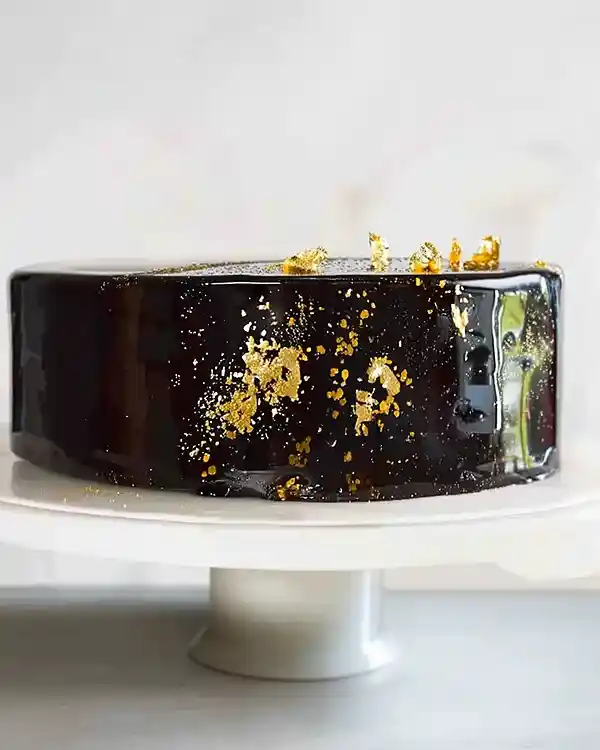
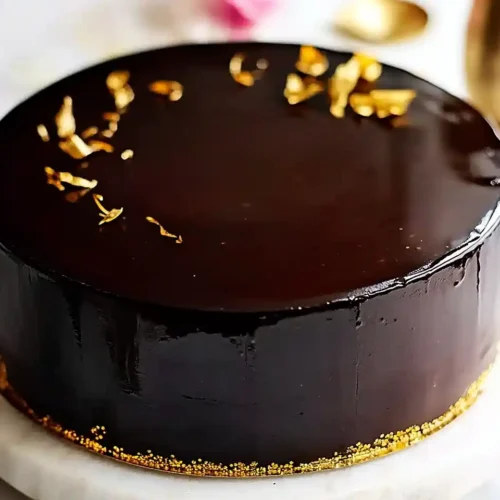
Stunning Mirror Glaze Chocolate Ganache Cake
Equipment
- Medium saucepan
- Small fine mesh strainer
- Shallow bowl
- Large tray
- Digital thermometer
- Offset spatula or palette knife
- Blow torch
- Tall jug or pitcher
- Cake turntable
Ingredients
Cake & Ganache Base
- 1 x 20cm (8 inch) chocolate cake, 2 layers Must be completely chilled before glazing
- 2 batches dark chocolate ganache For smooth, level frosting coverage
For the Gelatin Bloom
- 2.5 tablespoons cold water Just from the tap is fine
- 4 teaspoons gelatin powder Unflavored, standard supermarket kind
Mirror Glaze Components
- ⅔ cup water
- ⅔ cup pure cream (whipping cream) Not thickened/heavy cream—regular whipping works better
- 1 cup unsweetened cocoa powder Sifted! Dutch-processed gives the richest color
- 1 cup + 2 tablespoons white sugar (caster/superfine) The fine texture dissolves smoothly
Optional Decoration
- gold dust and gold leaf For that extra fancy touch
Instructions
- Pop those chocolate cake layers in the fridge for at least an hour until they’re properly cold and firm. This makes trimming and frosting about a million times easier.
- Trim the tops to make them flat, then frost your cake with dark chocolate ganache until you’ve got a smooth, level surface. Take your time here—any bumps will show through the mirror glaze.
- Refrigerate the frosted cake for another hour minimum. The ganache needs to be properly set and cold before that glossy glaze goes on.
- Pour cold water into a small bowl, then sprinkle the gelatin powder across the surface. Give it a quick stir just to wet all the powder, then leave it alone for 5 minutes. It’ll turn into this rubbery, jiggly mass—that’s exactly what you want.
- In your medium saucepan, combine the sifted cocoa powder and ⅔ cup water. Mix until you’ve got a smooth paste with barely any lumps.
- Splash in a bit of cream and stir—the paste will loosen right up. Add the remaining cream and all the sugar, then stir gently to combine. Don’t whisk vigorously or you’ll create bubbles.
- Turn your stove to medium-high heat and watch carefully. The moment the mixture starts to boil, pull it off the heat immediately.
- Drop in your blob of bloomed gelatin and stir gently until it completely dissolves into the hot mixture. You should see it turn glossy and smooth.
- Set your fine mesh strainer over a shallow bowl, then pour the glaze through it. Tilt both the strainer and the pan so the glaze falls the shortest distance possible to avoid creating air bubbles.
- Hold the bowl between your hands and twist it back and forth quickly. Any bubbles will rise to the center where you can see them. If you spot some, gently scoop them out with a spoon.
- Cover the glaze with plastic wrap, pressing it directly onto the surface so no skin forms. Let it sit on your counter for about 2 hours until it reaches exactly 30°C (86°F).
- Right before you’re ready to glaze, strain the mixture one more time into a jug or pitcher. Tilt everything to minimize the distance the glaze travels.
- Take your chilled cake from the fridge and carefully transfer it onto a wire rack. Place the rack over a large tray to catch all the excess glaze.
- Starting at the center of your cake, pour the glaze in a steady, thick stream. Move in an expanding spiral motion toward the edges, letting the glaze naturally drape down the sides. Try to do this in one continuous pour without stopping.
- Quickly check all sides are fully coated. If you see any bare patches, do a quick little pour directly onto those spots to cover them up.
- Before the glaze sets (you’ve got about 10 minutes), carefully move the cake to your final serving plate using two large offset spatulas to lift it.
- Use the excess glaze from your tray to fill in any gaps or tears. Gently warm an offset spatula and smooth over any rough spots.
- Fill a tall jug with warm tap water. Dip your knife in, wipe it completely dry, then make one clean slice through the cake. Clean the knife between each cut for perfect wedges with crisp layers.
Notes
Nutrition
Nutritional Peek (Per Serving)
| Nutrient | Amount |
|---|---|
| Calories | 385 |
| Protein | 5g |
| Carbohydrates | 48g |
| Fat | 21g |
| Fiber | 3g |
| Sugar | 36g |
Based on 12 servings
Ingredients You’ll Need
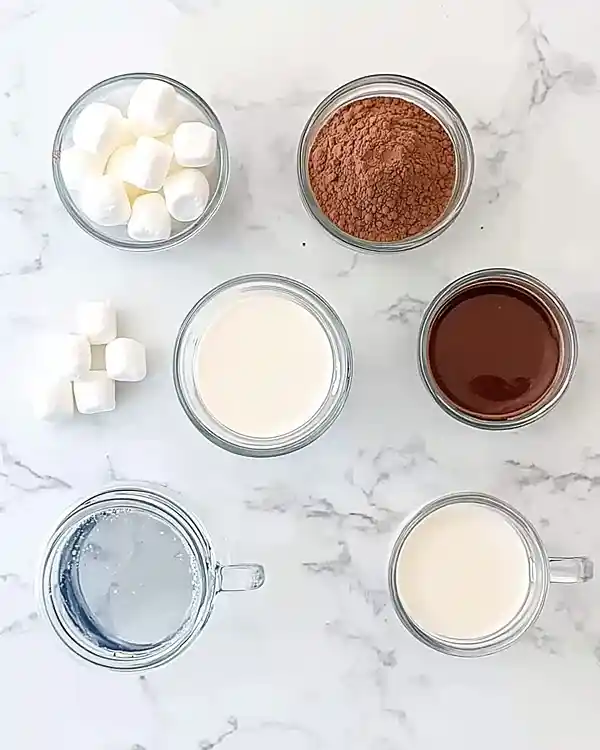
For this mirror glaze chocolate ganache recipe, you’ll need a mix of pantry staples and a few special ingredients that make all the difference. The gelatin is what gives that signature glossy bounce, while dutch-processed cocoa creates the deepest chocolate color.
Cake & Ganache Base
| Amount | Ingredient | Notes |
|---|---|---|
| 1 | 20cm (8″) chocolate cake, 2 layers | Must be completely chilled before glazing |
| 2 batches | Dark chocolate ganache | For smooth, level frosting coverage |
For the Gelatin Bloom
| Amount | Ingredient | Notes |
|---|---|---|
| 2½ tbsp | Cold water | Just from the tap is fine |
| 4 tsp | Gelatin powder | Unflavored, standard supermarket kind |
Mirror Glaze Components
| Amount | Ingredient | Notes |
|---|---|---|
| ⅔ cup | Water | |
| ⅔ cup | Pure cream (whipping cream) | Not thickened/heavy cream—regular whipping works better |
| 1 cup | Unsweetened cocoa powder | Sifted! Dutch-processed gives the richest color |
| 1 cup + 2 tbsp | White sugar (caster/superfine) | The fine texture dissolves smoothly |
Optional Decoration
| Amount | Ingredient | Notes |
|---|---|---|
| As desired | Gold dust and gold leaf | For that extra fancy touch! |
For more tips on selecting the right bakeware for perfect cakes, check out our best chocolate ganache technique guide.
Equipment You’ll Need
Here’s what you’ll want to have ready before you start:
Essential Tools:
- Medium saucepan
- Small fine mesh strainer (this is crucial for bubble-free glaze!)
- Shallow bowl
- Wire cooling rack
- Large tray (to catch drips)
- Digital thermometer (for hitting that perfect 30°C/86°F)
- Offset spatula or palette knife
Nice to Have:
- Blow torch (for warming your palette knife)
- Tall jug or pitcher (makes pouring so much easier)
- Cake turntable (not required, but makes frosting smoother)
Step-by-Step Instructions
Preparing Your Chocolate Ganache Cake Base
- Chill your cake layers. Pop those chocolate cake layers in the fridge for at least an hour until they’re properly cold and firm. This makes trimming and frosting about a million times easier—trust me, I learned this the hard way with crumbly warm cake.
- Level and frost with ganache. Trim the tops to make them flat, then frost your cake with dark chocolate ganache until you’ve got a smooth, level surface. Take your time here—any bumps will show through the mirror glaze. The ganache should look like silk when you’re done.
- Second chill session. Refrigerate the frosted cake for another hour minimum. The ganache needs to be properly set and cold before that glossy glaze goes on, or things get messy fast.
Making the Mirror Glaze
- Bloom your gelatin. Pour cold water into a small bowl, then sprinkle the gelatin powder across the surface. Give it a quick stir just to wet all the powder, then leave it alone for 5 minutes. It’ll turn into this rubbery, jiggly mass—that’s exactly what you want.
- Create the cocoa paste. In your medium saucepan, combine the sifted cocoa powder and ⅔ cup water. Mix until you’ve got a smooth paste with barely any lumps. It should look thick and fudgy at this point.
- Add cream and sugar gently. Splash in a bit of cream and stir—the paste will loosen right up. Add the remaining cream and all the sugar, then stir GENTLY to combine. Don’t whisk vigorously or you’ll create bubbles, which are the enemy of mirror-smooth glaze.
- Bring to a gentle boil. Turn your stove to medium-high heat and watch carefully. The moment the mixture starts to boil, pull it off the heat immediately. Overcooking can mess with the consistency.
- Dissolve the gelatin. Drop in your blob of bloomed gelatin and stir gently until it completely dissolves into the hot mixture. You should see it turn glossy and smooth. A little white foam on top is totally normal—don’t stress about it.
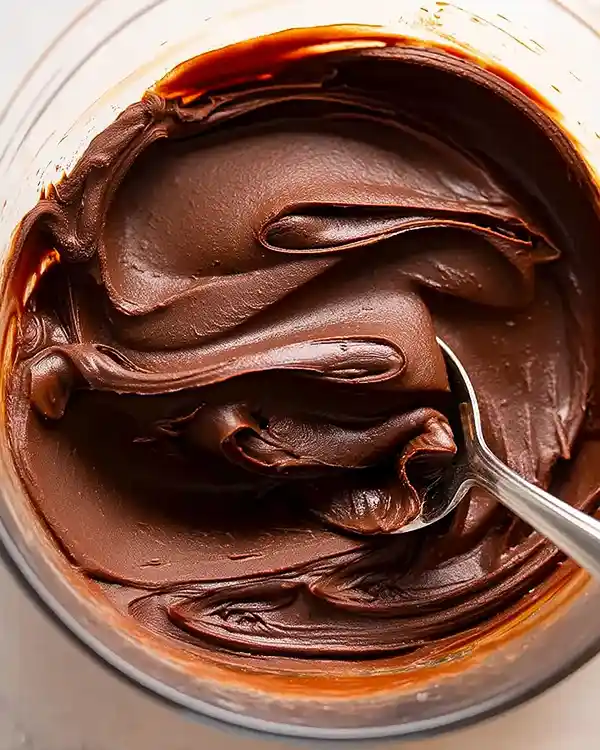
Cooling and Straining (The Critical Part!)
- First strain for smoothness. Set your fine mesh strainer over a shallow bowl, then pour the glaze through it. Here’s the trick: tilt both the strainer and the pan so the glaze falls the shortest distance possible. Pouring from a height creates air bubbles, and we’re trying to avoid those like the plague.
- Check for sneaky bubbles. Hold the bowl between your hands and twist it back and forth quickly. Any bubbles will rise to the center where you can see them. If you spot some, gently scoop them out with a spoon.
- Cool to the magic temperature. Cover the glaze with plastic wrap, pressing it directly onto the surface so no skin forms. Let it sit on your counter for about 2 hours until it reaches exactly 30°C (86°F). This temperature is crucial—too hot and it’ll be too runny, too cool and it won’t flow properly.
- Second strain before pouring. Right before you’re ready to glaze, strain the mixture one more time into a jug or pitcher. Again, tilt everything to minimize the distance the glaze travels. This double-straining really does make a difference in that flawless finish.
The Glazing Moment
- Set up your work station. Take your chilled cake from the fridge and carefully transfer it onto a wire rack. Place the rack over a large tray to catch all the gorgeous excess glaze (which you’ll reuse for touch-ups).
- Pour with confidence! Starting at the center of your cake, pour the glaze in a steady, thick stream. Move in an expanding spiral motion toward the edges, letting the glaze naturally drape down the sides like a chocolate waterfall. Try to do this in one continuous pour without stopping—that’s what creates the seamless surface.
- Cover any naked spots. Quickly check all sides are fully coated. If you see any bare patches, do a quick little pour directly onto those spots to cover them up.
- Transfer to your serving platter. Before the glaze sets (you’ve got about 10 minutes), carefully move the cake to your final serving plate. I like to use two large offset spatulas to lift it, but you can also carefully slide it if your platter is flat.
- Fix any imperfections. Use the excess glaze from your tray to fill in any gaps or tears. Gently warm an offset spatula with a blow torch or by dipping it in warm water (then wiping dry), and smooth over any rough spots. The warmth helps blend everything seamlessly.
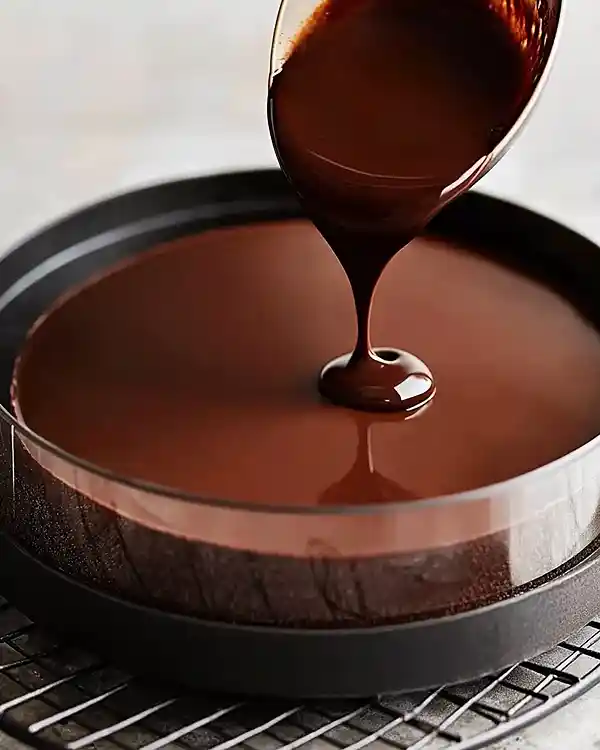
How to Slice for Perfect Layers
- The warm knife trick. Fill a tall jug with warm tap water. Dip your knife in, wipe it completely dry, then make one clean slice through the cake.
- Repeat for each cut. Clean the knife, dip it again, dry it, then make your second cut to get a perfect wedge. Pull out that slice and admire those gorgeous layers before continuing. Each slice should reveal crisp lines between the mirror glaze, ganache frosting, and moist chocolate cake layers.
If you need a reliable base, our one-bowl easy chocolate cake bakes up moist and sturdy—perfect as the foundation for this mirror glaze.
Pro Tips & Guidance for Mirror Glaze Success
Temperature is everything. The 30°C/86°F sweet spot isn’t just a suggestion—it’s the difference between a perfect pour and a disaster. Too hot and the glaze runs right off, too cold and it sets too quickly with visible drip marks.
According to Serious Eats‘ guide on working with gelatin, temperature control affects both the viscosity and setting time of gelatin-based glazes, which is why precision matters here.
Dutch-processed cocoa makes a difference. It creates a deeper, richer chocolate color and smoother texture than natural cocoa powder. The alkalization process also makes it dissolve more easily, giving you that flawless glossy finish.
Bubble prevention beats bubble removal. Every technique in this recipe about gentle stirring and careful pouring isn’t fussy—it’s strategic. Once bubbles get into your glaze, they’re incredibly hard to remove completely. Prevention through gentle handling saves so much frustration.
Room temperature ingredients matter for ganache. When making your base chocolate ganache frosting, using room-temperature cream helps create a stable emulsion. Temperature differences greater than 10°C can cause the mixture to separate, resulting in a grainy texture instead of that silky-smooth finish you want.
The cake must be COLD. I can’t stress this enough. If your ganache-frosted cake isn’t properly chilled, the warm glaze will melt the ganache underneath and create a muddy, mixed finish instead of distinct layers. Give it that full hour in the fridge—patience pays off here.
Troubleshooting Guide
Why is my mirror glaze too thick and won’t pour smoothly?
It probably cooled below 30°C. Gently warm it in 5-second microwave bursts, stirring between each one, until it reaches the right temperature again. Don’t overheat or you’ll create new problems!
What if my glaze has visible bubbles even after straining?
Use a small kitchen torch to gently pass over the surface—the heat pops surface bubbles instantly. Alternatively, lightly spray the surface with cooking spray and skim off the bubbles that gather.
Why did my mirror glaze turn out dull instead of glossy?
This usually means it was too cool when you poured it, or there wasn’t enough gelatin bloomed properly. Make sure your gelatin fully bloomed for those 5 minutes and dissolved completely into the hot mixture.
Can I fix drip marks or uneven coating?
Absolutely! Before the glaze fully sets, use that warmed offset spatula technique to smooth things out. You’ve got about 10 minutes to make adjustments, so work quickly but don’t panic.
What if my ganache frosting underneath wasn’t smooth enough?
The mirror glaze will highlight every bump and dent, unfortunately. If this happens, your best bet is to scrape off the glaze while still workable, re-smooth the ganache, chill again, and try another pour. It’s frustrating but fixable!
Why is my cake sliding around on the glaze?
The glaze between the cake and the rack creates a slippery layer. This is normal! Work quickly and confidently when transferring to your platter, using two spatulas for stability.
Variations & Twists on This Recipe
White chocolate mirror glaze: Swap the cocoa powder for white chocolate and create a stunning ivory or colored glaze. You can even add gel food coloring for vibrant effects—perfect for birthday cakes or themed celebrations. Check out our easy chocolate frosting guide for more flavor variations.
Raspberry swirl addition: Before pouring the glaze, pipe small dots of raspberry coulis on top of the ganache, then pour the glaze over everything. The raspberry swirls through the chocolate for a gorgeous marbled effect with fruity brightness.
Individual mini cakes: This technique works beautifully on small entremet cakes too. Just adjust your pouring scale and work quickly since the glaze sets faster on smaller surfaces.
Coffee-spiked version: Add 2 tablespoons of instant espresso powder to the cocoa mixture for a sophisticated mocha mirror glaze that deepens the chocolate flavor even more.
For a dairy-free version, explore our gluten-free chocolate cake guide which includes ingredient substitution tips that work with this glazing technique.
For deeper flavor, our chocolate cake with coffee recipe adds espresso to intensify the cocoa notes under your mirror glaze.
How to Serve, Store, and Enjoy
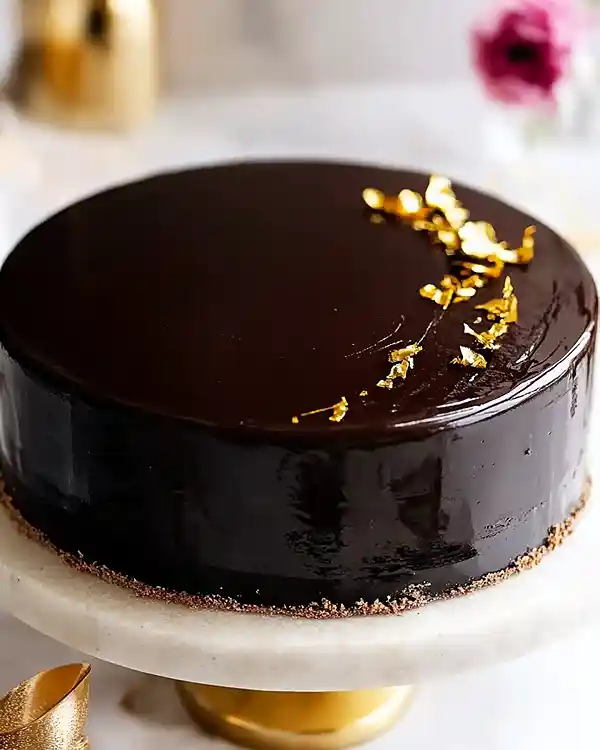
Serving this beauty: Let the cake sit at room temperature for about 20 minutes before serving so the chocolate ganache softens slightly. The contrast between the firm glaze and creamy ganache is perfection. Serve with a dollop of barely sweetened whipped cream or fresh berries if you want to cut through the richness.
Storage tips: Cover loosely with plastic wrap (don’t let it touch the glaze surface!) and refrigerate for up to 4 days. The mirror finish stays glossy even after refrigeration, which is one of the magical things about this technique. Just remember to let it come to room temp before serving for the best texture.
Freezing for later: You can freeze this chocolate ganache cake for up to 2 months. Wrap it really well in plastic wrap and foil. Thaw overnight in the fridge, then bring to room temperature. The glaze might lose a tiny bit of shine after freezing, but you can touch it up with a barely damp cloth.
No-Waste Kitchen Magic
Save every drop of excess glaze. That beautiful chocolate mirror glaze pooled in your tray? Pour it into a jar and refrigerate it. Gently reheat to 30°C whenever you want to glaze donuts, cookies, or even create chocolate bark by pouring it onto parchment and letting it set.
Cake scraps = cake truffles. If you trimmed your cake layers to level them, don’t toss those scraps! Crumble them up, mix with a bit of the leftover ganache, roll into balls, and coat with cocoa powder or melted chocolate. Instant cake truffles.
Repurpose the ganache. Made too much? It keeps for a week in the fridge and can be reheated gently to use as a sauce for ice cream, a fondue for fruit, or even spread on toast for an indulgent breakfast treat.
One recipe down, and so many more to explore! Head over to our complete Chocolate cakes & chocolate desserts lineup for more delicious ideas that’ll keep your kitchen buzzing. Bookmark this one — you’ll thank yourself later.
Chocolate Ganache Recipe Mirror FAQs
Can I make this chocolate ganache mirror glaze cake ahead of time?
Yes! Make the cake and ganache frosting up to 2 days ahead, keeping it refrigerated. The mirror glaze itself is best poured the day of or the night before serving, as it’s at its glossiest when fresh. The whole assembled cake keeps beautifully for 3-4 days covered in the fridge.
Why did my chocolate ganache turn out grainy under the glaze?
This usually happens when the chocolate and cream temperatures are too different when mixing, or if water got into the ganache. Make sure your chocolate is finely chopped, your cream is hot but not boiling, and everything is completely dry. Mix gently but thoroughly until smooth.
Can I use this mirror glaze on a buttercream-frosted cake?
It’s not ideal. Mirror glaze works best over ganache because ganache sets firm and smooth. Buttercream is softer and can melt or shift under the warm glaze, creating an uneven finish. Stick with ganache for this technique.
How do I fix cracks in my mirror glaze after it sets?
Small cracks can be gently smoothed with a barely damp finger or that warmed spatula technique. For larger cracks, you might need to accept the imperfection or strategically place decorations like gold leaf or fresh berries to cover them artistically.
What if I don’t have a thermometer for the glaze temperature?
You can test it by touch—it should feel just barely warm, about body temperature. Or dip a cold spoon into the glaze and watch how it coats—at the right temp, it should coat smoothly and flow slowly off the spoon without being runny.
Celebrate Your Mirror Glaze Masterpiece!
There’s something deeply satisfying about creating this chocolate ganache recipe mirror glaze at home and watching everyone’s faces when you bring it to the table. That glossy, reflective surface never fails to impress, and underneath, you’ve got layers of pure chocolate heaven.
I’d absolutely love to see your mirror glaze creations! Share your photos in the comments, and tell me what colors or flavors you tried. Did you go classic chocolate, or did you venture into colored glazes? For more stunning chocolate desserts, don’t miss our silky chocolate topping method for even more ways to work with ganache.
Now go forth and create something gorgeous. You’ve got this!
Check out our Mile High Chocolate Cake for more delicious recipes!
Check out our The Legendary 150 Hour Chocolate Cake for more delicious recipes!