Rose Milk Cake
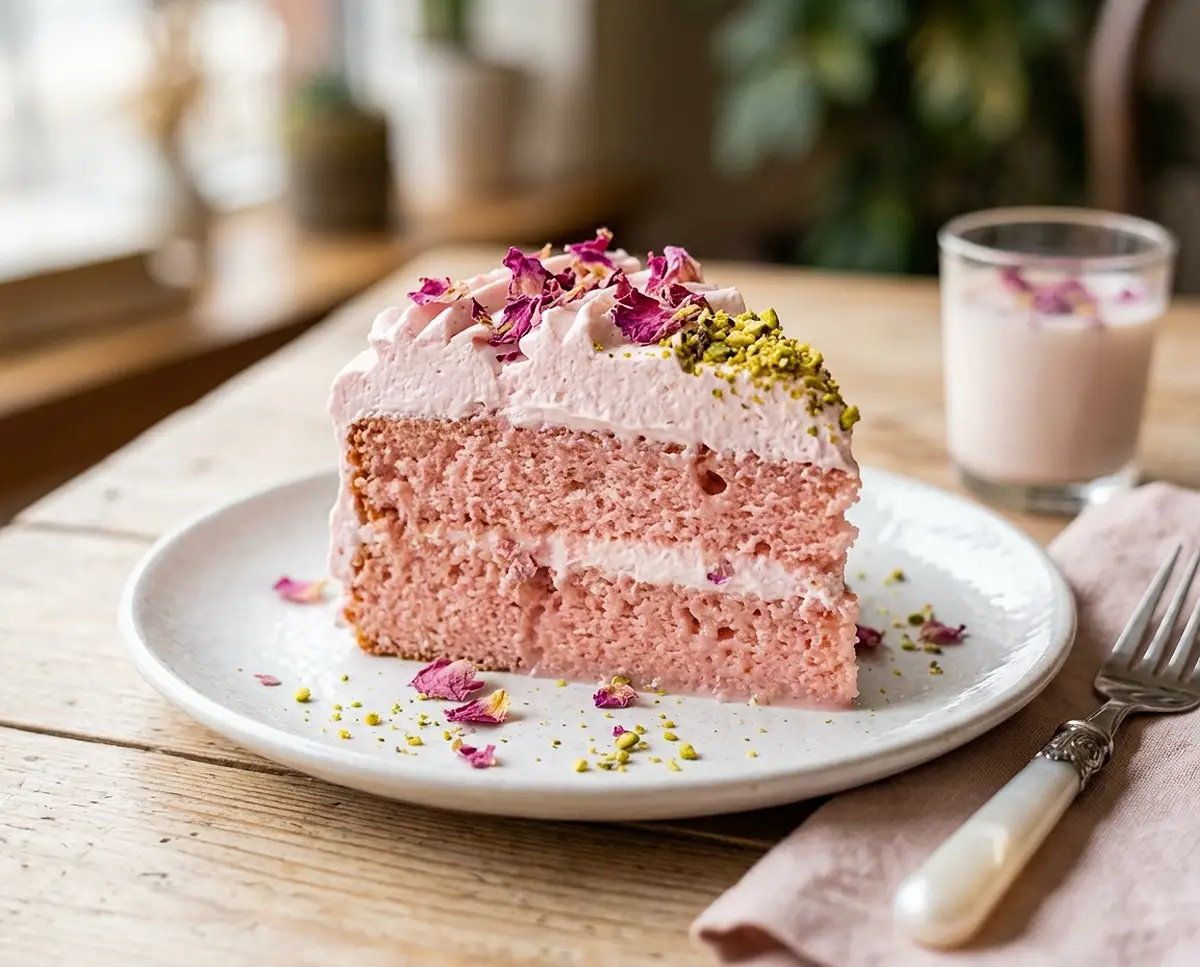
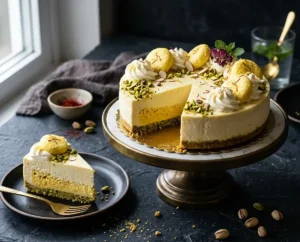
This rose milk cake soaks deep with a 3-milk rose syrup and crowns itself with floral whipped cream. One bite and you’ll understand the obsession. Get the recipe.
This rose milk cake recipe changed how I think about tres leches entirely. You’re about to get the exact ratios, the pricking method, and the whipped topping trick that took me three batches to nail.
Rose milk cake is a floral-forward spin on classic tres leches: a light sponge cake soaked in rose essence, sweetened condensed milk, evaporated milk, and whole milk, then topped with rose whipped cream — the result is tender, fragrant, and just barely pink.
The idea came from a memory of a rose milk drink at a South Asian restaurant — that perfumed, cold sweetness that lingers. I needed it in cake form, and this is exactly that.
How Do You Make Rose Milk Cake at Home?
Rose milk cake is a sponge cake soaked in a rose-scented three-milk syrup — sweetened condensed milk, evaporated milk, and whole milk — then finished with rose whipped cream for a floral, custardy dessert.
- Beat egg yolks and sugar until pale yellow, then whip egg whites to stiff peaks separately.
- Sift cake flour, baking powder, and salt together, then alternate adding flour and milk-vanilla mixture to the yolks.
- Fold whipped egg whites into the batter gently so the mixture stays airy and light.
- Bake at 350°F in a greased 9×13 pan for 25-30 minutes until a toothpick comes out clean.
- Prick the cooled cake 150-200 times with a fork, then pour the rose milk syrup evenly across the surface.
- Refrigerate one hour, spread rose whipped cream over the top, and garnish with rose petals and pistachios.
- Rose essence vs. rose water: Rose essence is more concentrated — 1 tablespoon essence equals 2 tablespoons rose water in this recipe.
- Cake flour vs. all-purpose flour: Cake flour creates a softer, more absorbent crumb that soaks up the milk syrup better.
- Full soak vs. partial soak: Using 3/4 of the syrup in the cake and reserving 1/4 for serving keeps the cake moist but not waterlogged.
- Whipped cream vs. store-bought topping: Homemade rose whipped cream holds its shape and carries the floral flavor — pre-made toppings can’t replicate it.
Make this with rose essence (not rose water alone), cake flour, and separated eggs — that combination gives you the lift, flavor, and absorption you need for a truly great rose tres leches cake.
Why You’ll Love This Rose Milk Cake
This rose milk cake earns its place at any table — here’s what makes it genuinely different from other tres leches recipes.
- The texture is unlike any other cake. The separated-egg method creates a sponge that’s sturdy enough to absorb the three-milk rose syrup without collapsing, but still melts the second it hits your tongue.
- It’s easier than it looks. No stand mixer required, no complicated frosting — the rose whipped cream comes together in minutes and spreads like a dream straight from the bowl.
- The flavor is layered, not one-note. Rose essence goes into the sponge, the soaking milk, and the whipped cream, so every bite carries the floral note without one layer drowning the others.
- It’s actually better the next day. During testing, I found that slices pulled from the fridge after an overnight rest were more deeply flavored and even silkier than same-day servings.
- The presentation is effortless. Dried rose petals and crushed pistachios scattered over white whipped cream do most of the visual work — you barely have to try. If you love this kind of floral, custardy dessert, check out these rose water macarons with a delicate floral shell for another way to work with rose flavor in baking.
What Ingredients Do You Need for Rose Milk Cake?
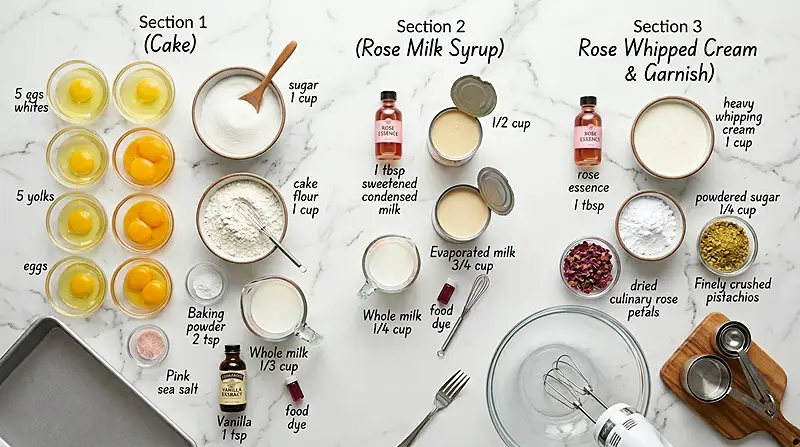
This rose tres leches cake recipe uses pantry-friendly ingredients — the only specialty item is rose essence, which you can find at most Indian or Middle Eastern grocery stores or order online.
Here’s everything broken down by component, with a few notes where it actually matters.
| Amount | Ingredient |
|---|---|
| For the Cake | |
| 5 large | Eggs, at room temperature (room temp eggs whip up much more volume — don’t skip this) |
| 1 cup | Sugar (organic raw cane sugar works beautifully here) |
| 1 cup | Cake flour (not all-purpose — cake flour makes the crumb softer and more absorbent) |
| 2 teaspoons | Baking powder, aluminum-free |
| 1/2 teaspoon | Pink sea salt |
| 1/3 cup | Whole milk |
| 1 teaspoon | Pure vanilla extract |
| 2-3 drops | All-natural red food dye (optional, gives the cake its blush color) |
| For the Rose Milk Syrup | |
| 1 tablespoon | Rose essence (or substitute 2 tablespoons rose water) |
| 1/2 cup | Sweetened condensed milk |
| 3/4 cup | Evaporated milk |
| 1/4 cup | Whole milk |
| 2-3 drops | All-natural red food dye |
| For the Rose Whipped Cream | |
| 1 tablespoon | Rose essence |
| 1 cup | Heavy whipping cream (cold cream whips faster and holds peaks longer) |
| 1/4 cup | Powdered sugar |
Per Serving (serves 12): Approx. 320 calories · 6g protein · 38g carbs · 16g fat. This is a celebration dessert — serve it cold and enjoy every bite.
Need a quick homemade condensed milk? Check out this 5-minute sweetened condensed milk you can make from scratch — it works perfectly in the soaking syrup.
What Equipment Do You Need?
- 9×13 inch baking pan — Essential. This size gives you the right cake depth for proper soaking.
- Two large mixing bowls — You’ll separate the eggs and work in two bowls simultaneously.
- Hand mixer or stand mixer — You need one for whipping the egg whites and the cream.
- Sifter or fine mesh strainer — For the dry ingredients; skipping this creates lumpy batter.
- Fork — Your only tool for the pricking step; a skewer works too but covers less surface area.
- Wire cooling rack — Lets air circulate under the pan so the cake cools evenly.
- Measuring cup with a spout — Optional, but makes pouring the rose milk syrup evenly across the cake much easier.
- Offset spatula — Optional, but gives you a smoother whipped cream finish than a regular knife.
How Do You Make Rose Milk Cake Step by Step?
Making this rose milk cake is a three-stage process — the sponge, the soaking syrup, and the whipped topping — and each one builds on the last.
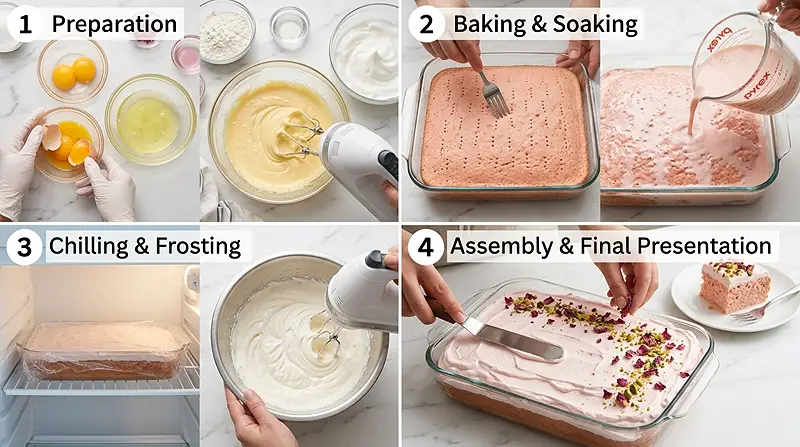
For the Cake
- Preheat your oven to 350°F. Grease a 9×13 inch baking pan and dust it lightly with flour, then set it aside. (A well-greased pan prevents sticking, which is important since tres leches cakes are served directly from the pan.)
- Separate 5 eggs, placing the yolks in one large bowl and the whites in another. Make sure no yolk gets into the whites — even a drop of fat will prevent them from whipping properly.
- Add the cup of sugar to the egg yolks and beat until the mixture turns pale yellow and slightly thick. Scrape down the sides of the bowl as needed — this takes about 2-3 minutes with a hand mixer.
- Beat the egg whites separately until stiff peaks form — when you lift the beater, the peak should stand straight up without drooping. Set aside and do not overmix, or they’ll turn grainy.
- Sift the cake flour, baking powder, and pink sea salt together into a separate bowl. In a measuring cup, whisk together the whole milk and vanilla extract until combined.
- Add half the flour mixture to the yolk-sugar mixture and mix until just combined. Add half the milk mixture and mix again. Repeat with the remaining flour, then the remaining milk — adding 2-3 drops of red food dye with the final milk addition. (Don’t overmix at this stage — a few streaks are fine. Overmixing develops gluten and toughens the crumb.)
- Gently fold the whipped egg whites into the batter in two or three additions, using a wide spatula and a folding motion from the bottom of the bowl. Stop as soon as the batter looks uniform — you want to keep as much air in those whites as possible.
- Pour the batter into your prepared pan and bake for 25-30 minutes, until a toothpick inserted in the center comes out clean. The top should be lightly golden and spring back when pressed.
- Cool the cake completely on a wire rack. Once cool, use a fork to prick the entire surface — aim for 150-200 pricks, covering every inch evenly. (This step is non-negotiable. The holes are the highways the milk syrup travels through — miss a spot and you’ll get an uneven soak.)
For the Rose Milk Syrup
- Whisk together the rose essence, sweetened condensed milk, evaporated milk, whole milk, and red food dye in a small bowl until fully combined. The mixture should look smooth and evenly pink.
- Pour three-quarters of the rose milk syrup slowly and evenly across the entire pricked surface of the cooled cake. Let it pool briefly in spots — that’s fine, it’ll absorb.
- Cover the pan and refrigerate for at least 1 hour so the cake can fully absorb the syrup. Reserve the remaining quarter of the milk syrup to serve alongside each slice.
For the Rose Whipped Cream
- Add the rose essence and cold heavy whipping cream to a clean mixing bowl. Cold cream whips faster — if your kitchen is warm, chill the bowl in the freezer for 10 minutes first.
- Whip until the cream begins to thicken, then gradually stream in the powdered sugar. Keep whipping until stiff peaks form — the cream should hold its shape when you lift the beater.
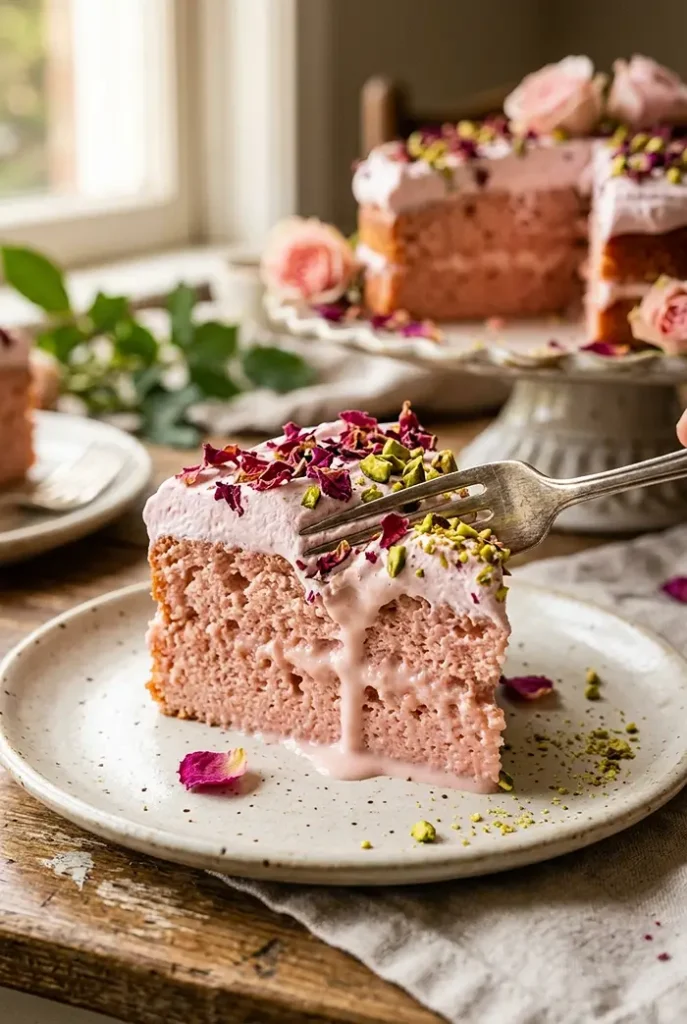
- Spread the rose whipped cream across the chilled cake in an even layer. Scatter dried rose petals and crushed pistachios across the top. Serve cold with the reserved rose milk on the side.
Pro Tips for a Perfect Rose Tres Leches Cake
Getting this rose tres leches cake right comes down to a few details that most recipes gloss over. Here’s what actually made the difference across multiple test batches.
Use room temperature eggs, every single time. Cold egg whites won’t whip to their full volume, and you need every bit of that air to get the sponge light enough to absorb the soaking milk without turning dense. Pull your eggs out of the fridge at least 30 minutes before you start — this one habit changed the texture of my cakes completely.
Don’t rush the soaking step. One hour in the fridge is the minimum; if you can make the cake the night before and let it soak overnight, the texture the next day is noticeably better — silkier, more evenly saturated.
King Arthur Baking explains the milk absorption process in tres leches really well: the starches in the crumb swell and bind the liquid as it rests, which is why a longer soak gives you a creamier (not soggy) result rather than a wetter one.
Measure rose essence carefully. This is the one ingredient that can quietly wreck the whole cake if you eyeball it. Too little and the rose note disappears behind the sweetened condensed milk. Too much and it tastes like soap. One tablespoon per component — the sponge, the syrup, and the cream — is the amount that worked consistently across every batch I made.
Keep your whipping bowl and cream cold. Warm cream won’t whip to stiff peaks, and even if it does, it’ll deflate faster. I tested this side by side — a pre-chilled metal bowl got me to stiff peaks in under 3 minutes, while a room-temperature bowl took nearly double that and gave me a softer result that started weeping after two hours.
Troubleshooting: When Something Goes Wrong
Why did my cake turn out dense instead of fluffy?
The most common cause is deflated egg whites — either they were over-whipped to the point of breaking, or they were folded too aggressively into the batter. Fold gently in wide, slow strokes and stop the moment the batter looks uniform.
Why is my cake soggy in some spots and dry in others?
Uneven pricking is almost always the culprit. Go back over any unpoked areas and add more holes — the milk follows the path of least resistance, so sparse spots stay dry while dense clusters of holes get flooded. Aim for an even grid across the whole surface.
Why does my rose whipped cream keep deflating?
Your cream or bowl wasn’t cold enough, or you stopped whipping before reaching true stiff peaks. Pop the bowl and beaters in the freezer for 10 minutes before you start, and keep whipping until the cream holds a firm, upright peak when you lift the beater.
Can I taste the rose essence before adding it to the batter?
Yes, and you should — rose essence varies in strength by brand. Dip a toothpick, taste it, and if it’s extremely potent, dial back to 2 teaspoons in the syrup rather than a full tablespoon. You want fragrant, not perfume-counter.
Why did my cake stick to the pan?
Not enough greasing, or you tried to remove slices before chilling. Tres leches cakes are meant to be served straight from the pan — run a knife along the edges and slice directly in the dish, don’t try to flip or unmold it.
How Can You Customize This Rose Flavored Milk Cake?
This rose flavored milk cake is a great base for seasonal and creative twists — the three-milk soaking method works beautifully with a range of add-ins and swaps.
- Holiday version: For Diwali, Eid, or Valentine’s Day, press gold leaf onto the whipped cream and swap the pistachios for slivered almonds. The blush-pink color makes it instantly festive with almost zero extra effort.
- Cardamom rose twist: Add 1/2 teaspoon ground cardamom to the dry ingredients and a pinch to the rose milk syrup. This turns the cake into something closer to an Indian mithai-inspired dessert — floral, warm, and deeply aromatic.
- Lychee-rose variation: Replace the 1/4 cup whole milk in the soaking syrup with 1/4 cup lychee juice from canned lychees. The tropical sweetness plays beautifully with the rose and makes the syrup a little lighter.
- Gluten-free swap: Substitute a 1:1 gluten-free baking flour blend (one with xanthan gum already included) for the cake flour. The texture will be slightly denser, but the soaking step compensates — the milk syrup keeps everything moist. For anyone baking tres leches-style cakes gluten-free, try the same technique used in our matcha tres leches with an airy gluten-adaptable sponge.
Can You Make Rose Milk Cake Ahead of Time?
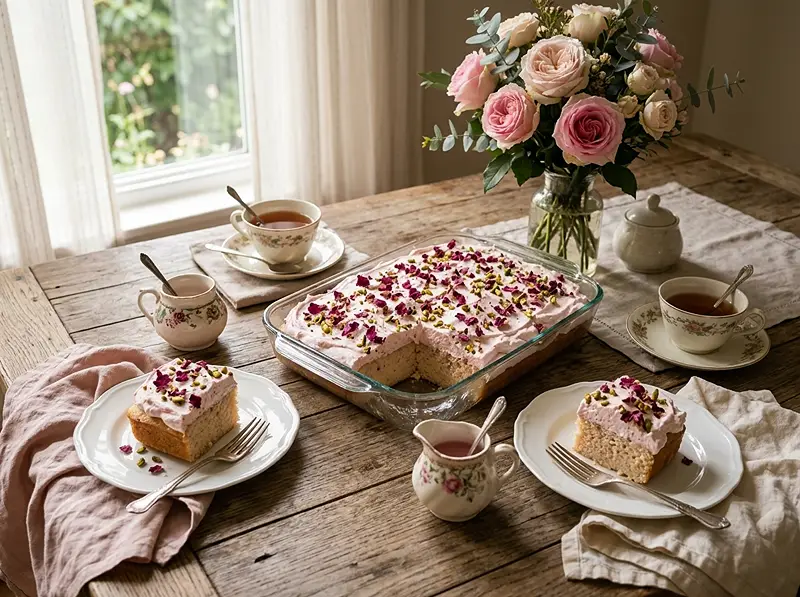
Serving
Serve this cake cold, straight from the fridge. Cut clean squares with a sharp knife wiped between slices, and pour a small splash of the reserved rose milk syrup alongside each plate. The contrast of cold, floral cake against room-temperature milk is the whole experience.
Storing
Cover the pan tightly with plastic wrap or transfer slices to an airtight container and refrigerate for up to 4 days. The cake actually improves on day two as the milk fully absorbs. By day four, the whipped cream starts to weep slightly — still delicious, just less photogenic.
Reheating
Don’t. Tres leches cakes are cold desserts — warmth breaks down the whipped cream topping and makes the sponge rubbery. If you prefer a slightly less cold slice, pull it from the fridge 10 minutes before serving and let it come up just a touch. That’s the sweet spot.
Frequently Asked Questions
How long does rose milk cake need to soak before serving?
At minimum, 1 hour in the fridge. For the best texture and most deeply absorbed flavor, let the cake soak overnight — the crumb becomes silkier and the rose milk flavor intensifies significantly after 8-12 hours of resting.
Can I use rose water instead of rose essence in this recipe?
Yes — substitute 2 tablespoons of rose water for every 1 tablespoon of rose essence called for. Rose water is less concentrated, so you need more of it to get the same floral depth. Taste as you go, especially with the syrup.
What is the difference between rose milk cake and traditional tres leches?
Classic tres leches uses plain whole milk in the soaking syrup and unflavored whipped cream on top. This rose milk cake adds rose essence to the sponge, the syrup, and the whipped topping, giving every layer a floral, fragrant quality that the original doesn’t have.
Why does my tres leches cake need to be refrigerated?
The milk-soaked sponge and whipped cream topping are both perishable and need to stay cold for food safety. Beyond safety, refrigeration is also what sets the texture — the cold sponge holds its shape when sliced and delivers that signature custardy bite.
Is rose milk cake an Indian dessert?
Not traditionally — tres leches is Latin American in origin. But the Indian rose milk cake variation draws on the rose milk drinks popular in South Asian cuisine, bringing the rose flavor into a tres leches format. It sits beautifully at the intersection of both traditions.
Ready to Make This?
This rose milk cake is the kind of dessert that earns a permanent spot in your rotation — it looks elegant, tastes deeply floral and creamy, and gets better every hour it rests in the fridge.
If you make it, drop a comment below and tell me how it went — I especially want to know if you tried any of the variation twists.
And if you’re on a floral baking kick, don’t miss this silky elderflower panna cotta with a delicate floral finish — it’s the perfect companion dessert to serve alongside this cake at a dinner party.
Baked with love by Rebeccah Ellene. This recipe went through three full test batches before the rose syrup ratio, pricking method, and whipped cream stability all landed exactly where they needed to be.
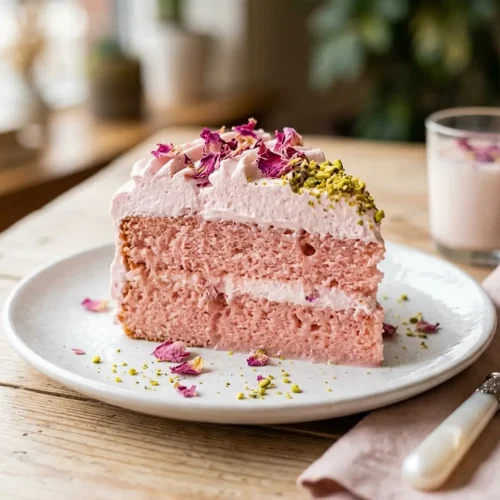
Rose Milk Cake
Equipment
- 9×13-inch baking pan
- Two large mixing bowls
- Sifter or fine mesh strainer
- fork
- Measuring cup with spout
- Offset spatula
Ingredients
For the Cake
- 5 eggs large, at room temperature
- 1 cup sugar organic raw cane sugar recommended
- 1 cup cake flour not all-purpose — cake flour gives a softer, more absorbent crumb
- 2 tsp baking powder aluminum-free
- ½ tsp pink sea salt
- ⅓ cup whole milk
- 1 tsp pure vanilla extract
- 2-3 drops all-natural red food dye optional, gives the cake its blush color
For the Rose Milk Syrup
- 1 tbsp rose essence or substitute 2 tablespoons rose water
- ½ cup sweetened condensed milk
- ¾ cup evaporated milk
- ¼ cup whole milk
- 2-3 drops all-natural red food dye optional
For the Rose Whipped Cream
- 1 tbsp rose essence
- 1 cup heavy whipping cream cold — chill bowl before whipping for best results
- ¼ cup powdered sugar
Instructions
- Preheat your oven to 350°F. Grease a 9×13 inch baking pan and dust it lightly with flour, then set it aside.
- Separate 5 eggs, placing yolks in one large bowl and whites in another. Make sure no yolk gets into the whites — even a drop of fat will prevent them from whipping properly.
- Add the sugar to the egg yolks and beat until the mixture turns pale yellow and slightly thick, about 2–3 minutes with a hand mixer. Scrape down the sides of the bowl as needed.
- Beat the egg whites separately until stiff peaks form — when you lift the beater, the peak should stand straight up without drooping. Set aside and do not overmix.
- Sift the cake flour, baking powder, and pink sea salt together into a separate bowl. In a measuring cup, whisk together the whole milk and vanilla extract until combined.
- Add half the flour mixture to the yolk-sugar mixture and mix until just combined. Add half the milk mixture and mix again. Repeat with remaining flour, then remaining milk — adding 2–3 drops of red food dye with the final milk addition. Do not overmix.
- Gently fold the whipped egg whites into the batter in two or three additions using a wide spatula and a folding motion from the bottom of the bowl. Stop as soon as the batter looks uniform.
- Pour the batter into your prepared pan and bake for 25–30 minutes, until a toothpick inserted in the center comes out clean and the top springs back when pressed.
- Cool the cake completely on a wire rack. Once cool, use a fork to prick the entire surface 150–200 times, covering every inch evenly — this is what allows the rose milk syrup to absorb throughout the cake.
- Whisk together the rose essence, sweetened condensed milk, evaporated milk, whole milk, and red food dye in a small bowl until fully combined and evenly pink.
- Pour three-quarters of the rose milk syrup slowly and evenly across the entire pricked surface of the cooled cake. Reserve the remaining quarter to serve alongside each slice.
- Cover the pan and refrigerate for at least 1 hour — or overnight for best results — to allow the cake to fully absorb the rose milk syrup.
- Add the rose essence and cold heavy whipping cream to a clean mixing bowl. Whip until the cream begins to thicken, then gradually stream in the powdered sugar. Continue whipping until stiff peaks form.
- Spread the rose whipped cream in an even layer across the chilled cake. Scatter dried rose petals and crushed pistachios across the top. Serve cold with the reserved rose milk syrup on the side.