Mango Sago Dessert
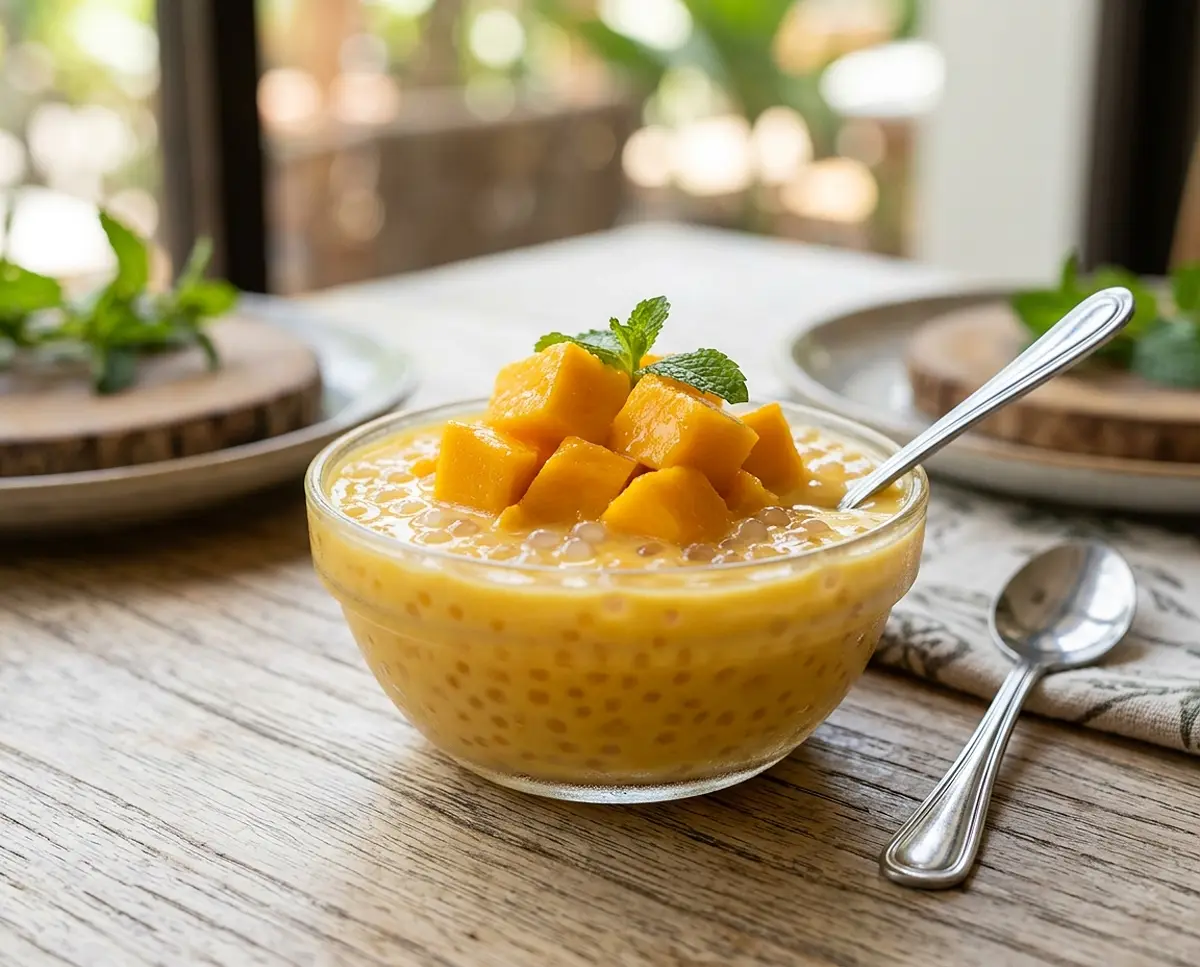
This mango sago dessert is silkier than any restaurant version — ripe mango, coconut milk, chewy tapioca, zero fuss. Get the full recipe now.
Mango sago dessert is the one recipe I make more than anything else between June and August — and I’ve never once had a complaint.
By the end of this post, you’ll know exactly how to nail the tapioca texture, balance the coconut milk richness, and build a mango sago that tastes like it came from a Hong Kong dessert shop.
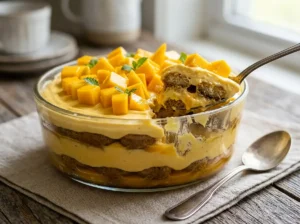
This mango sago dessert combines sweet ripe mangoes, silky unsweetened coconut milk, and chewy mini tapioca pearls — blended smooth and served chilled — for a spoonable dessert that’s cooling, fragrant, and just rich enough without being heavy.
The first time I had it, I was at a tiny dessert stall in a night market, eating out of a paper cup with a flat plastic spoon. The mango was almost orange it was so ripe, and the tapioca had that soft, bouncy chew that I couldn’t stop thinking about on the flight home.
I spent the next few weeks figuring out how to get that same result in my own kitchen — and the answer turned out to be embarrassingly simple.
Table of Contents
How Do You Make Mango Sago Dessert at Home?
Mango sago is a chilled dessert made from blended ripe mango, coconut milk, condensed milk, and cooked mini tapioca pearls — it’s creamy, naturally sweet, and comes together without any baking or special equipment.
- Boil 4 cups of water and add mini tapioca pearls once it reaches a full rolling boil.
- Simmer pearls for 20 minutes, stirring occasionally, until fully transparent with no white center.
- Drain the cooked tapioca and rinse in cold water, then soak in a bowl of cold water.
- Blend peeled ripe mango chunks with coconut milk, condensed milk, and vanilla until smooth.
- Chill the mango base for at least one hour if you prefer the dessert cold.
- Drain the tapioca, fold it into the mango base, and top with reserved fresh mango chunks.
- Fresh mango vs. frozen mango: Fresh gives a brighter flavor; frozen works but adds extra liquid.
- Coconut milk vs. coconut cream: Coconut milk gives a lighter texture; coconut cream makes it richer and thicker.
- Mini tapioca vs. large tapioca: Mini pearls cook faster and blend better with the mango base.
- Condensed milk vs. sugar: Condensed milk adds creaminess that plain sugar can’t replicate.
- Blended base vs. chunky base: Blending gives the smoothest texture; leaving mango chunks in adds rustic bite.
Use fresh, very ripe mangoes — the kind that smell sweet before you even cut them — and cook your tapioca until every single pearl is fully clear for the best result.
Why Will You Love This Mango Sago Dessert?
This mango sago recipe is one of the most crowd-pleasing desserts I make — and it takes less effort than most things in my usual rotation.
- Silky, spoonable texture: Blending the mango with coconut milk creates a base that’s smooth and velvety, with the tapioca adding just enough chew to keep each bite interesting.
- Easier than it looks: There’s no baking, no tempering, no special technique — just boiling, blending, and chilling. The hardest part is waiting for it to get cold.
- Naturally fresh and fruity: Real mango flavor carries the whole dessert. The coconut milk softens it without masking it, and the condensed milk adds just the right sweetness without tipping into cloying.
- Better than anything store-bought: Pre-made mango puddings use artificial flavoring and stabilizers. This version tastes like fruit, not like a product.
- Testing note: I tried making this with light coconut milk once to cut down the richness. The texture went thin and watery — not great. Full-fat coconut milk is genuinely necessary here, not optional.
If you love cold, fruity Asian desserts, you might also enjoy this shaved ice dessert layered with fresh mango and sweet syrup — it uses a lot of the same flavor notes in a completely different format.
What Ingredients Do You Need for Mango Sago?
The mango sago recipe ingredient list is short by design — every item is doing real work here.
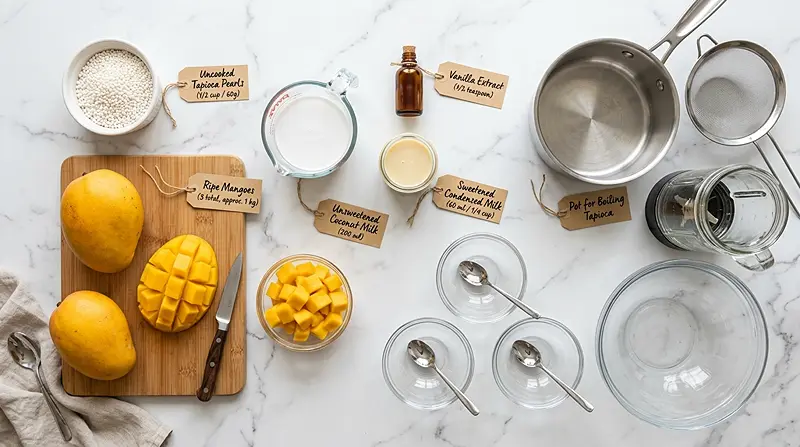
For the mango sago with coconut milk base, you want full-fat coconut milk and very ripe mangoes. Nothing else will give you the same result.
| Amount | Ingredient |
|---|---|
| 1/2 cup (about 60g) | Small-sized uncooked tapioca pearls (mini, not large — they cook faster and blend better) |
| 3 ripe mangoes (about 1 kg) | Fresh mangoes (the riper, the better — look for ones that give slightly when pressed) |
| 200 ml (1/2 of a 13.5 oz. can) | Unsweetened coconut milk (full-fat only — light coconut milk makes the base too thin) |
| 60 ml (1/4 cup) | Sweetened condensed milk (taste as you blend — add a little more if your mangoes aren’t very sweet) |
| 1/2 teaspoon | Vanilla extract (pure, not imitation — it rounds out the coconut without competing with the mango) |
Per Serving (approx.): 280 calories · 3g protein · 45g carbs · 10g fat
This is a dessert meant to feel indulgent, and the coconut milk fat is part of what makes the texture work.
Craving more coconut-forward Asian desserts? This creamy Southeast Asian coconut cream dessert is a natural next step if you love coconut as a main flavor.
Mango Sago Dessert Equipment
- Essential — Medium saucepan: For boiling and simmering the tapioca pearls — a 2–3 quart pot works perfectly.
- Essential — Blender: You need a proper blender here; an immersion blender won’t get the mango base smooth enough.
- Essential — Fine mesh strainer or colander: For draining and rinsing the tapioca after cooking.
- Essential — Large mixing bowl: For holding the mango base and eventually combining everything.
- Essential — Individual serving bowls: Four medium bowls for portioning and presenting.
- Optional — Kitchen scale: Handy for measuring the tapioca precisely — eyeballing 60g is tricky.
- Optional — Ladle or large spoon: Makes portioning the finished dessert into bowls much neater.
How Do You Make Mango Sago Dessert Step by Step?
Making mango sago dessert is genuinely straightforward — the tapioca needs the most attention, and everything else is just blending and chilling.
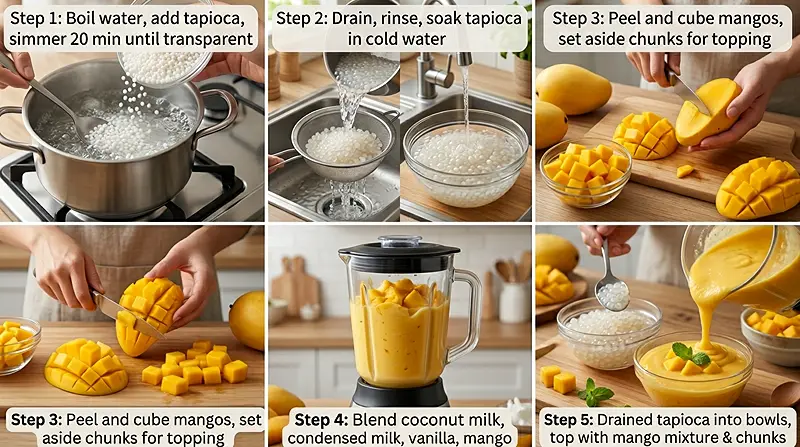
- Boil the water, then add the tapioca. Bring 4 cups of water to a full, rolling boil in your saucepan. Add the mini tapioca pearls only once the water is fully boiling — adding them too early means they sit in warming water and get gummy before they cook through. (If the pearls clump together in the first minute, give them a quick stir. They’ll separate.)
- Simmer until the pearls are fully transparent. Lower the heat to a steady simmer and cook for 20 minutes, stirring occasionally. You’re looking for pearls that are completely clear — no white dot in the center. (Still see a white center after 20 minutes? Turn off the heat, cover the pot, and let them steam for another 10 minutes. That trapped heat finishes the job without overcooking the outside.)
- Drain, rinse, and soak the cooked tapioca. Drain the tapioca through a fine mesh strainer and rinse thoroughly under cold running water — this stops the cooking and rinses off the excess starch that makes them sticky. Transfer to a bowl, cover with cold water, and set aside while you prep the mango.
- Peel and prep the mangoes. Peel all three mangoes and cut the flesh away from the pit. Set aside a generous handful of your nicest, most evenly cut chunks — these are your topping, so make them look good. The rest goes into the blender.
- Blend the mango base until silky smooth. Add the mango pieces, coconut milk, condensed milk, and vanilla extract to the blender. Blend on high until completely smooth — about 45–60 seconds. Taste it here and add a bit more condensed milk if your mangoes weren’t very sweet. (Want the dessert served cold? Transfer the blended base to a large bowl and refrigerate for at least one hour before the next step.)
- Combine, portion, and serve. Drain the soaked tapioca and add it to the mango base, stirring gently to distribute evenly. Spoon into four individual bowls and top each one with a few pieces of the reserved fresh mango chunks.
What Are the Pro Tips for Perfect Chinese Mango Sago Dessert?
Getting the mango sago with coconut milk right comes down to a few things that most recipes gloss over.
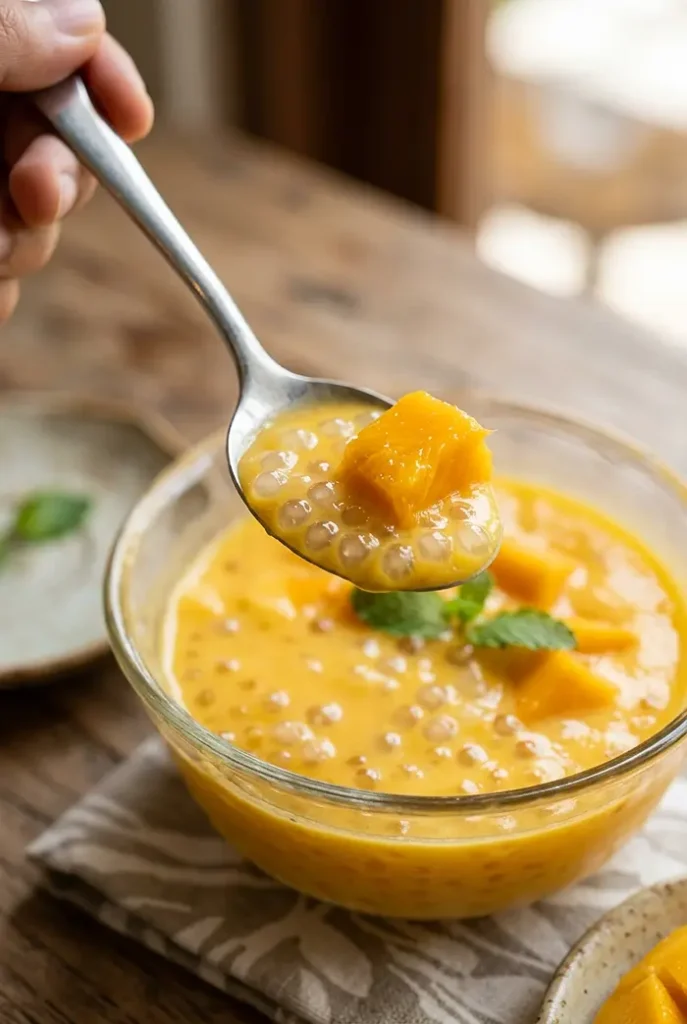
Don’t rush the tapioca — transparency is your doneness cue. Color alone doesn’t tell you enough. The pearl needs to be fully clear all the way through, not just on the surface. Cutting one open and seeing a white center means the starch hasn’t fully gelatinized yet.
According to Serious Eats’ guide on starch gelatinization, tapioca starch granules need sustained heat to fully hydrate and become translucent. That’s why the covered resting method works — the trapped steam keeps the temperature high enough to finish the job without overcooking the pearls’ exterior.
Keep the tapioca in cold water until you’re ready to serve. After rinsing, the pearls will stick to each other and to the bowl if you leave them out. Storing them submerged in cold water keeps them separate and maintains that soft, bouncy texture. Drain just before folding into the mango base.
Use the ripest mangoes you can find. After testing this across batches, the single biggest variable in flavor is mango ripeness — not the brand of coconut milk, not the amount of condensed milk. A barely ripe mango will give you a pale, slightly sour base. A deeply ripe, almost-orange mango gives you something that tastes luxurious even before you add anything else.
Chill the mango base before adding the tapioca. I learned this after serving it at room temperature once and being disappointed by the flatness of it. Chilling the blended base for an hour before combining deepens the coconut and mango flavors noticeably — cold really does change how much you taste it.
Troubleshooting: When Something Goes Wrong
Why are my tapioca pearls still hard or white in the center?
They need more time — that white center means the starch hasn’t fully cooked through. Turn off the heat, cover the pot, and let them rest in the hot water for another 10 minutes. The steam does the work without turning the outside mushy.
Why is my mango base too thin or watery?
This almost always comes down to the coconut milk. Light coconut milk doesn’t have enough fat to give the base body, and very juicy mangoes can add extra liquid too. Use full-fat coconut milk and, if needed, reduce the amount slightly — start with 150 ml and taste before adding more.
Why did my tapioca pearls stick together in one solid mass?
They weren’t rinsed thoroughly enough after draining, or they sat out of water too long. Rinse them well under cold running water right after draining and keep them submerged in fresh cold water until you’re ready to use them. Even 10 minutes uncovered makes them start to clump.
Why does my dessert taste bland even though I followed the recipe?
Underripe mangoes are the most common culprit — they simply don’t have the sugar and fragrance to carry the flavor of the whole dessert. Taste the mango base before chilling it. If it needs more sweetness, add condensed milk a tablespoon at a time until it tastes right to you.
Can I make this ahead and store it overnight?
You can, but store the mango base and the tapioca separately and combine them just before serving. Tapioca left sitting in the mango base overnight will absorb the liquid and turn dense. Kept apart in the fridge, both components stay fresh for up to two days.
What Are Some Fun Ways to Customize This Mango Sago Recipe?
The mango sago recipe is a great base to build on — the flavor is versatile enough to go in a lot of directions.
Summer party version: Serve in tall glasses over crushed ice with a few pomelo segments tucked in alongside the mango chunks. The pomelo adds a citrusy pop and makes it feel more festive without changing the base recipe at all.
Vegan-friendly swap: Replace the condensed milk with coconut condensed milk or a tablespoon of maple syrup plus a pinch of salt. The result is slightly less rich but still very good. Make sure your coconut milk is unsweetened so you control the sweetness level yourself.
Tropical flavor twist: Blend half mango and half fresh pineapple for a tangier, more complex base. The pineapple brightens the coconut milk and makes the whole thing taste lighter. Use a touch less condensed milk since pineapple brings its own sweetness.
Mango pudding variation: Add a teaspoon of agar-agar powder to the blended mango base and warm it gently before chilling — it sets into a looser, spoonable mango sago pudding texture. For a full guide to setting Asian-style desserts without gelatin, see our guide to chewy and creamy Asian-style dessert textures.
Can You Make Mango Sago Dessert Ahead of Time?
Serving
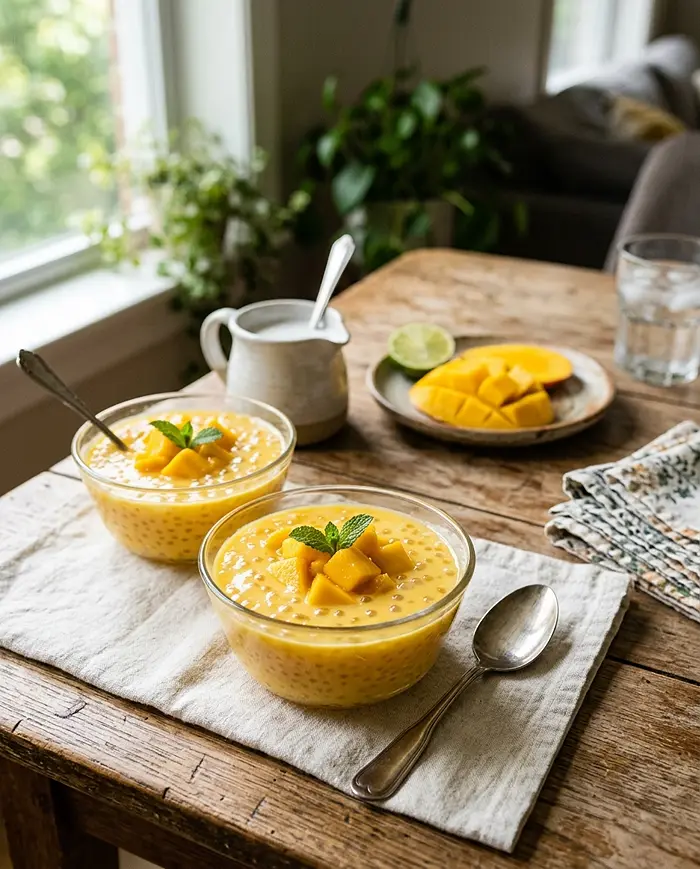
This dessert is best served very cold, straight from the fridge.
Spoon into chilled bowls and top with fresh mango chunks just before serving — they soften if they sit in the base too long.
A few crushed pistachios or a small drizzle of extra condensed milk on top takes it from homemade to genuinely beautiful.
Storing
Store the mango base and tapioca in separate airtight containers in the fridge.
Both will last up to 2 days. The tapioca will firm up slightly in the fridge — that’s normal and the texture softens again once it hits room temperature or blends back into the mango base.
Don’t freeze this one — the tapioca becomes unpleasantly hard and grainy once thawed.
Reheating
This is a cold dessert — it’s not meant to be reheated.
If the tapioca got too firm in the fridge, briefly rinse them under warm water before combining with the mango base.
Avoid microwaving the full assembled dessert; the tapioca turns rubbery and the coconut milk can separate.
Mango Sago Dessert FAQs
How long do you cook tapioca pearls for mango sago?
Cook mini tapioca pearls for 20 minutes at a steady simmer, then check for full transparency. If there’s still a white dot in the center, turn off the heat and let them rest covered for another 10 minutes — the residual steam finishes the cooking without making the outside mushy.
Can you use canned mango instead of fresh for this recipe?
Yes, but the flavor will be noticeably less vibrant. Canned mango works in a pinch — drain it well and reduce or skip the condensed milk since canned versions are often packed in syrup. Fresh, very ripe mango will always give you a brighter, more fragrant result.
What type of mango is best for mango sago dessert?
Ataulfo (honey) mangoes or Alphonso mangoes are ideal — they’re sweet, low in fiber, and blend into an exceptionally smooth puree. Tommy Atkins mangoes (the common grocery store variety) are more fibrous and less fragrant, so the blended base won’t be as silky or flavorful.
Is mango sago gluten-free?
Yes, this recipe is naturally gluten-free. Tapioca pearls are made from cassava starch, coconut milk is naturally gluten-free, and none of the other ingredients contain gluten. Always check your condensed milk label if you have a severe intolerance, as some brands are processed in shared facilities.
Why did my tapioca pearls turn hard after storing overnight?
Tapioca pearls firm up when they cool and sit out of liquid. Store them submerged in cold water in the fridge, separate from the mango base, and they’ll stay soft. Once they’re mixed into the mango base, serve within a few hours for the best texture.
Ready to Make This?
Mango sago dessert earns its place as a warm-weather staple — it’s quick, beautiful, and tastes like something you’d wait in line for.
Try it, make it your own, and leave a comment below to tell me what variation you went with or what question came up along the way.
If you’re on a roll with tropical desserts, don’t miss our no-bake watermelon cake decorated with fresh fruit and cream — it’s the same easy, show-stopping energy in a completely different shape.
Baked with love by Rebeccah Ellene. I’ve tested this recipe across six batches with three different mango varieties — the Ataulfo batch was the one that finally made me stop tweaking.
Mango Sago Dessert
Equipment
- Medium saucepan
- Blender
- fine-mesh strainer
- Individual serving bowls
- Ladle
Ingredients
Tapioca
- ½ cup Mini tapioca pearls About 60g — use small/mini pearls only, not large boba
Mango Base
- 3 Ripe mangoes About 1 kg — Ataulfo or Alphonso preferred for best flavor and smoothness
- 200 ml Unsweetened coconut milk Full-fat only — half of a 13.5 oz. can. Light coconut milk makes the base too thin
- 60 ml Sweetened condensed milk 1/4 cup — add more to taste if your mangoes are not very sweet
- ½ tsp Vanilla extract Pure, not imitation
Instructions
- Bring 4 cups of water to a full rolling boil in a medium saucepan. Add the mini tapioca pearls only once the water is fully boiling — adding them too early causes them to turn gummy before they cook through.
- Lower the heat to a steady simmer and cook for 20 minutes, stirring occasionally, until the pearls are completely transparent with no white center. If a white dot remains after 20 minutes, turn off the heat, cover the pot, and let the tapioca rest in the hot water for another 10 minutes.
- Drain the cooked tapioca through a fine mesh strainer and rinse thoroughly under cold running water to stop the cooking and remove excess starch. Transfer to a bowl, cover with fresh cold water, and set aside.
- Peel all three mangoes and cut the flesh away from the pit. Set aside a generous handful of your nicest chunks for topping. The remaining mango goes into the blender.
- Add the mango pieces, coconut milk, condensed milk, and vanilla extract to the blender. Blend on high for 45–60 seconds until completely smooth. Taste and adjust sweetness with extra condensed milk if needed. For best results, transfer the blended base to a large bowl and refrigerate for at least 1 hour before serving.
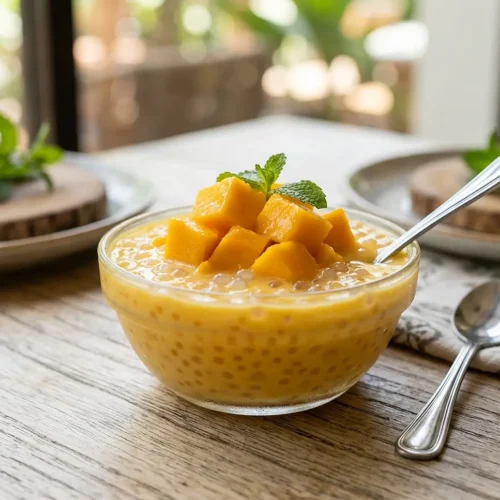
- Drain the soaked tapioca and fold it into the chilled mango base. Spoon into four individual bowls and top each with the reserved fresh mango chunks. Serve immediately.