Lemon Elderflower Cake Recipe
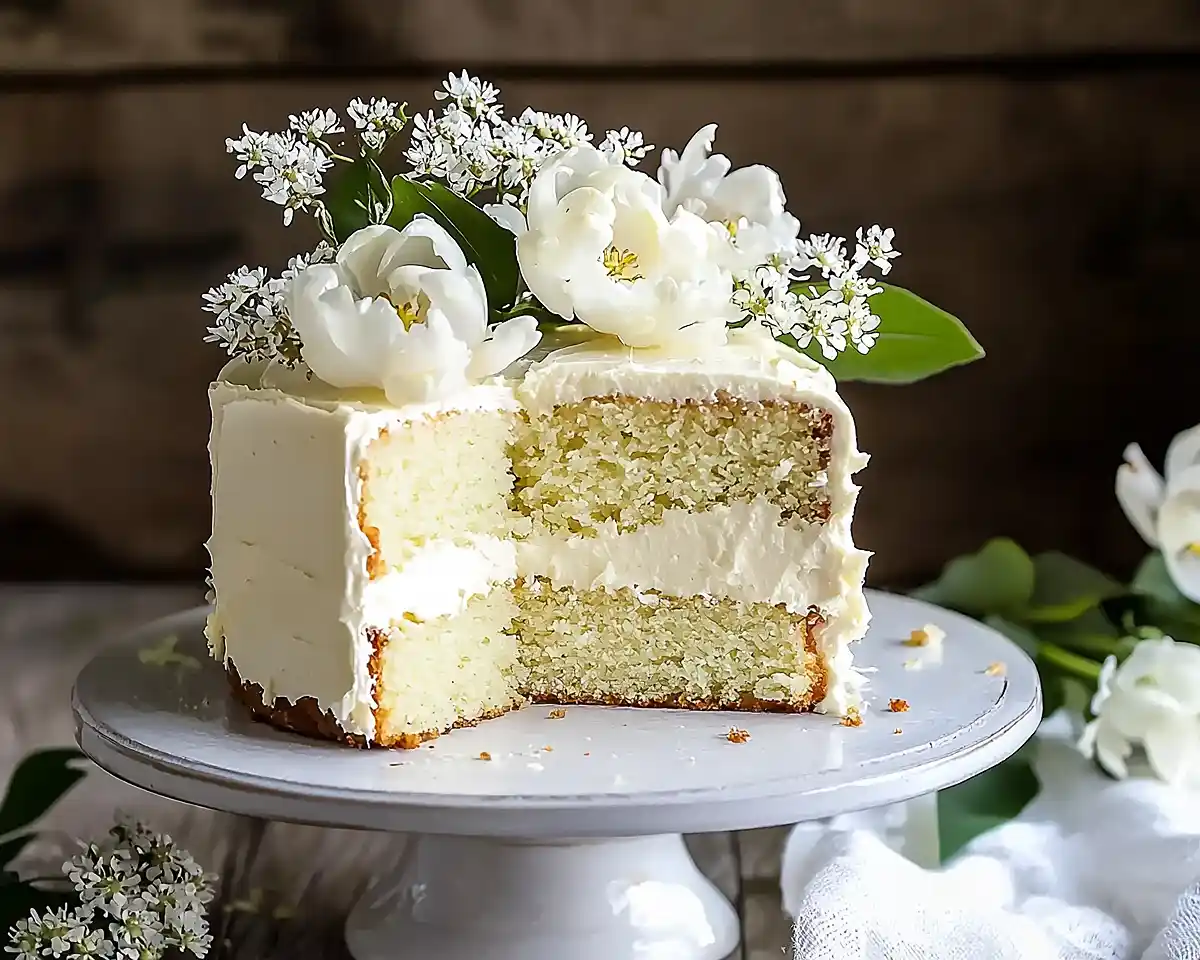
This lemon elderflower cake layers tender citrus sponge with tangy lemon curd and floral Swiss meringue buttercream for an elegant, show-stopping dessert.
This lemon elderflower cake combines three tender layers of citrus-kissed sponge cake with homemade tangy lemon curd and silky elderflower Swiss meringue buttercream, creating a moist, fragrant dessert with bright lemon flavor, delicate floral notes, and a cloud-like texture that melts on your tongue.
I’ll never forget the first time I tasted elderflower cordial in a London café—it was like bottling spring sunshine. That memory inspired this lemon elderflower layer cake, where bright citrus meets delicate floral sweetness in the most elegant way.
The combination sounds fancy (and it definitely looks impressive), but honestly, it’s just three simple components that come together beautifully. If you’re a fan of citrus desserts, you’ll also love our ultimate fudgy chocolate cream pie for a completely different flavor adventure.
Table of Contents
Why You’ll Love This Recipe
This elderflower lemon cake is absolutely worth the effort, and here’s why.
The flavor combination is genuinely unique. You get bright, zingy lemon that wakes up your taste buds, followed by the subtle, almost honeyed floral notes from the elderflower cordial. It’s sophisticated without being overly sweet, and trust me, your guests will ask for the recipe.
This cake makes a statement. Whether you’re celebrating a spring birthday, Mother’s Day, or just because it’s Tuesday, this three-layer beauty looks like it came from a bakery. I love serving it with fresh peonies on top—the soft pink petals against the pale buttercream are simply stunning.
You can prep components ahead. The lemon curd actually tastes better after sitting overnight in the fridge, and the cake layers freeze beautifully. I’ve made this dozens of times, and prepping in stages makes it totally manageable, even on a busy weekend.
Nutritional Information
Here’s what you’re looking at per slice (recipe serves 16):
| Nutrient | Per Serving |
|---|---|
| Calories | 485 |
| Protein | 6g |
| Carbohydrates | 58g |
| Fat | 26g |
| Sugar | 45g |
| Fiber | 1g |
What Makes This Lemon Elderflower Cake Recipe Special?
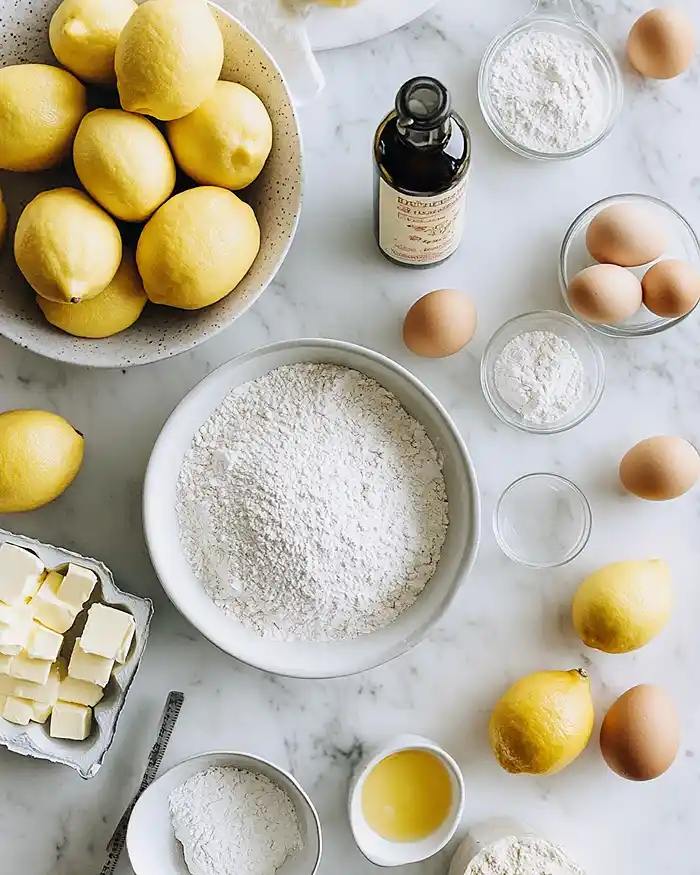
This lemon elderflower cake recipe delivers bakery-quality results at home with simple techniques. Here’s what you’ll need:
For the Lemon Cake:
| Amount | Ingredient | Notes |
|---|---|---|
| 3 cups | all-purpose flour | Spooned and leveled for accuracy |
| 1 Tbsp | baking powder | Fresh baking powder gives the best rise |
| 3/4 tsp | salt | Balances the sweetness perfectly |
| 1 cup | unsalted butter, room temperature | Don’t skip the room temp step! |
| 1 Tbsp | lemon zest | From one large lemon—this is where the magic happens |
| 2 cups | granulated sugar | |
| 4 large | eggs, room temperature | Cold eggs can break your batter |
| 2 tsp | vanilla extract | Pure vanilla makes a difference |
| 2/3 cup | whole milk, room temperature | |
| 1/3 cup | fresh lemon juice | From one medium lemon, strained |
For the Lemon Curd:
| Amount | Ingredient | Notes |
|---|---|---|
| 4 large | eggs | |
| 1 cup | granulated sugar | |
| 1/2 cup | fresh lemon juice | From one large lemon |
| 1 Tbsp | lemon zest | From one large lemon |
| 6 Tbsp | unsalted butter, cubed | Cutting it into cubes helps it melt evenly |
For the Elderflower Swiss Meringue Buttercream:
| Amount | Ingredient | Notes |
|---|---|---|
| 6 large | egg whites | Save those yolks for scrambled eggs! |
| 2 cups | granulated sugar | |
| 3 cups | unsalted butter, room temperature | Soft but not melted |
| 2-4 Tbsp | elderflower cordial | Start with 2 Tbsp and taste as you go |
For Assembly:
| Amount | Ingredient | Notes |
|---|---|---|
| As needed | elderflower cordial/syrup | For brushing the cake layers |
I always reach for fresh lemons instead of bottled juice—the flavor difference is night and day.
Equipment You’ll Need
Essential:
- Three 8-inch round cake pans (same size ensures even layers)
- Stand mixer with paddle and whisk attachments (or a hand mixer and a lot of patience)
- Medium mixing bowl
- Small heavy-bottomed pot for the lemon curd
- Candy thermometer (helpful but not mandatory)
- Wire cooling racks
- Offset spatula for frosting
- Bamboo skewer or toothpick
Optional but Helpful:
- Cake turntable (makes frosting so much easier)
- Piping bag with round tip (for the buttercream border)
- Bench scraper (for those smooth sides)
- Kitchen scale (for precision nerds like me)
How to Make the Perfect Lemon Elderflower Layer Cake
Making this lemon elderflower cake is easier than it looks when you break it into steps. Let’s walk through it together.
Making the Lemon Cake Layers:
- Preheat your oven to 350°F and prepare three 8-inch cake pans by greasing them thoroughly, dusting with flour, and lining the bottoms with parchment paper circles. This triple protection ensures your cakes release perfectly every single time.
- Whisk together 3 cups all-purpose flour, 1 Tbsp baking powder, and 3/4 tsp salt in a medium bowl until evenly distributed with no clumps. Set this aside—you’ll need it in a minute.
- In your stand mixer fitted with the paddle attachment, cream together 1 cup room-temperature unsalted butter and 1 Tbsp fresh lemon zest until the mixture looks smooth and smells incredible. Add 2 cups granulated sugar and beat on medium-high speed for about 3 minutes until the mixture turns pale yellow and fluffy like whipped clouds (this aerates the batter and creates that tender crumb).
- Reduce the mixer speed to low and add your 4 room-temperature eggs one at a time, making sure each egg is fully incorporated before adding the next one. Scrape down the bowl between additions. Mix in 2 tsp vanilla extract until combined.
- With the mixer on low speed, alternate adding the flour mixture and the combined milk-lemon juice mixture, starting and ending with flour (so: flour, milk mixture, flour, milk mixture, flour—3 additions of flour and 2 of liquid). Mix just until each addition disappears into the batter; overmixing develops too much gluten and creates a tough, dense cake instead of a tender one.
- Divide the batter evenly among your three prepared pans using a kitchen scale if you want perfectly equal layers (I aim for about 550g per pan). Smooth the tops with your offset spatula and give each pan a gentle tap on the counter to release any air bubbles.
- Bake for approximately 35 minutes or until a toothpick inserted into the center comes out with just a few moist crumbs clinging to it. The tops should spring back when gently pressed, and the edges will just start pulling away from the pan sides.
- Let the cakes cool in their pans on wire racks for exactly 10 minutes (set a timer—this prevents sticking), then carefully turn them out onto the racks to cool completely. Don’t rush this step; frosting warm cake layers will melt your buttercream into a puddle.
Making the Lemon Curd:
- In a small heavy-bottomed pot, whisk together 4 eggs and 1 cup granulated sugar until well combined and slightly pale. Add 1/2 cup fresh lemon juice, 1 Tbsp lemon zest, and 6 Tbsp cubed unsalted butter.
- Cook over medium-low heat, whisking constantly in a figure-eight pattern to prevent the eggs from scrambling. After about 8-10 minutes, the mixture will thicken noticeably and coat the back of a wooden spoon—when you draw your finger through it, the line should hold cleanly. Don’t let it boil or you’ll end up with lemony scrambled eggs.
- Immediately transfer the lemon curd to a glass bowl and press plastic wrap directly onto the surface to prevent that annoying skin from forming. Refrigerate for at least 3 hours until it sets to a thick, spreadable consistency. This makes about 2 cups of the most gorgeous, tangy curd.
Making the Elderflower Swiss Meringue Buttercream:
- Place 6 egg whites and 2 cups granulated sugar in your stand mixer bowl and whisk them together briefly just to combine. Don’t whip them yet—that comes later.
- Set the bowl over a pot with 1-2 inches of gently simmering water (make sure the bottom of the bowl doesn’t touch the water). Whisk constantly for about 3 minutes until the mixture feels hot to the touch and no longer grainy—it should read 160°F on a candy thermometer if you have one. This cooks the egg whites to a safe temperature and dissolves the sugar completely.
- Transfer the bowl to your stand mixer fitted with the whisk attachment and whip on medium-high speed for 5-10 minutes until the meringue forms stiff, glossy peaks and the bowl feels completely cool to the touch. Be patient here; rushing this step gives you soupy buttercream.
- Switch to the paddle attachment and reduce speed to medium-low. Add your 3 cups of room-temperature butter a few tablespoons at a time, beating well after each addition. The mixture might look curdled or broken at first—don’t panic! Just keep mixing and it’ll come together into silky smooth buttercream. If it stays soupy, pop it in the fridge for 10 minutes and beat again.
- Add 2 Tbsp elderflower cordial and mix until smooth, then taste. Add up to 2 more tablespoons, one at a time, until you hit that perfect floral sweetness. I usually end up using 3 tablespoons total.
Assembling Your Masterpiece:
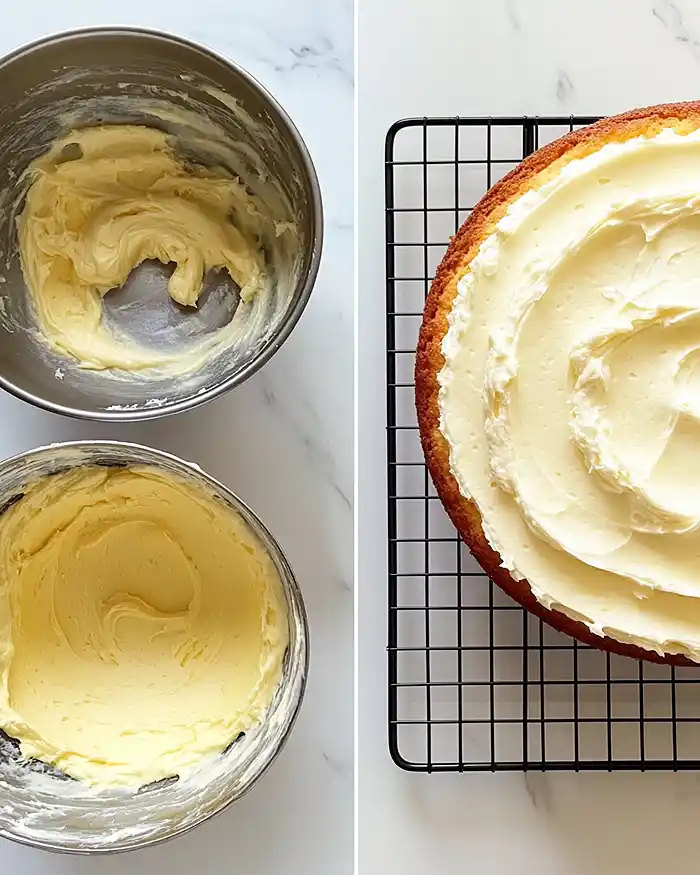
- Place your first cake layer on a cake stand or serving plate. Use a bamboo skewer to poke holes across the entire surface (about 20-25 holes), then brush generously with elderflower cordial—this adds moisture and an extra hit of flavor.
- Spread a thin layer of buttercream on top of the layer (about 1/4 cup), then pipe a buttercream border around the outer edge using a piping bag or a ziplock bag with the corner snipped off. This dam holds the lemon curd in place and prevents it from squishing out.
- Fill the center with approximately 3/4 cup of lemon curd, spreading it evenly within the buttercream border. Repeat this entire process with the second layer (poke, brush, buttercream, border, curd).
- Place the final cake layer on top, flat side up for a level surface. Apply a thin crumb coat—a barely-there layer of buttercream that seals in all the crumbs. Refrigerate the cake for 20 minutes to let this set firm.
- Apply your final coat of frosting in whatever style makes you happy. I love a rustic look: spread a generous amount of buttercream on top and let it naturally overhang the edges, then use a flat offset spatula to smooth buttercream around the sides, which creates that beautiful organic lip at the top edge.
- If you’re decorating with fresh flowers like peonies or roses, wrap the stems in floral tape first to keep them food-safe. Store the finished cake in the refrigerator, but let it sit at room temperature for 30 minutes before serving so the buttercream softens to its dreamy, silky texture.
Pro Tips for Lemon Elderflower Cake Success
Getting your elderflower lemon cake just right comes down to a few key techniques.
Temperature is everything. Room-temperature ingredients create a stable emulsion that produces even texture and maximum volume.
According to Serious Eats, when butter, eggs, and milk are all around 65-70°F, they blend smoothly without the batter breaking or looking curdled. Cold eggs can cause the butter to seize up, giving you a grainy, dense cake. I set all my fridge ingredients out for about 60 minutes before starting.
Don’t skip the parchment rounds. Even with greasing and flouring, cake layers can stick stubbornly. That circle of parchment paper is insurance—I trace my pan on the paper, cut just inside the line, and press it into the greased pan bottom. Your layers will slide right out.
Measure flour correctly. Scooping directly from the bag packs the flour down, and you’ll end up with dry, tough cake. Instead, fluff the flour with a spoon, spoon it into your measuring cup, and level off with a knife. Better yet, weigh it: 3 cups of all-purpose flour should be about 360 grams.
Let the curd chill completely. Warm lemon curd is too runny to stay between cake layers—it’ll ooze out the sides no matter how good your buttercream dam is. Three hours minimum in the fridge gets it to that perfect, thick, spreadable consistency.
Swiss meringue buttercream is worth it. Yes, it takes more steps than American buttercream, but the silky texture and less-sweet flavor are unbeatable with this delicate cake. If your buttercream looks broken or soupy while adding the butter, just keep beating—I promise it’ll come together. If it’s actually warm, chill it briefly.
Troubleshooting: What If Something Goes Wrong?
Why did my cake layers dome or crack on top?
Your oven might be running hot. Use an oven thermometer to check the actual temperature—most home ovens are off by 25°F or more. You can also try using cake strips (wet fabric strips wrapped around the pans) to help the layers bake more evenly.
What if my lemon curd tastes eggy?
The eggs cooked too fast, which happens if the heat was too high. Always use medium-low heat and whisk constantly in a figure-eight pattern. If you catch it early, you can strain out any cooked egg bits through a fine-mesh sieve.
Why is my Swiss meringue buttercream soupy or won’t come together?
Either your butter was too warm or your meringue wasn’t cooled completely before adding the butter. Pop the whole bowl in the fridge for 10-15 minutes, then beat again. It should tighten right up. If it’s grainy instead, your meringue was too cool—microwave the bowl for 5-second bursts while beating until smooth.
Can I fix a broken buttercream?
Absolutely. If it looks curdled, keep beating—90% of the time it’ll smooth out within 5 minutes. If it stays broken, try adding 2-3 tablespoons of fresh room-temperature butter, or warming the bowl slightly with your hands while the mixer runs.
What if my cake layers are dry?
Overbaking is the usual culprit. Next time, pull them out when they’re just set—a few moist crumbs on the toothpick are perfect. Also make sure you’re measuring flour correctly (spooned and leveled, not scooped). The elderflower cordial brush between layers helps add moisture back too.
Variations and Creative Twists
This lemon elderflower layer cake is endlessly adaptable for different seasons and tastes.
Try lavender instead of elderflower for a different floral note. Use 1-2 tablespoons of lavender simple syrup in the buttercream and for brushing the layers. The purple hue is gorgeous for spring celebrations.
Make it a raspberry lemon elderflower cake by adding a layer of fresh raspberry compote alongside the lemon curd. The tartness of raspberries plays beautifully with the floral sweetness.
Go citrus-crazy by mixing in orange or lime zest with the lemon zest in the cake batter. A combination of lemon, lime, and orange zest creates incredible depth.
Skip the fancy frosting if you’re short on time. A simple lemon cream cheese frosting (like our classic cream cheese icing technique) works wonderfully and takes half the time.
Make it gluten-free by using a 1:1 gluten-free flour blend like Bob’s Red Mill. I’ve had success with this swap, though the texture is slightly more delicate—handle the layers gently.
How to Serve, Store, and Reheat Your Cake
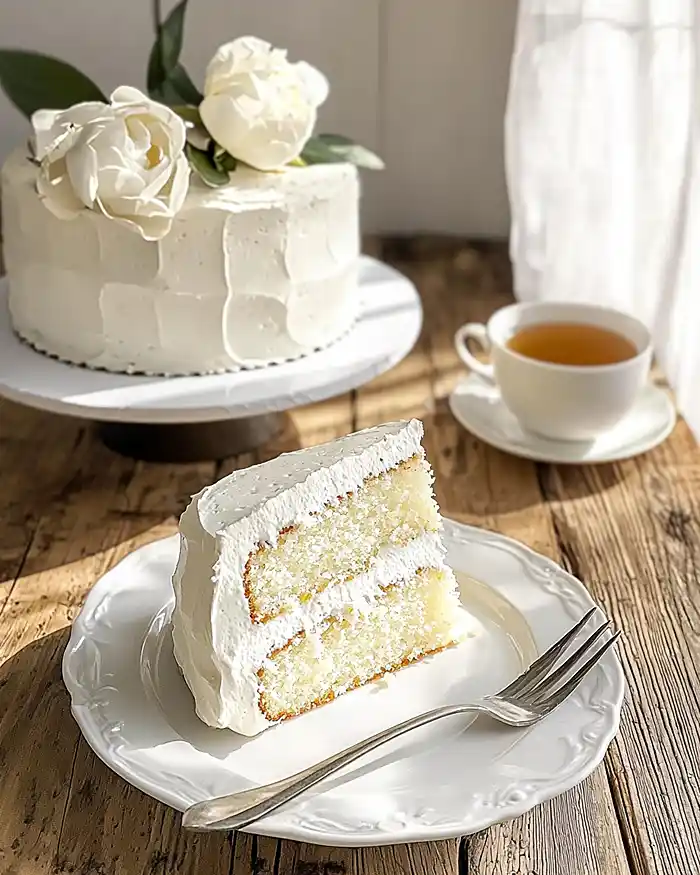
Serving this beauty:
Let the cake sit at room temperature for 30-45 minutes before slicing so the buttercream softens to that luxurious, silky texture. Use a long, sharp knife dipped in hot water and wiped dry between cuts for clean slices. This cake serves 16 generous portions—trust me, a little goes a long way with these rich layers.
Storing leftovers:
Cover the cake loosely with plastic wrap or keep it in a cake dome and refrigerate for up to 5 days. Swiss meringue buttercream holds up beautifully in the fridge without getting hard or crusty. Just remember to let slices come to room temperature before eating for the best flavor and texture.
Can you freeze it?
Absolutely! Wrap individual slices or the whole cake tightly in plastic wrap, then aluminum foil, and freeze for up to 3 months. Thaw overnight in the refrigerator, then bring to room temperature. The cake layers also freeze beautifully unfrosted—wrap them individually and they’ll keep for 2 months, making this perfect for make-ahead entertaining.
No-Waste Kitchen Magic
- Save those egg yolks. You’ll have 6 leftover yolks from making the Swiss meringue buttercream. Use them for homemade pasta, custard, hollandaise sauce, or my favorite—add them to scrambled eggs for the creamiest breakfast ever. They’ll keep in the fridge for 2 days or freeze for up to 3 months.
- Freeze cake scraps for cake pops. If you trim your layers for a neater stack, crumble those scraps and freeze them. Later, mix with a bit of frosting and roll into cake balls—coat in chocolate for easy cake pops or truffles.
- Turn extra lemon curd into thumbprint cookies. If you have leftover curd (though this rarely happens at my house), spoon it into sugar cookie thumbprints, swirl it into yogurt, or spread it on toast for breakfast.
- Repurpose dry cake slices. If any slices get a bit dry after a few days, cube them up and make a trifle layered with whipped cream and fresh berries. Or turn them into French toast for a decadent weekend brunch.
Lemon Elderflower Cake FAQs
Can I make this lemon elderflower cake ahead of time?
Yes! The cake layers can be baked up to 2 days ahead and wrapped tightly in plastic wrap at room temperature, or frozen for up to 2 months. The lemon curd actually improves after a day in the fridge. Make the Swiss meringue buttercream the day of assembly for the best texture, though you can refrigerate it for up to 3 days and re-whip before using.
What’s the best substitute for elderflower cordial if I can’t find it?
Elderflower liqueur (like St. Germain) works beautifully—use the same amount. You can also try rose water (use sparingly, start with 1 teaspoon), orange blossom water, or even a lavender simple syrup. Each gives a different floral note but keeps that elegant, sophisticated flavor.
Why is my Swiss meringue buttercream so sweet?
Swiss meringue buttercream is actually less sweet than American buttercream, but if you find it too sugary, you can reduce the cordial or add a pinch of salt to balance the sweetness. Some people also prefer adding an extra tablespoon of lemon juice to the finished buttercream for more tang.
How do I know when the lemon curd is thick enough?
The curd should coat the back of a spoon and hold a clean line when you run your finger through it. It’ll thicken more as it cools, so don’t overcook it. If you have a thermometer, it should reach about 170-175°F—any hotter and you risk scrambling the eggs.
Can I use bottled lemon juice instead of fresh?
I really don’t recommend it. Fresh lemon juice has bright, vibrant flavor that bottled juice just can’t match. The oils in fresh zest add incredible aroma too. If you absolutely must use bottled, add an extra teaspoon of zest to boost the lemon flavor.
Celebrating Spring, One Slice at a Time
There’s something magical about the way this lemon elderflower cake captures spring in dessert form—the bright sunshine of lemon, the delicate garden sweetness of elderflower, and those impossibly fluffy layers that make every celebration feel special.
Whether you’re baking this for Mother’s Day, a spring wedding shower, or just because your Tuesday needs more cake (always valid), I hope you love it as much as I do.
Snap a photo of your finished creation and tag me—I love seeing your beautiful bakes! And if you’re craving more show-stopping desserts, don’t miss our ultimate fudgy chocolate cream pie for a completely different but equally impressive treat.
Baked with love by Rebeccah Ellene.
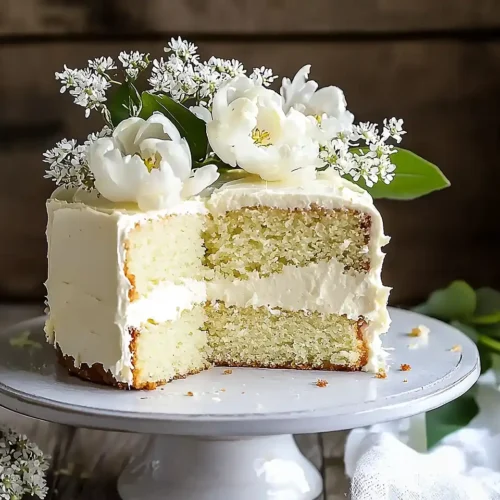
Lemon Elderflower Cake
Equipment
- Three 8-inch round cake pans
- Stand mixer with paddle and whisk attachments
- medium mixing bowl
- Small heavy-bottomed pot
- Candy thermometer
- Wire cooling racks
- Offset spatula
- Bamboo skewer
- Cake turntable
- Piping bag with round tip
- Bench scraper
Ingredients
Lemon Cake
- 3 cups all-purpose flour spooned and leveled
- 1 Tbsp baking powder
- ¾ tsp salt
- 1 cup unsalted butter room temperature
- 1 Tbsp lemon zest from one large lemon
- 2 cups granulated sugar
- 4 large eggs room temperature
- 2 tsp vanilla extract
- ⅔ cup whole milk room temperature
- ⅓ cup fresh lemon juice from one medium lemon
Lemon Curd
- 4 large eggs
- 1 cup granulated sugar
- ½ cup fresh lemon juice from one large lemon
- 1 Tbsp lemon zest from one large lemon
- 6 Tbsp unsalted butter cubed
Elderflower Swiss Meringue Buttercream
- 6 large egg whites
- 2 cups granulated sugar
- 3 cups unsalted butter room temperature
- 2-4 Tbsp elderflower cordial to taste
Assembly
- elderflower cordial for brushing layers
Instructions
- Preheat your oven to 350°F and prepare three 8-inch cake pans by greasing them thoroughly, dusting with flour, and lining the bottoms with parchment paper circles. This triple protection ensures your cakes release perfectly every single time.
- Whisk together 3 cups all-purpose flour, 1 Tbsp baking powder, and 3/4 tsp salt in a medium bowl until evenly distributed with no clumps. Set this aside.
- In your stand mixer fitted with the paddle attachment, cream together 1 cup room-temperature unsalted butter and 1 Tbsp fresh lemon zest until the mixture looks smooth and smells incredible. Add 2 cups granulated sugar and beat on medium-high speed for about 3 minutes until the mixture turns pale yellow and fluffy like whipped clouds.
- Reduce the mixer speed to low and add your 4 room-temperature eggs one at a time, making sure each egg is fully incorporated before adding the next one. Scrape down the bowl between additions. Mix in 2 tsp vanilla extract until combined.
- With the mixer on low speed, alternate adding the flour mixture and the combined milk-lemon juice mixture, starting and ending with flour (3 additions of flour and 2 of liquid). Mix just until each addition disappears into the batter.
- Divide the batter evenly among your three prepared pans. Smooth the tops with your offset spatula and give each pan a gentle tap on the counter to release any air bubbles.
- Bake for approximately 35 minutes or until a toothpick inserted into the center comes out with just a few moist crumbs clinging to it. The tops should spring back when gently pressed.
- Let the cakes cool in their pans on wire racks for exactly 10 minutes, then carefully turn them out onto the racks to cool completely.
- In a small heavy-bottomed pot, whisk together 4 eggs and 1 cup granulated sugar until well combined and slightly pale. Add 1/2 cup fresh lemon juice, 1 Tbsp lemon zest, and 6 Tbsp cubed unsalted butter.
- Cook over medium-low heat, whisking constantly in a figure-eight pattern for about 8-10 minutes until the mixture thickens noticeably and coats the back of a wooden spoon. Don’t let it boil.
- Immediately transfer the lemon curd to a glass bowl and press plastic wrap directly onto the surface to prevent a skin from forming. Refrigerate for at least 3 hours until it sets to a thick, spreadable consistency.
- Place 6 egg whites and 2 cups granulated sugar in your stand mixer bowl and whisk them together briefly just to combine.
- Set the bowl over a pot with 1-2 inches of gently simmering water. Whisk constantly for about 3 minutes until the mixture feels hot to the touch and no longer grainy (160°F on a thermometer).
- Transfer the bowl to your stand mixer fitted with the whisk attachment and whip on medium-high speed for 5-10 minutes until the meringue forms stiff, glossy peaks and the bowl feels completely cool to the touch.
- Switch to the paddle attachment and reduce speed to medium-low. Add your 3 cups of room-temperature butter a few tablespoons at a time, beating well after each addition. Keep mixing until it comes together into silky smooth buttercream.
- Add 2 Tbsp elderflower cordial and mix until smooth, then taste. Add up to 2 more tablespoons, one at a time, until you hit that perfect floral sweetness.
- Place your first cake layer on a cake stand or serving plate. Use a bamboo skewer to poke holes across the entire surface, then brush generously with elderflower cordial.
- Spread a thin layer of buttercream on top of the layer, then pipe a buttercream border around the outer edge. This dam holds the lemon curd in place.
- Fill the center with approximately 3/4 cup of lemon curd, spreading it evenly within the buttercream border. Repeat this entire process with the second layer.
- Place the final cake layer on top, flat side up. Apply a thin crumb coat and refrigerate the cake for 20 minutes to let this set firm.
- Apply your final coat of frosting in a rustic style. Spread a generous amount of buttercream on top and let it naturally overhang the edges, then use a flat offset spatula to smooth buttercream around the sides.
- If decorating with fresh flowers like peonies, wrap the stems in floral tape first. Store the finished cake in the refrigerator, but let it sit at room temperature for 30 minutes before serving.