Falooda Ice Cream Dessert: The Dreamy Rose-Scented Soda Float You’ll Want Every Summer
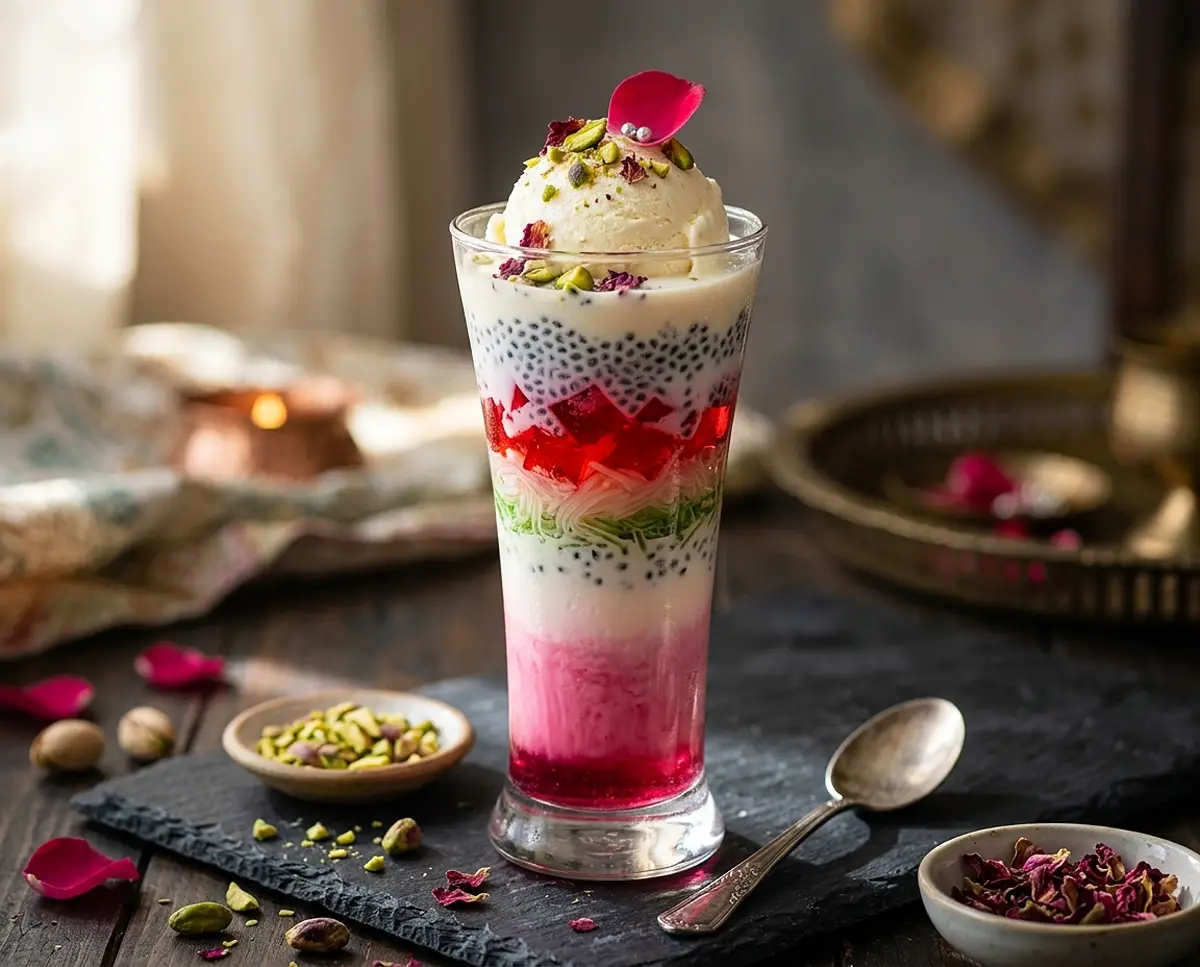
Make the ultimate falooda ice cream dessert with perfect layers, rich milk, and homemade rose syrup—no watery results. Learn the secret now & try it today!
Falooda ice cream dessert is one of those rare things that looks like a magic trick and tastes even better than it looks. In this guide, you’ll get the exact layering technique, a homemade rose syrup recipe, and the one swap that makes the milk so thick it almost rivals ice cream on its own.
This falooda ice cream dessert is built from homemade rose syrup, soaked tukmaria seeds, strawberry jello cubes, cooked vermicelli, cold evaporated milk, and a crown of vanilla ice cream — layered in a tall glass until the whole thing turns a gorgeous pink ombre that tastes floral, creamy, and cold all at once.
The first time I made this, I found the recipe in a small printed cookbook tucked into my aunt’s kitchen drawer, stained with rose water and completely unmarked for occasion. It was just labeled “summer.” I’ve been making it every warm season since, tweaking the syrup ratio and swapping in evaporated milk for a richer base.
Table of Contents
How Do You Make Falooda Ice Cream Dessert at Home?
Falooda ice cream dessert is a layered South Asian cold drink made from rose syrup, soaked basil seeds, cooked vermicelli, jello cubes, chilled milk, and a scoop of vanilla ice cream — served in a tall glass with a straw and a spoon.
- Soak tukmaria seeds in cold water for 15 minutes until they form a gel coating.
- Cook vermicelli in boiling water until tender, drain, and chill in cold water.
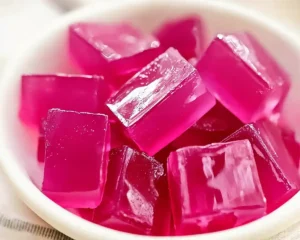
- Set strawberry jello using half the water called for on the packet to get chewy, dense cubes.
- Layer jello cubes, vermicelli, and soaked seeds into the bottom of a tall glass.
- Pour one cup of chilled evaporated milk over the layers, then drizzle in 2–4 tablespoons of rose syrup.
- Crown with a scoop of vanilla ice cream and serve immediately with a straw and spoon.
- Regular milk vs. evaporated milk: Evaporated milk gives a richer, creamier base that holds the layers better.
- Store-bought syrup vs. homemade rose syrup: Homemade gives deeper color and a cleaner floral flavor without artificial sweetness.
- Rice vermicelli vs. roasted wheat vermicelli: Rice vermicelli cooks faster and is gluten-free; roasted vermicelli has more chew.
- Vanilla ice cream vs. kulfi: Kulfi gives a denser, cardamom-forward finish; vanilla keeps it light and universally crowd-pleasing.
- Soft jello vs. chewy jello: Using half the water produces a firmer, more satisfying bite that doesn’t dissolve into the milk.
Use evaporated milk mixed with condensed milk, make your syrup from scratch, and set the jello with half the water — those three things alone will get you a falooda that looks and tastes like it came from a proper Pakistani sweet shop.
Why Will You Love This Falooda Ice Cream Dessert?
This falooda ice cream dessert is one of the most visually stunning things you can make at home, and it comes together faster than most layer cakes.
- The texture is a full experience. You get chew from the jello, slip from the vermicelli, tiny bursts from the tukmaria seeds, and creamy cold from the ice cream — all in a single sip.
- It’s easier than it looks. Everything can be prepped hours in advance; assembly takes about three minutes per glass.
- The homemade syrup is genuinely better. When I tested it side by side with a popular store-bought brand, the homemade version had a cleaner rose flavor and a color that held its pink ombre instead of going murky.
- It beats any store-bought version. Ready-made faloodas usually use thin milk and pre-set jello that’s already starting to weep. Fresh assembly means every layer stays crisp and distinct right to the bottom of the glass.
- The prep is totally flexible. Make the jello and syrup the night before. Cook the vermicelli an hour ahead. When guests arrive, just layer and serve.
One thing I noticed across several batches: if you’re using store-bought rose syrup, add two or three drops of vanilla extract directly into the glass before the milk. It rounds out the artificial edge in most commercial syrups and makes the whole drink taste more intentional. It’s a tiny thing that makes a noticeable difference.
If you love layered, scoop-based desserts, our homemade cardamom ice cream recipe with warm spice and a creamy custard base pairs beautifully with this falooda as a topper swap.
What Ingredients Do You Need for Falooda Ice Cream?
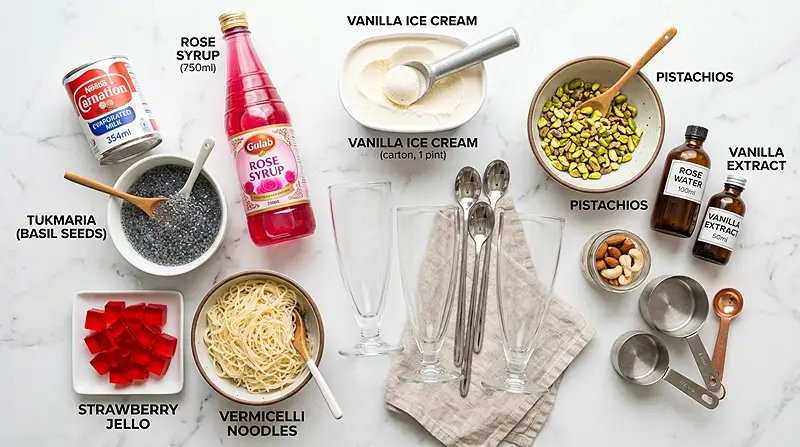
This royal falooda ice cream recipe uses ingredients you can find at most South Asian grocery stores, and several at any supermarket. The full list below is split into components so nothing gets lost.
Homemade Falooda Syrup (makes about 2½ cups)
| Amount | Ingredient |
|---|---|
| 400 g (2 cups) | White sugar |
| 50 g | Corn syrup / glucose syrup (keeps the syrup from crystallizing) |
| 200 mL (just under 1 cup) | Rose water (not rose extract — the extract is too strong and goes bitter in heat) |
| 2 tsp | Vanilla extract (use real extract, not essence — the flavor stays cleaner) |
| A few drops | Red food coloring (Americolor “red red” gives the deepest, truest pink) |
Falooda (for 4 drinks)
| Amount | Ingredient |
|---|---|
| 1 cup (2–4 tbsp per drink) | Rose syrup or homemade falooda syrup |
| 4 cups (1 cup per drink) | Cold evaporated milk (richer and creamier than regular milk — worth the swap) |
| 4 tsp | Tukmaria seeds (sweet basil seeds / sabja seeds) (store in a cool, dry place; they absorb water fast once open) |
| ½ cup | Water (for soaking seeds) |
| 1 cup | Strawberry jello, cut into 1 cm cubes |
| ½ cup | Cooked vermicelli or sev, stored in cold water |
| 4 scoops | Vanilla ice cream |
| A few drops | Vanilla extract (optional, if using store-bought syrup) |
Strawberry Jello
| Amount | Ingredient |
|---|---|
| 1 packet (85 g / 3 oz) | Strawberry jello |
| 1 cup | Hot water |
| ½ cup (optional) | Cold water or rose water mix (add for softer jello; skip for chewy, dense cubes) |
Thick Sweet Milk (optional upgrade)
| Amount | Ingredient |
|---|---|
| 4 cups | Evaporated milk |
| ¾ cup (3 tbsp per cup of milk) | Condensed milk (this replaces added sugar — don’t sweeten the milk separately) |
Per Serving (approximate): Calories 480 · Protein 9g · Carbs 72g · Fat 17g
If you’re watching sugar, reduce the syrup to 1–2 tablespoons per glass and skip the condensed milk upgrade — the evaporated milk alone is still beautifully rich.
For another richly spiced frozen dessert that uses similar pantry staples, take a look at our silky Middle Eastern ice cream made with mastic and rose water.
What Equipment Do You Need to Make Falooda?
Essential tools:
- 4 tall highball or hurricane glasses: You need height for the layers — short glasses won’t give you the ombre effect.
- Small saucepan: For the rose syrup; you need one with a heavy base so the sugar doesn’t scorch at the edges.
- Medium pot: For boiling the vermicelli — nothing fancy, just something large enough to let the noodles move freely.
- 8 or 9-inch cake pan: For setting the jello in a shallow, even layer so the cubes cut cleanly.
- Sharp knife and cutting board: Jello cubes need clean cuts — a dull knife drags and distorts them.
- Colander: For draining and rinsing the vermicelli with cold water after cooking.
- Glass measuring jug: For mixing and pouring the thick sweet milk neatly into each glass.
- Wide straws and long spoons: Non-negotiable — the seeds need a straw wide enough to pass through, and a spoon gets to the jello at the bottom.
Optional tools:
- Small funnel or squeeze bottle: Makes drizzling rose syrup down the side of the glass much cleaner if you want a perfect ombre effect.
- Kitchen scissors: For snipping long vermicelli into shorter, more manageable pieces before serving.
- Syrup bottle with a pour spout: If you’re making this regularly, decant the homemade syrup into a bottle — it stores for weeks in the fridge and pours beautifully.
How Do You Make Falooda Ice Cream Dessert Step by Step?
Building a falooda ice cream dessert is mostly about having all the components cold and ready before you start layering — once everything’s prepped, assembly is genuinely fast.
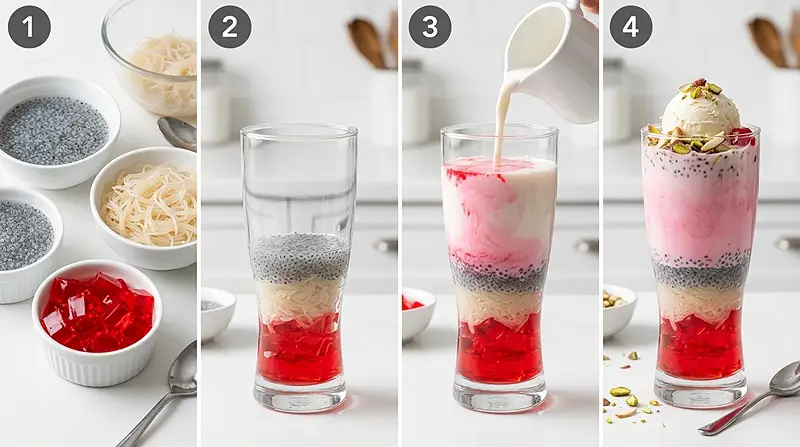
Make the Homemade Falooda Syrup
- Combine the white sugar, corn syrup, and rose water in a heavy-based saucepan. Stir to combine, then place over medium heat, swirling the pan occasionally until every grain of sugar is dissolved. (Check the sides of the pan — any undissolved crystals clinging to the walls will cause the whole syrup to re-crystallize as it cools. Wipe them down with a damp pastry brush if needed.)
- Let the syrup come to a gentle simmer once the sugar is fully dissolved, then simmer for one minute exactly. You’re not making candy — you just want it slightly thickened and the rose water flavor concentrated, not cooked out.
- Remove from heat and stir in the vanilla extract and a few drops of red food coloring. The color will deepen slightly as the syrup cools — start with less dye than you think you need. Pour into a clean bottle and cool completely before using.
Set the Strawberry Jello
- Empty the jello packet into a heatproof bowl and dissolve it in one cup of hot water, stirring until completely clear — no granules remaining. (If you see any undissolved bits, don’t add the cold water yet; keep stirring.)
- For chewy, dense cubes, leave the jello as is and pour it into your cake pan. For a softer result, stir in up to half a cup of cold water or a mix of cold water and rose water. Pour into a large, shallow pan and let it cool to room temperature, then refrigerate overnight until fully set.
- Once set, unmold the jello slab onto a cutting board and cut it into neat 1 cm cubes. Keep them in the fridge in a covered container until you’re ready to build your drinks.
Cook the Vermicelli
- Bring a medium pot of water to a full rolling boil. Add the dry vermicelli and stir immediately so the noodles don’t clump at the bottom. (If you’re using roasted wheat vermicelli, it will take around 5 minutes to become tender. Rice vermicelli is much faster — check it at 2 minutes.)
- Drain through a colander and run immediately under cold water until the noodles are completely chilled. Transfer to a small bowl and cover with just enough cold water to keep them from sticking together. If the vermicelli is long, use scissors to snip it into shorter, more manageable lengths.
Soak the Tukmaria Seeds
- Place the tukmaria seeds in a small bowl and pour over half a cup of cold water. Leave them for 15 minutes — they’ll swell and develop a clear gel coating that turns each tiny seed into something that looks like a miniature bubble tea bead. They should be fully hydrated before going into the glass. (Don’t soak them too far in advance or the gel becomes too thick to sip easily through a straw.)
Mix the Thick Sweet Milk (if using)
- Combine the evaporated milk and condensed milk in a jug, using 3 tablespoons of condensed milk for every cup of evaporated milk. Stir until fully combined, then chill in the fridge until cold. (Don’t try to use warm milk — it will start melting the ice cream immediately and the layers will collapse before anyone can appreciate them.)
Assemble the Falooda
- Start with a tall glass. Add a generous layer of jello cubes — up to a quarter cup per glass. Spoon in about 2 tablespoons of the cold, drained vermicelli, and then add a spoonful of soaked tukmaria seeds. You want the glass about one-third full at this stage.
- Pour approximately one cup of your chilled milk slowly over the layers. It should pool over the seeds and vermicelli and stay mostly clear at the bottom — you’ll add the color in the next step. If you’re using store-bought rose syrup, add two or three drops of vanilla extract directly into the milk now.
- Drizzle the rose syrup down the inside edge of the glass — start with 2 tablespoons and add more to taste. Watch it spiral through the milk and settle toward the bottom, creating that pink ombre from the base up. (Add the syrup slowly — once it hits the milk it blooms outward and you can’t pull it back.)
- Add one scoop of vanilla ice cream directly on top of the milk, pressing it in slightly so it crowns the glass without falling over. Optionally top with a few extra jello cubes and serve immediately with a wide straw and a long spoon.
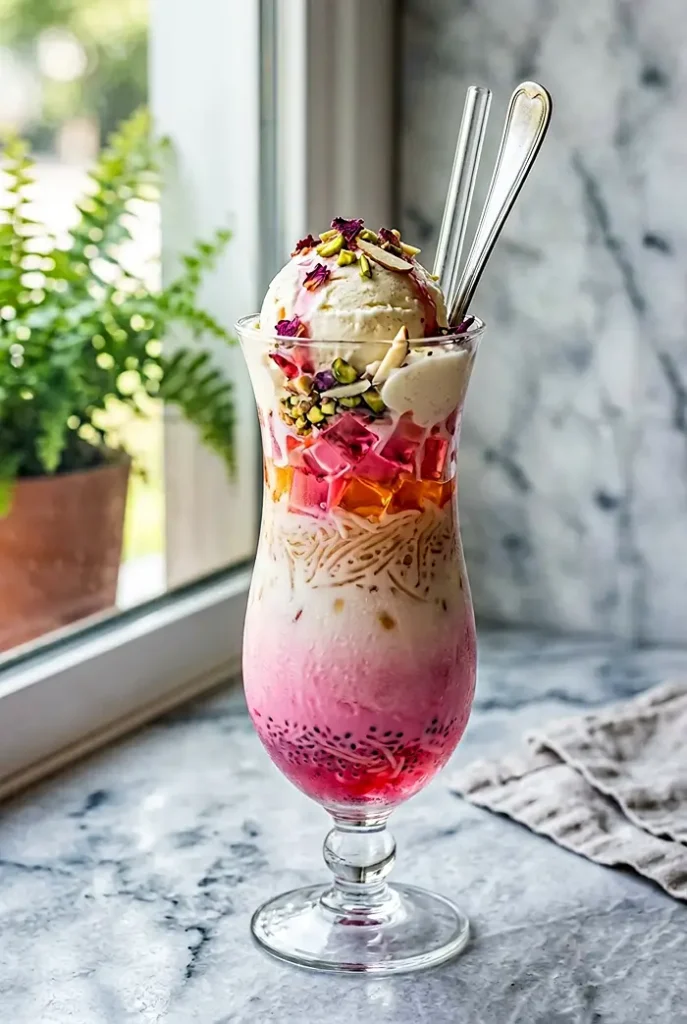
Pro Tips for Perfect Rose Falooda Ice Cream Every Time
Getting a great rose falooda ice cream is mostly about small decisions that compound — none of them are hard, but skipping one usually shows up in the final glass.
Don’t skip the corn syrup in the homemade rose syrup. The corn syrup isn’t there for sweetness — it’s an invert sugar that interrupts the crystallization of sucrose molecules as they cool.
According to Serious Eats’ deep dive on syrup science and preventing crystallization, even a small proportion of an interfering sugar like glucose or corn syrup keeps your syrup smooth and pourable for weeks in the fridge. Without it, you’ll find sandy sugar crystals forming along the bottom of the bottle within a few days.
Set your jello with half the water on the packet. The standard instruction on most jello packets produces a wobbly, barely-set dessert that dissolves into falooda milk within seconds. Using only one cup of hot water and skipping the cold water entirely gives you cubes that hold their shape, have a satisfying chew, and stay distinct against the milk. I tested both side by side across four batches — the half-water version won every time without exception.
Soak the tukmaria seeds at the right time. Fifteen minutes in cold water is the sweet spot. Less than that and the gel coating is thin and barely noticeable. More than about 30 minutes and the gel thickens so much the seeds start clumping and won’t travel easily through a straw. I now set a timer the moment I start assembling everything else — by the time the jello is cut and the milk is poured, the seeds are exactly right.
Use evaporated milk, not regular milk. Regular milk is fine but noticeably thin next to the other components. Evaporated milk has had about 60% of its water removed before canning, which means it’s naturally thick and creamy without added sugar. Mix in three tablespoons of condensed milk per cup and you have something that’s halfway between a milkshake and a cream — it coats the jello and seeds and makes the whole drink feel substantial rather than just sweet and wet.
Keep every component cold before assembly. The ice cream melts from the bottom up once it hits the milk. If the milk is even slightly warm, the melt happens too fast and the whole drink turns uniformly pink before it reaches the table. Chill everything — the glasses too if you can — and you’ll buy yourself enough time for the beautiful layered presentation to survive the journey from kitchen counter to table.
Troubleshooting: When Something Goes Wrong with Your Falooda
Why is my rose syrup crystallizing in the bottle?
The corn syrup was either left out or not enough was used. Sucrose on its own tends to re-crystallize as it cools, and even one stray sugar crystal on the side of the pan during cooking can trigger a chain reaction. Rewarm the syrup gently to dissolve the crystals and add a small splash more corn syrup before re-bottling.
Why did my jello melt into the milk?
Your jello was either set with too much water or the milk wasn’t cold enough. Make sure to use only one cup of hot water when setting the jello, and always assemble the drink with fully chilled milk. A jello that’s been set with the full amount of water recommended on the packet simply doesn’t have enough gelatin density to hold up in liquid.
Why do my tukmaria seeds taste bitter or gummy?
They were either soaked too long or in water that was too warm. Always soak in cold water for 15 minutes exactly. Warm water softens the gel too fast and can give the seeds a slightly mucilaginous texture that not everyone loves. Drain off any excess water before adding them to the glass so you don’t dilute the milk.
Why does my falooda taste flat even though I followed the recipe?
Store-bought rose syrup often has a sharp artificial edge that gets lost in all the other flavors. Add two or three drops of vanilla extract directly into each glass before the milk — it bridges the rose and dairy flavors and rounds out anything that tastes one-dimensional. It’s the single most impactful small fix I’ve found.
Why are my vermicelli noodles clumped together?
They dried out after cooking without enough cold water to keep them separate. After draining, always transfer the noodles to a bowl with a little standing cold water — just enough to coat them. Stir once or twice over the next few minutes as they cool, and they’ll stay loose and easy to spoon into the glass.
What Are the Best Variations of Falooda Ice Cream?
The beauty of a falooda kulfi ice cream setup is that the core structure stays the same and almost every component is swappable without breaking the drink.
- Royal Falooda Ice Cream: Swap the vanilla ice cream scoop for a round of homemade kulfi — either cardamom or pistachio flavored. Top with crushed pistachios, a few strands of saffron bloomed in warm milk, and an extra drizzle of rose syrup. The richer, denser kulfi makes the whole drink feel like a celebration dessert rather than an everyday float. For a head start on that topper, our classic layered chocolate and vanilla ice cream guide covers the no-churn method that also works beautifully here.
- Gluten-Free Version: Use rice vermicelli instead of roasted wheat vermicelli — it cooks faster and behaves identically in the glass. All other components in this recipe are naturally gluten-free. Check your jello packet to confirm no wheat-based additives are listed.
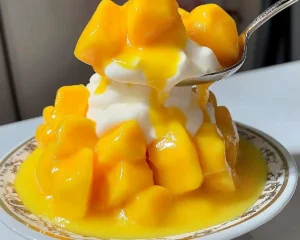
- Mango Falooda: Replace the rose syrup with a thick mango puree sweetened to taste. Use mango-flavored jello or plain agar-set mango cubes instead of strawberry jello. The whole drink shifts from floral and pink to tropical and golden, and it’s especially good in late summer when ripe mango puree is easy to find.
- Eid or Diwali Celebration Version: Double the saffron in the milk (bloom it in 2 tablespoons of warm milk before adding), layer in crushed rose petals between the jello and the vermicelli, and top each glass with edible gold leaf. The visual effect is extraordinary for a special occasion spread, and the flavor becomes richer and more perfumed.
Can You Make Falooda Ice Cream Dessert Ahead of Time?
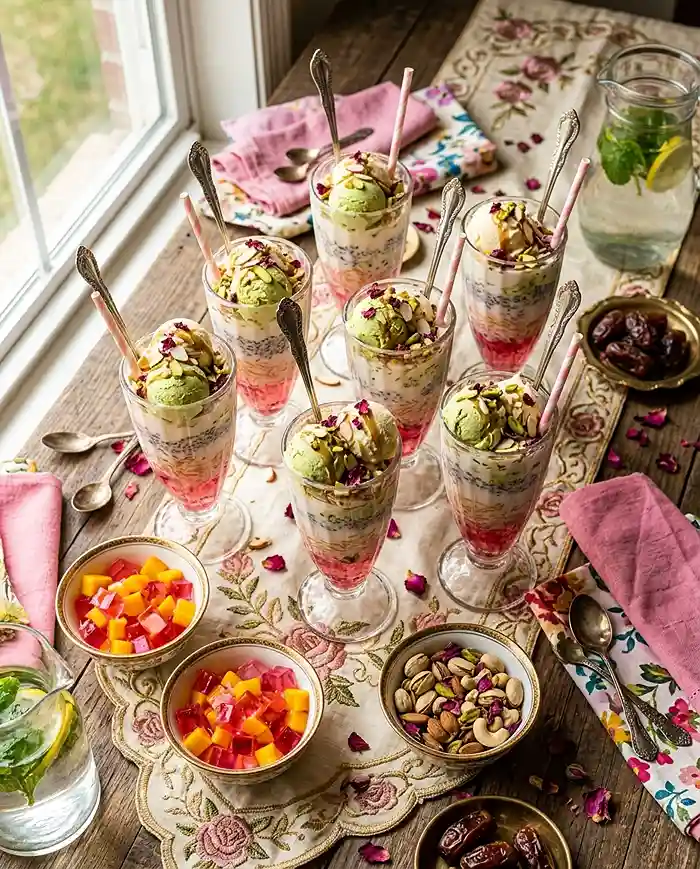
Serving
Falooda is at its best the moment it’s assembled — the ice cream just starting to melt into the syrup-streaked milk, the jello cold and bouncy, the layers still distinct. Serve it immediately with a wide straw and a long spoon so guests can experience every texture from top to bottom, then stir it all together at the end if they prefer a fully blended drink.
Storing the Components
The homemade rose syrup keeps for up to a month in the fridge in a sealed bottle. Jello cubes will keep for 3 days covered in the fridge — beyond that, they start to weep and lose their chew. Cooked vermicelli lasts about 2 days in cold water in the fridge; change the water once a day to keep it fresh. The thick sweet milk mixture keeps for up to 4 days chilled in a sealed jug. Soaked tukmaria seeds are best used the same day — they continue to hydrate and the gel gets too thick overnight.
Reheating / Re-Assembly
There’s no reheating here — this is a cold dessert and it should stay that way. Fully assembled faloodas don’t store well; the ice cream melts, the jello softens, and the vermicelli absorbs the milk and becomes mushy. Assemble each glass fresh from pre-prepped components for the best result, especially if you’re serving a crowd at a party.
Frequently Asked Questions About Falooda Ice Cream
What are tukmaria seeds and can I skip them?
Tukmaria seeds — also called sabja seeds, sweet basil seeds, or kasa kasa — are tiny black seeds that develop a clear gel coating when soaked in water. They’re a traditional part of falooda and provide the signature textural contrast against the smooth milk.
Can I make falooda ice cream recipe without rose syrup?
Yes — you can substitute with a good quality store-bought rose syrup like Rooh Afza, or skip the floral element entirely and use strawberry or lychee syrup instead. The drink will lose its signature rose flavor but will still work structurally. If you go this route, add vanilla extract directly to the milk to compensate for the flavor depth the rose syrup would have provided.
How do I make the falooda layered and not mixed?
Cold temperature and careful pouring are everything. Make sure the milk is fully chilled, pour it gently over the back of a spoon or down the inside edge of the glass, and add the rose syrup last and slowly. The syrup is denser than the milk and will naturally sink and settle — pouring it too fast just splashes it into the milk and loses the ombre effect immediately.
Is falooda gluten-free?
It can be, easily. The only component that contains gluten by default is the roasted wheat vermicelli — swap it for rice vermicelli and the entire drink is naturally gluten-free. Check your jello packet and rose syrup label to confirm, as some brands do include additives, but most are clean.
Why does falooda ice cream taste different at restaurants than at home?
Restaurant versions often use evaporated or condensed milk combined with homemade syrups that have been simmered for longer, giving a deeper color and a more concentrated sweetness.
Ready to Build Your Own Glass?
Falooda ice cream dessert is one of those recipes that earns its place in every warm-weather rotation — the layers are stunning, the flavors are unlike anything else in the dessert world, and once you’ve made the syrup from scratch you’ll never go back to the bottle.
If you make this, drop a comment below with what syrup you used or how you customized the layers — I genuinely love seeing how these turn out in other people’s kitchens.
And if you’re building a full dessert spread, our Dubai chocolate ice cream recipe with a crispy pistachio knafeh swirl makes an extraordinary companion piece alongside this falooda.
Baked with love by Rebeccah Ellene. This recipe has been tested across more than a dozen batches — including a version that went slightly sideways when I tried setting the jello with sparkling rose water (lesson learned: carbonation and gelatin do not get along).