Basque Cheesecake Cupcakes
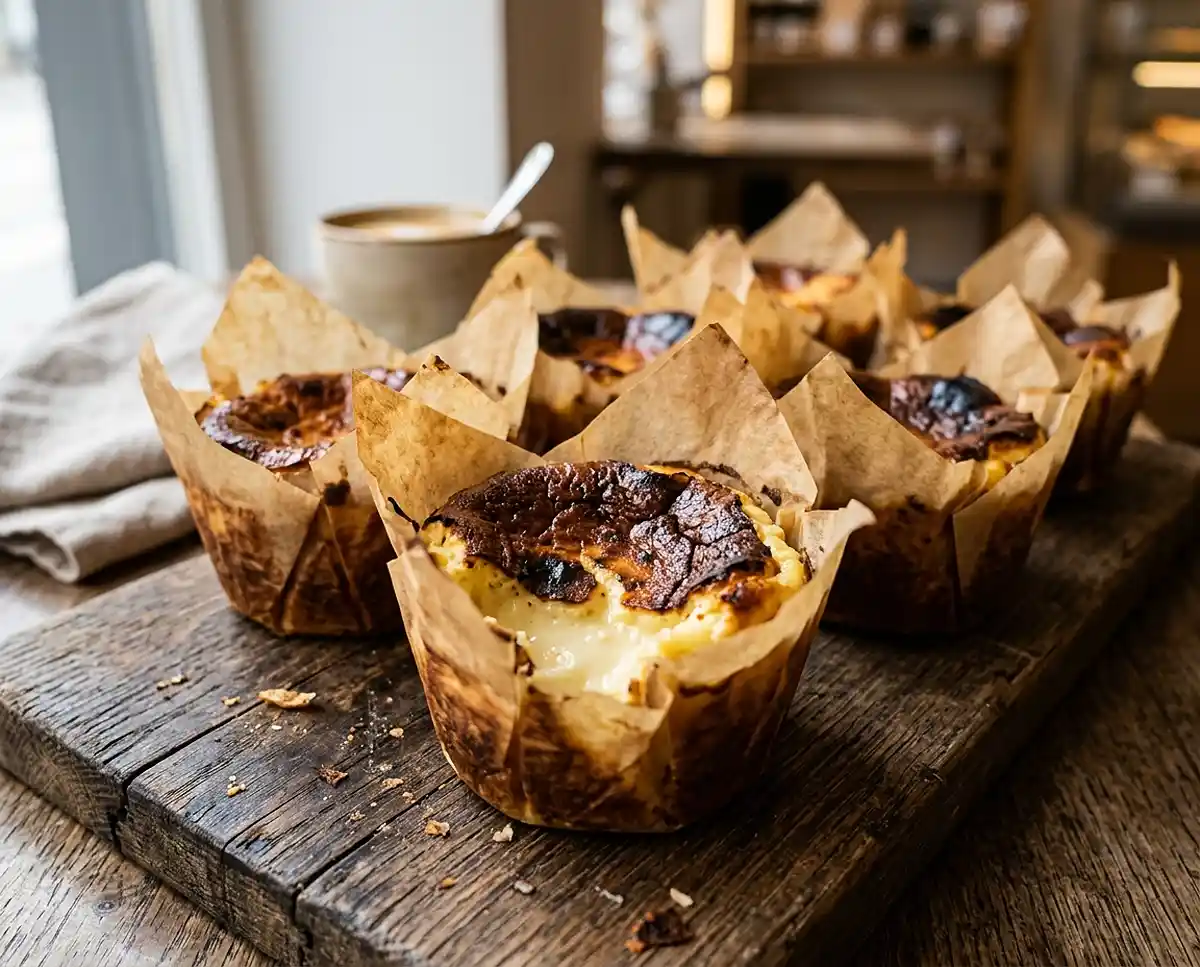
These basque cheesecake cupcakes have a caramelized top and a custardy center — made in one bowl, done in 20 min. Get the recipe now.
Basque cheesecake cupcakes are the one thing I wish I’d made sooner — because once you do, you’ll wonder why you ever made a full-sized cheesecake at all.
What you’ll get from this post: the exact batter ratios, the visual cues that matter more than any timer, and the one filling trick that keeps the center custardy instead of rubbery.
These basque cheesecake cupcakes are made from cream cheese, heavy cream, eggs, caster sugar, and a whisper of flour — baked hot in a lined muffin tray until the tops are deeply bronzed and the centers still tremble just slightly when you tap the pan.
I found this recipe after eating a full-sized burnt cheesecake at a Spanish restaurant and immediately needing it in individual form. The restaurant’s version had that signature bittersweet edge on top with an almost-molten middle — and I knew that texture was everything.
Table of Contents
How Do You Make Basque Cheesecake Cupcakes at Home?
Basque cheesecake cupcakes are individual portions of the classic burnt Basque cheesecake — made from cream cheese, heavy cream, eggs, sugar, and a small amount of flour, baked hot and fast until the tops are deeply caramelized and the centers are creamy and custardy.
- Beat cream cheese until completely smooth before adding any other ingredients.
- Pour in heavy cream and mix until the batter is silky with no lumps.
- Add sugar, vanilla paste, and salt, mixing until fully dissolved.
- Fold in flour briefly, then add eggs one at a time without overmixing.
- Fill parchment-lined muffin cavities 90–95% full and bake at 200°C for 16–17 minutes.
- Cool in the pan for 15 minutes, then chill for at least 2 hours before serving.
- Muffin tray vs. ramekins: Muffin tray gives more even heat and perfect portion size.
- Parchment squares vs. cupcake liners: Parchment releases cleanly; liners stick and tear the edges.
- Fan oven vs. conventional: Fan circulates heat more evenly and browns the tops faster.
- Room temp cream cheese vs. cold: Room temp blends smoothly; cold leaves lumps that never fully mix out.
Use room temperature cream cheese, fill each cavity nearly to the top, bake at high heat until the tops are deeply browned and the centers still jiggle, then chill for at least two hours — that’s the whole recipe in one sentence.
Why You’ll Love This Recipe
Burnt cheesecake cupcakes are the kind of recipe that looks impressive but doesn’t require any special skills — just good ingredients and a little patience with the chill time.
- The texture is genuinely special. The outside has that slightly bitter, caramelized crust while the center is cool, creamy, and almost custardy — like a cross between a cheesecake and a creme brulee.
- One bowl, no mixer required. A hand whisk and some elbow grease gets the job done — though a stand mixer makes it even easier.
- They’re easier than full-sized cheesecake. No water bath, no springform pan, no cracking anxiety. Individual portions bake faster and cool faster too.
- The extra yolk matters. I tested with and without the additional egg yolk — with it, the center is noticeably silkier and the texture holds better after chilling. Don’t skip it.
- They travel well. Cold, they hold their shape completely. Pack them in a container for a dinner party and they arrive looking perfect.
If you love rich, custardy desserts with a caramelized edge, you’ll also want to bookmark this Dubai chocolate cheesecake with a crispy filling layer — a different vibe, same obsessive attention to texture.
Ingredients
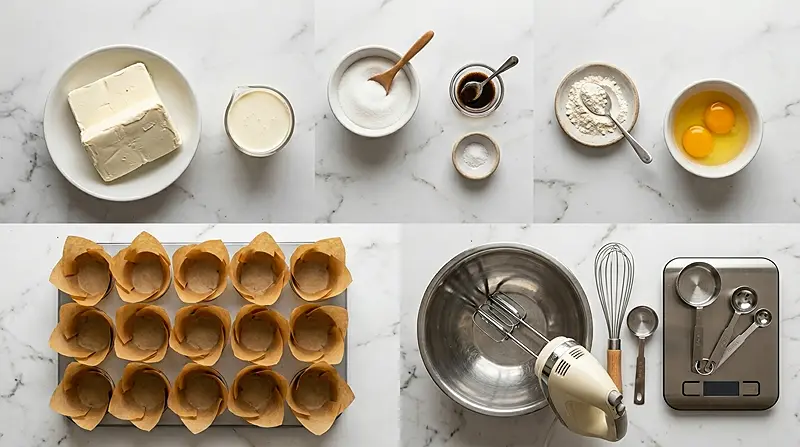
This basque cheesecake cupcakes recipe uses just a handful of ingredients — but every single one is doing real work, so don’t swap without reading the notes below. This makes 12 cupcakes.
| Amount | Ingredient |
|---|---|
| 500 g | Cream cheese, room temperature (full-fat only — low-fat won’t set properly) |
| 250 ml | Heavy cream (also called double cream or whipping cream) |
| 105 g | Caster sugar (finer than granulated — dissolves into the batter more cleanly) |
| 1/2 tsp | Vanilla paste (or vanilla extract — paste gives better depth) |
| 1/4 tsp | Fine salt |
| 12–13 g | All-purpose flour, about 1 tbsp + 1 tsp (just enough to give the edges structure) |
| 2 large | Eggs |
| 1 | Extra egg yolk (strongly recommended — adds richness and helps the center set silkier) |
Per Serving (1 cupcake): approx. 290 cal · 5 g protein · 13 g carbs · 25 g fat. These are rich, so one is genuinely satisfying — no need to feel like you need two. (Though you might want two.)
Planning a no-bake dessert night alongside these? This no-bake Biscoff cheesecake that sets overnight is a great make-ahead companion.
What Equipment Do You Need?
- Standard 12-cup muffin tray — the backbone of this recipe; don’t use a silicone one, it doesn’t conduct heat the same way.
- Parchment paper — cut into rough squares larger than the cups so they overhang and create tall sides.
- Large mixing bowl — you’ll be combining everything in one bowl, so give yourself room.
- Hand mixer or stand mixer — technically optional, but getting cream cheese truly smooth by hand takes real effort.
- Kitchen scale — for portioning batter accurately; 85–90 g per cup is the target.
- Rubber spatula — for scraping down the bowl between additions.
- Optional: ladle or large spoon — for transferring batter into the cups without dripping everywhere.
How Do You Make Basque Cheesecake Cupcakes Step by Step?
Making basque cheesecake cupcakes is mostly about building the batter correctly — each addition needs to be fully incorporated before the next one goes in.
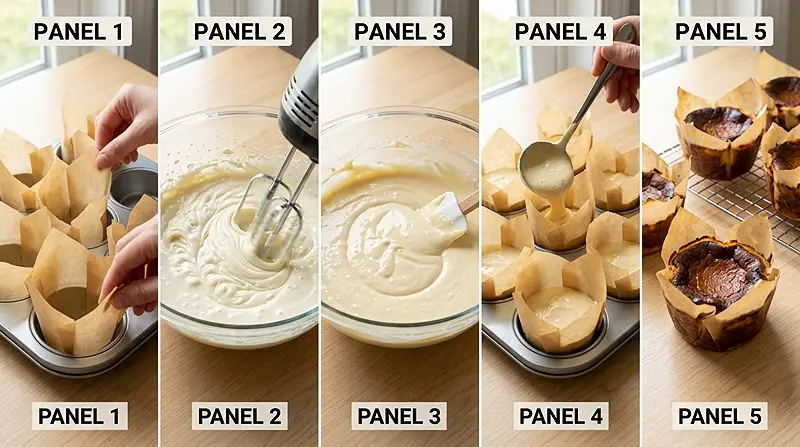
- Preheat your oven to 200°C (180°C fan). Cut 12 squares of parchment paper, roughly 15 cm each, and press them into each muffin cup so they overlap the edges. They don’t need to be perfect — the rustic crinkled look is part of the aesthetic.
- Beat the cream cheese. Add all 500 g to your bowl and mix on medium until it’s completely smooth with zero lumps — this usually takes 2–3 minutes. If you can feel any graininess when you scrape the bowl, keep going. (Cold cream cheese will never fully smooth out, so if you forgot to pull it early, give it 20 minutes in a warm oven with just the light on.)
- Add the heavy cream. Pour in the 250 ml and mix until the batter looks silky and cohesive. It should flow off the spatula in a slow, thick ribbon.
- Add sugar, vanilla, and salt. Mix until the sugar has fully dissolved — you shouldn’t feel any grit when you rub a bit of batter between your fingers. Add the 1/2 tsp vanilla paste and 1/4 tsp salt at the same time.
- Add the flour. Sift in the 12–13 g and stir briefly — just until it disappears. Overmixing at this stage develops gluten and makes the texture slightly chewy instead of custardy.
- Add the eggs. Crack in the 2 large eggs one at a time, mixing gently after each. Then add the extra yolk. Stop mixing as soon as everything is just combined — the batter should be smooth, pourable, and lump-free. (If you see small streaks, give it one more gentle fold — but resist the urge to over-beat here.)
- Portion the batter. Use a ladle or large spoon to fill each parchment-lined cup 90–95% full. If you have a scale, aim for 85–90 g per cup. Underfilling leads to flat cupcakes with thin tops that don’t caramelize properly.
- Bake for 16–17 minutes on the center rack. Watch for these visual cues: tops should be deep brown — darker than you think is right — edges should look set, and when you gently tap the tray, the centers should wobble like set jello, not slosh like liquid. Pull them at the wobble, not before.
- Cool and chill. Let the cupcakes rest in the pan for 10–15 minutes — they’ll sink slightly in the center as they cool, and that’s perfect. Transfer to a wire rack to cool completely, then refrigerate for at least 2 hours before eating. Overnight is even better.
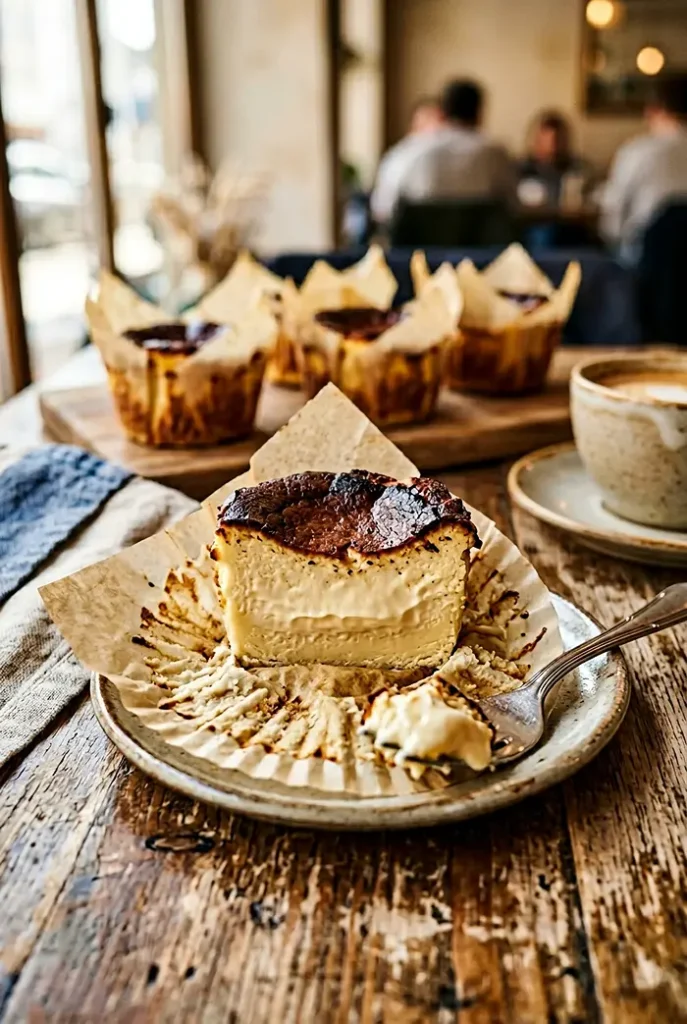
Pro Tips for Perfect Mini Basque Burnt Cheesecakes
Mini basque burnt cheesecakes are forgiving in a lot of ways — but a few details will consistently separate a good batch from a great one.
High heat is the whole point, not a risk. The 200°C bake isn’t aggressive — it’s essential. The high temperature is what drives the Maillard reaction on the surface, creating that bittersweet caramelized crust while the interior stays protected by the moisture in the cream cheese and heavy cream.
According to King Arthur Baking’s breakdown of the Maillard reaction, this browning process only begins reliably at temperatures above 140°C — so don’t be tempted to lower the heat to “play it safe.”
The jiggle cue is more reliable than your timer. Ovens vary. I’ve pulled these at exactly 16 minutes in one oven and needed 18 minutes in another. Learn the visual: edges opaque, top deeply browned, center moves as a unit when the pan is tapped. That’s done. If the center sloshes independently, give it 90 more seconds.
Don’t skip the chill time. I know it’s tempting to cut into one while it’s still warm — I’ve done it, and the texture is completely different. Warm, the center is runny and almost liquid. After two hours in the fridge, it firms into that dense, custardy, melt-on-your-tongue thing you’re actually after.
Parchment squares over cupcake liners, always. After testing both, the difference is significant: liners grip the edges and tear the sides when you peel them away. Parchment releases completely and gives you that beautiful crinkled edge that’s part of the look.
Troubleshooting: When Something Goes Wrong
Why did my cupcakes come out pale on top?
Your oven temperature is likely running cooler than the dial says — or you pulled them too early. Use an oven thermometer to verify actual temperature, and trust the visual cue (deep brown tops) over the clock. A pale top means the inside is also undercooked.
Why is the center completely liquid even after chilling?
They needed more time in the oven. The jiggle at pull time should be a firm wobble of the whole center — not liquid movement. Return underbaked cupcakes to a 180°C oven for 4–5 more minutes and chill again.
Why did my batter end up lumpy?
The cream cheese wasn’t soft enough before you started. Cold cream cheese never fully smooths out, no matter how long you mix — and those lumps bake in. Pull your cream cheese at least an hour before you start, and let it reach full room temperature.
Why did my cupcakes overflow the cups?
Overfilling past the 95% mark will cause overflow as the batter puffs during the first few minutes of baking. Stick to 85–90 g per cup — use a scale at least the first time to calibrate your eye.
Can I fix them if they overbaked and the center is rubbery?
Unfortunately not — an overbaked cheesecake cupcake won’t soften after the fact. The good news: they’ll still taste good. Treat the texture as a firmer cheesecake rather than a custardy one, and use the visual cues next time to catch them earlier.
Variations and Ways to Customize
Basque cheesecake cupcakes are wonderful plain, but the base recipe is also a great canvas for easy twists.
- Espresso version: Dissolve 1 tsp instant espresso powder in the heavy cream before adding it to the batter. The coffee flavor doesn’t overpower — it deepens the caramelized top and makes the whole thing taste slightly more complex. Perfect for a dinner party.
- Cinnamon honey finish: Right before serving, drizzle each cupcake with a small amount of raw honey and a pinch of flaky salt. This is especially good in autumn and makes a simple dessert feel considered and complete.
- Gluten-free swap: Replace the all-purpose flour with an equal weight of fine rice flour or a 1:1 gluten-free baking blend. The texture is very similar — the flour amount is so small that the structure comes mostly from the eggs and cream cheese anyway. For a full guide to building no-bake GF cheesecakes, see our no-bake matcha cheesecake with a gluten-free base option.
- Citrus twist: Add the zest of one lemon or blood orange to the batter along with the sugar. It brightens the whole flavor without changing the texture — especially good in spring when you want something that feels a little lighter.
Can You Make Basque Cheesecake Cupcakes Ahead of Time?
Serving
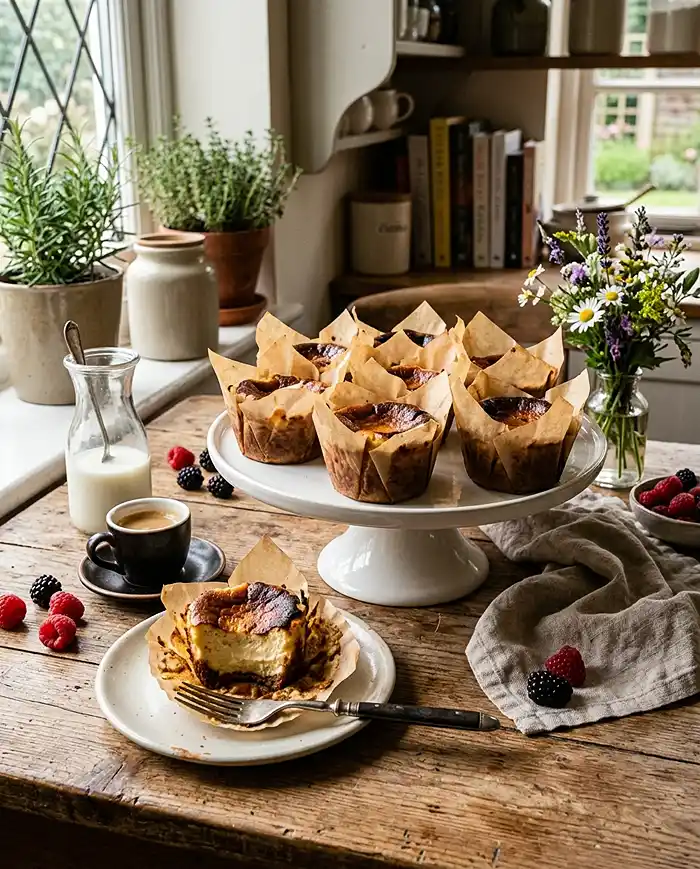
These are best served cold, straight from the fridge. Peel back the parchment just before plating — the edges look beautiful when they’re exposed. A small dusting of flaky salt or a drizzle of honey right before serving is optional but genuinely good. No sauce needed; they’re complete on their own.
Storing
Store in an airtight container in the fridge for up to 4 days. The texture actually improves slightly on day two as the custardy center firms up a bit more. After day four, the tops can get a little tacky and the flavor starts to dull — eat them before then.
Reheating
Honestly, don’t reheat them — the whole point is that cool, custardy center, and warming them reverses that. If you must bring them to room temperature, pull them out 15 minutes before serving. Never microwave; it ruins the texture completely.
Frequently Asked Questions
How long do basque cheesecake cupcakes need to chill before serving?
A minimum of 2 hours in the fridge is required — but overnight is better. The chill time is what transforms the jiggly, almost-molten center into the dense, custardy texture that makes this recipe worth making. Cutting in too early gives you something runny and under-set.
Can I make basque cheesecake cupcakes without a muffin tray?
Yes — individual ramekins work well, though the bake time will increase slightly depending on their size. Avoid silicone molds; they don’t conduct heat the same way and the tops often won’t caramelize properly. A metal muffin tray gives the most consistent result.
What does the burnt top actually taste like?
It tastes slightly bitter, deeply caramelized, and almost smoky — in a good way. It contrasts with the sweet, creamy center and that contrast is the whole point of the recipe. If it tastes acrid or ash-like rather than caramelized, it went too far; aim for dark brown, not black.
Why does my cheesecake cupcake sink in the middle after baking?
That’s supposed to happen. The center sinks slightly as the cupcakes cool, and this is a normal part of the process — it’s not a sign of underbaking or failure. That gentle dip in the center is exactly what gives the finished cupcake its custardy interior texture.
Can I freeze burnt cheesecake cupcakes?
Yes, they freeze surprisingly well. Wrap individually in plastic wrap, then place in a freezer bag for up to 6 weeks. Defrost overnight in the fridge — not at room temperature, which causes condensation and makes the top go sticky. The texture holds up well after freezing.
Baked with Love by Rebeccah Ellene
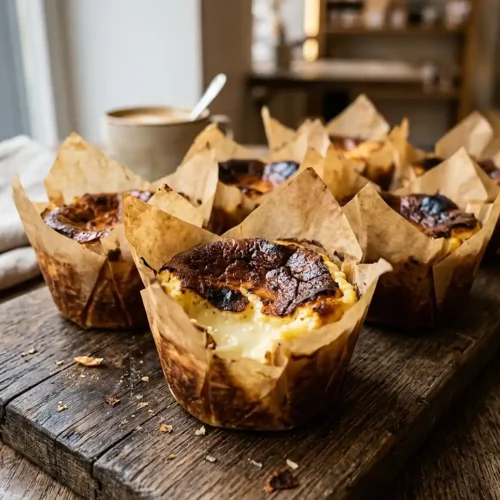
Basque cheesecake cupcakes are one of those rare recipes where the high-drama appearance — that deeply bronzed, almost-burnt top — is actually the easiest part to achieve.
Made this batch? Drop a comment below and tell me how the jiggle looked when you pulled them — I want to hear every detail.
If you’re on a cheesecake kick, don’t stop here — try this Cinnamon Toast Crunch cheesecake with a cereal-infused crust next.
Baked with love by Rebeccah Ellene. These were tested across four separate batches — including one embarrassing tray that came out completely pale because I trusted the timer instead of my eyes. That batch taught me everything that ended up in this post.
Basque Cheesecake Cupcakes
Equipment
- Standard 12-cup muffin tray
- Ladle or large spoon
Ingredients
Batter
- 500 g Cream cheese room temperature — full-fat only, low-fat won’t set properly
- 250 ml Heavy cream also called double cream or whipping cream
- 105 g Caster sugar finer than granulated — dissolves into the batter more cleanly
- ½ tsp Vanilla paste or vanilla extract — paste gives better depth
- ¼ tsp Fine salt
- 13 g All-purpose flour about 1 tbsp + 1 tsp — just enough to give the edges structure
- 2 Large eggs
- 1 Egg yolk strongly recommended — adds richness and helps the center set silkier
Instructions
- Preheat your oven to 200°C (180°C fan). Cut 12 squares of parchment paper, roughly 15 cm each, and press them into each muffin cup so they overlap the edges. They don’t need to be perfect — the rustic crinkled look is part of the aesthetic.
- Add all 500 g of cream cheese to your bowl and mix on medium until completely smooth with zero lumps — this usually takes 2–3 minutes. If you can feel any graininess when you scrape the bowl, keep going. Cold cream cheese will never fully smooth out, so if you forgot to pull it early, give it 20 minutes in a warm oven with just the light on.
- Pour in the 250 ml of heavy cream and mix until the batter looks silky and cohesive. It should flow off the spatula in a slow, thick ribbon.
- Add the caster sugar, vanilla paste, and fine salt. Mix until the sugar has fully dissolved — you shouldn’t feel any grit when you rub a bit of batter between your fingers.
- Sift in the flour and stir briefly — just until it disappears. Overmixing at this stage develops gluten and makes the texture slightly chewy instead of custardy.
- Crack in the 2 large eggs one at a time, mixing gently after each. Then add the extra yolk. Stop mixing as soon as everything is just combined — the batter should be smooth, pourable, and lump-free. If you see small streaks, give it one more gentle fold, but resist the urge to over-beat.
- Use a ladle or large spoon to fill each parchment-lined cup 90–95% full. If you have a scale, aim for 85–90 g per cup. Underfilling leads to flat cupcakes with thin tops that don’t caramelize properly.
- Bake for 16–17 minutes on the center rack. Watch for these visual cues: tops should be deep brown — darker than you think is right — edges should look set, and when you gently tap the tray, the centers should wobble like set jello, not slosh like liquid. Pull them at the wobble, not before.
- Let the cupcakes rest in the pan for 10–15 minutes — they’ll sink slightly in the center as they cool, and that’s perfectly normal. Transfer to a wire rack to cool completely, then refrigerate for at least 2 hours before eating. Overnight chilling gives the best texture.